

The US military has shot down 1,400 Iranian missiles and drones. It has used a third of its stockpile
In the two recent conflicts – Epic Fury and the 12-day clash between Tehran and Tel Aviv – the US air defence system deployed in the area reached saturation point. Faced with thousands of ballistic missiles, cruise missiles and UAVs, approximately 1,500 Patriot missiles and over 1,000 Tomahawk missiles were deployed, out of the 3,000 available. As for THAAD, the estimated US inventory stood at 452 interceptors prior to Epic Fury, between 232 and 262 at the time of the ceasefire, and between 234 and 278 by the end of July. The optimistic production capacity does not exceed 400 per year. This massive consumption is driving the search for new forms of interdiction

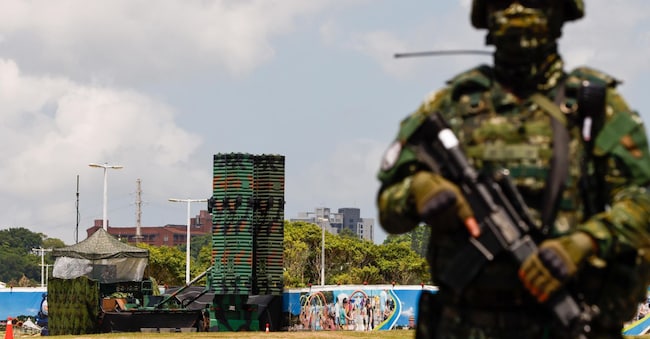
It is almost impossible to determine the exact size of US missile stockpiles. The figures are classified, but some details are beginning to emerge – both regarding the number of missiles shot down and the number and types of delivery systems used. It is clear that production capacity is significantly lower than consumption levels. This is why the US industry is exploring new avenues – to speed up production and to change the type of interceptors used.
During the recent conflicts in the Middle East in which it has been involved, the US military has shot down more than 1,400 Iranian missiles and drones, according to the officer in charge of air and missile defence. Data provided by Lieutenant General John Rafferty, commander of the U.S. Army Space and Missile Defence Command, of the Joint Functional Component Command for Integrated Missile Defence and the Joint Task Force-Gold, provide new insight into the number of interceptions carried out by the Army during these clashes. His statements also come amid growing concerns over the massive consumption of US interceptors, which has exacerbated the strain on the depth of American stocks of these high-tech defensive weapons.
Commitment to reducing
“Over the past 14 months,” Rafferty said during a panel at the Space and Missile Defence Symposium in Huntsville, Alabama, as reported by the specialist website TWZ, the 32nd Army Air and Missile Defence Command (AAMDC), based at Fort Bliss, Texas, “has been engaged in the largest air and missile defence operation in US history”. “During the 12-day war [between Iran and Israel], they successfully intercepted 125 ballistic missiles, and during Operation Epic Fury, over 1,200 threats – including ballistic missiles, cruise missiles and UAS – were neutralised.” The 32nd AAMDC, responsible for all US Army air and missile defence in the region, “has adapted and innovated to overcome advanced threats”, added Rafferty. “The THAAD, Patriot and anti-drone systems are the envy of the world, and this is due in no small part to the efforts of the organisations represented by the leaders sitting in the front row here, but also to the contributions of many of our industrial partners present.” Although he did not specify how many interceptions had been carried out by the US Navy’s SM-3 and SM-6 naval missiles, or by the Air Force’s air-to-air missiles and rockets, Rafferty’s remarks provide further insight into the scale of US military defence in the region during the numerous interceptions of Iranian missiles and drones. This was merely part of a much broader regional effort, involving several countries that had come under Iranian attack. In May, Admiral Brad Cooper, commander of CENTCOM, testified before Congress that Epic Fury ‘validated, on a full scale and in live combat, a combined Middle Eastern air defence network (MEAD) – a concept the region had been practising for years but had never fully operationalised’. ‘For the first time in history, US air defences fought side by side with those of partner nations, across different national systems... During the operation, this integrated architecture intercepted over 6,000 kamikaze drones and more than 1,500 ballistic missiles directed at US forces, Israel and our Arab partners’. Cooper did not break down the number of interceptions by country, but figures provided by Rafferty suggest that the Army was responsible for around 16 per cent of the total, writes TWZ. As a result of this intense air and missile defence activity, partner nations – excluding Israel, which uses its own systems – have had their missile stocks replenished by the United States, due to the enormous consumption of interceptors. As for the 12-day war, according to the IDF, Iran launched around 550 ballistic missiles and around 1,000 drones at Israel. Around 90 per cent were intercepted by the United States and Israel, as reported at the time by the Jerusalem Post. Although the Army intercepted 125 Iranian missiles, the US Navy also played a significant role in shooting down these threats.
Estimates of US stock levels
According to the Centre for Strategic and International Studies (CSIS), the United States has used up hundreds of THAAD and Patriot interceptors since a fragile ceasefire came into effect on 8 April. According to the CSIS, the United States had around 2,300 Patriot interceptors prior to Operation Epic Fury, 1,030 at the time of the ceasefire, and between 759 and 827 as at 27 July. As for THAAD, the US inventory stood at 452 interceptors before Operation Epic Fury, between 232 and 262 at the time of the ceasefire, and between 234 and 278 as of 27 July. The most significant depletion was in Tomahawk cruise missiles. According to CSIS estimates, reported by the Washington Post and the Wall Street Journal, the US Navy fired more than 1,000 of them during the 39 days of full-scale conflict, roughly a third of its entire stockpile. The crux of the matter is production: currently, fewer than 200 are manufactured each year, a consequence of limited orders in the past, compared with a target set by the manufacturer, Raytheon, of exceeding 1,000 units per year. The CSIS estimates that replenishing pre-war stocks could take until the end of 2030.
THAAD production had long been below 100 units per year. From 2025 onwards, this was set to rise to 400. Meanwhile, production of PAC-3 MSEs was projected to exceed 500 units in 2024, reach around 600 in 2025, and be estimated at at least 650 per year by 2027. These are significant figures, but they do not appear to be sufficient in the event of saturation, as occurred against Tehran. These are, of course, estimates, as the exact number of units held is covered by state secrecy. All of this, however, explains another fact very clearly. Europe would be completely incapable of managing such situations. And the development of anti-drone capabilities also requires commitment and is a long road ahead. The same applies to data integration models.

