

The US return to Libya is a boon for Italia
The US is once again taking an interest in the country. The aims are to reduce instability and revitalise the energy sector. This will limit the room for manoeuvre of rival players, foremost among them Russia

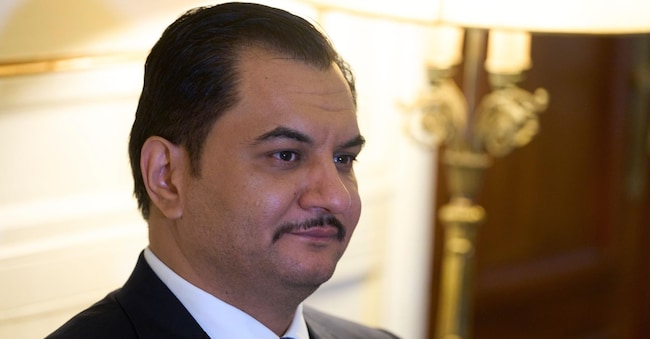
In recent months, there have been several signs pointing to an acceleration of US efforts. The Trump administration, through its envoy for Africa, Massad Boulos, is working towards an agreement between Libya’s two main power networks: the Dabaiba family in the west and the Haftar family in the east. According to various accounts, Boulos is said to have facilitated direct contacts between Ibrahim Dabaiba, the nephew of Prime Minister Abdelhamid Dabaiba, and Saddam Haftar, the son of Khalifa Haftar. In recent years, Saddam has gradually consolidated his influence in eastern Libya, which has been controlled for over a decade by the military apparatus built up by his father. The two are also said to have met in Paris, at the Élysée Palace, in one of the most high-profile developments in the attempt to establish a new political balance between the east and west of the country. Signs of coordination have also emerged on the military front: in April, forces from eastern and western Libya took part together in the US-led Flintlock exercises in the Sirte area. On the economic front, in May, Chevron and ExxonMobil resumed projects and talks in Libya’s energy sector, a further sign that work is underway towards stabilisation. Washington does not seem to harbour any illusions about being able to resolve the Libyan crisis in the short term. The objective appears more limited: to create a minimal balance that guarantees continuity of production, reduces the risk of internal escalation and curbs the influence of rival actors such as Russia. This shift in the US approach could also have significant implications for Italia.
The role of Rome
For Rome, Libya is an almost inevitable key player in the North African strategic theatre – which, from a geopolitical perspective, is Italy’s ‘other shore’. The country’s geographical proximity, its role in the energy sector, migratory pressures along the Central Mediterranean route and Eni’s historical interests have made stability in Libya a permanent priority of Italian foreign policy. In recent years, however, Italia has often operated within a fragmented international landscape. France, Turkey, the United Arab Emirates, Egypt, Russia and, to some extent, the United States have followed different and sometimes competing paths. This is one of the reasons why Rome has favoured a pragmatic approach, focused on maintaining operational relations with Tripoli (whose institutional status is recognised by the UN), on the protection of energy assets and on cooperation on migration issues, whilst never severing ties with Tobruk and Benghazi – given Haftar’s central role – or with Misrata (a city-state in the centre of the country, home to some of the most powerful militias).
Last month’s meeting between Giorgia Meloni and Abdulhamid Dabaiba, Prime Minister of the Government of National Unity, should be viewed within this context. Energy, gas, border control and coordination on the management of migration flows were at the heart of the talks. Underlying this is a growing realisation: energy security in the Mediterranean is once again becoming a key geopolitical issue.
It is against this backdrop that Libya retains clear strategic importance. The GreenStream gas pipeline connects Mellitah directly to Sicily. Eni is pursuing investments worth billions aimed at increasing gas production and improving infrastructure that has suffered from years of underutilisation and instability. Tensions in the Strait of Hormuz and the vulnerability of regional energy flows are also prompting various Western players to seek alternative sources and routes.
Converging interests
The novelty is that, this time, Italian interests may align more clearly with those of the United States. Washington now seems to have accepted that the political process backed by the United Nations is incapable of producing concrete results – a position that also stems from Donald Trump’s broader view of multilateral institutions. After years of unfinished transitions, elections that never took place and governments lacking legitimacy (above all that derived from popular consent), the United States appears to be moving towards a more transactional approach: working with the actors who actually control the territory, infrastructure and security apparatus. In this respect, Italia has an advantage over other European partners. Rome maintains well-established operational relations, has a structural economic presence through Eni, and has open channels of communication with a significant number of the regional actors involved in the Libyan issue, including Turkey.

