

The US in the Middle East: from energy importer to nuclear exporter
In Iran, the Americans appear to be bogged down. But if one takes a broader view, the strategy of helping Sunni countries in particular to break free from traditional energy sources and switch to civil nuclear power becomes clear. The White House stands to gain from this through military and technological transfers, but the risk is ongoing war

The United States is stuck in a quagmire in Iran and does not know how to extricate itself. But if we broaden our perspective to include American strategic objectives across the region, the picture becomes clearer, more nuanced and less chaotic. A large part of what is at stake revolves around the nuclear issue, and this is nothing new. The so-called ‘Arab Spring’ marked the beginning of the breakdown of the regional geopolitical balance, with Iran, Turkey and Saudi Arabia fighting a proxy war to secure an adequate sphere of influence. It is in this context that the thorny issue of Iran’s nuclear programme must be understood. No one in Tehran, not even the most hardline faction, can envisage using enriched uranium to build a bomb or a missile to launch at Israel. The regime would face a tit-for-tat response that would effectively wipe Iran off the map. That frantic pursuit – at the cost of extremely harsh international sanctions, restrictive measures and, most recently, a war – is justified by the quest for a deterrent shield and a means of amplifying its power in the balance of power with its two neighbours: Turkey and Saudi Arabia, to be precise.
Unilateral posture
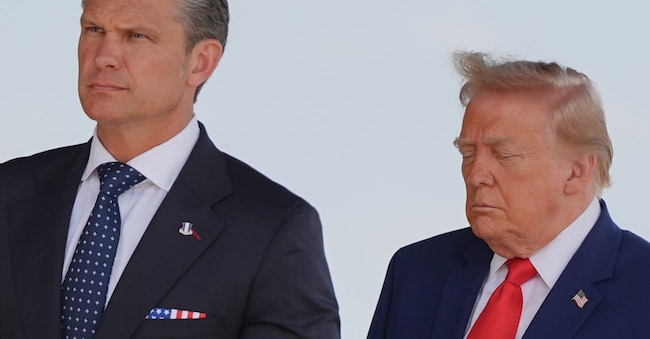
In this regard, credit must be given to the Trump administration for having made it unequivocally clear which side America is on. Barack Obama had, in fact, been trying to have it both ways: maintaining a cool but necessary relationship with Turkey; harbouring a cautious distrust of Saudi Arabia, which he deemed too complacent regarding the proliferation of terrorist movements and organisations; and initiating a rapprochement with Iran as a natural counterbalance. Trump has clearly overturned this stance and is doing so particularly with regard to the nuclear issue, dismantling Tehran’s capabilities whilst instead facilitating the transfer of technology to Riyadh. In line with his logic of constant negotiation, the US president has stated his willingness to accept nuclear power for civilian purposes for Saudi Arabia and for all those Gulf states that sign up to the Abraham Accords – the treaty of mutual recognition between Sunni Arab regimes and Israel on which the US administration has been working for some time. This issue primarily concerns four countries: Egypt, Bahrain, the United Arab Emirates and Saudi Arabia itself, which today face an urgent need to gradually wean themselves off fossil fuels, given that Iran has already demonstrated its ability to gain the upper hand through asymmetric tactics, by choking off oil and natural gas exports at Hormuz. Renewables and nuclear power are therefore the only viable options for the near future, particularly for countries such as Egypt, which is set to see its domestic energy demand double by 2050, partly due to population growth.
An alternative to Beijing
Linking this need to a broader strategic framework in the Gulf is the main objective of the United States, which, having freed itself from its dependence on oil from that part of the world, now has the opportunity to link its presence to the transfer of military technology and nuclear energy. The alternative would be for those same countries to become dependent on Beijing, the undisputed world leader in green technologies and batteries. The cornerstone of security would be guaranteed by the agreement with Israel (itself a nuclear power), which could thus benefit from a security buffer against the Iranian threat.
The unexpected
Everything therefore seems to point in this direction. Except for the assessment – which is not necessarily accurate – of the unintended consequences. Historically, the nuclear revival in the Middle East has always been eminently political in nature. This is the case today with the sensitive Iranian issue; it was the case in the past with the threat posed by the rise of countries such as Iraq, where Saddam Hussein’s regime boasted of having one of the most modern systems for using nuclear power to generate electricity, thanks to its long-standing collaboration with the Soviet Union and, after the fall of the Berlin Wall, with Russia, Ukraine and China. In the contemporary world, however, the main danger stems from the weaponisation of every tool – that is, the use of any sphere, even those not strictly military, for the purposes of power. We have seen yet another demonstration of this in recent days, when the primary targets of Iranian drones became data centres in Dubai and Bahrain.
Deterrence
In the strategic race involving the three key players in Middle Eastern geopolitics – Turkey, Iran and Saudi Arabia – the nuclear factor will remain the decisive one for a long time to come. That is why Washington is right to link its ambitions to a grand geopolitical bargain. But it would be making a fatal mistake if it were to overlook the aspects of deterrence and symmetry, the only real insurance policy for the future. The race for nuclear power is inevitable in a world that is hungry for energy, is becoming increasingly regionalised, and must curb carbon dioxide emissions. But, from a strategic perspective, the model of perfect symmetry – already tested between the US and the USSR during the Cold War, or between Pakistan and India in more recent years – is destined to be the only viable means of saving the world.

