

The vaccine commission's mess: Schillaci's step back, the clash and Meloni's wrath. What happened
The Minister of Health signed the decree revoking the appointments of the entire Nitag without waiting any longer as had been suggested by Palazzo Chigi

3' min read
3' min read
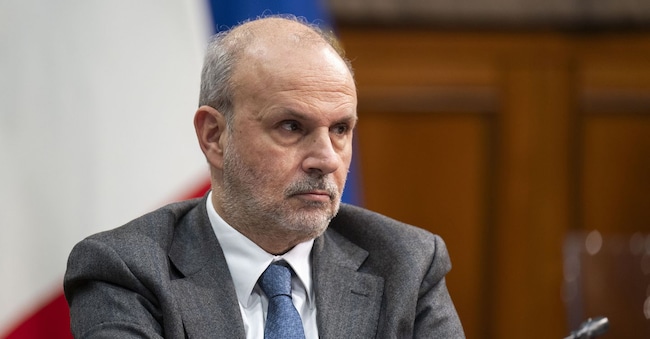
The Minister of Health Orazio Schillaci after the storm of controversy breaks the hesitations and takes a step back on the appointments of Paolo Bellavite and Eugenio Serravalle within the National Technical Advisory Group on Vaccinations (Nitag). In fact, Schillaci has just signed the decree revoking the entire Nitag appointed a dozen days ago without waiting any longer as had been suggested by Palazzo Chigi (on the side of Fratelli d'Italia), which had asked for the dossier to be postponed until September. In the face of pressure from part of the political world - within the majority, Forza Italia, for example, had been immediately critical - and from the entire scientific community to revoke the appointments of those who had publicly expressed positions contrary to vaccines, the Minister of Health decided not to wait any longer and to rescind the entire commission, which will now have to be composed again after the summer break. A summer incident that is likely to leave some traces in the majority that even in the recent past has had to deal with the pressure of the 'no vax' soul within it: from the appointment of the commission of enquiry on Covid to Italy's decision not to adhere to the new WHO health regulation to the pandemic plan still not approved.
Minister Schillaci's initiative is also said to have aroused the irritation of the Prime Minister Giorgia Meloni herself for the decision 'not agreed' with Palazzo Chigi because it would not take into account the 'pluralism' of voices even on the subject of vaccinations.
The steps in the affair and the outcry from the scientific community
It all started last 5 August when Minister Schillaci signed the decree appointing this independent body that provides support to the Ministry of Health in the formulation of evidence-based recommendations on vaccinations and vaccination policies, such as the extension of immunisation campaigns such as those for influenza, Covid or the other compulsory vaccines for paediatric age. Schillaci appoints the 22 members who will have to define the national vaccine strategies for the next three years, but among the names of the Nitag members are also those of the two doctors Eugenio Serravalle and Paolo Bellavite, who had criticised vaccination policies in the past during the pandemic, but also before, targeting for example the compulsory paediatric vaccinations introduced in 2017. These two appointments triggered a reaction from practically the entire scientific community: from the Italian Hygiene Society to the Fnomceo Medical Association to many other medical-scientific societies (paediatricians, immunologists, neonatologists and others). Even one of the world's most prestigious scientific journals, the British Medical Journal' (Bmj) has returned to the controversy surrounding the appointments in the new Nitag with a special editorial. The Transversal Pact for Science launched a collection of signatures to ask Minister Schillaci to turn back, with over 21,000 signatures, including those of pharmacologist Silvio Garattini, Nobel Prize winner Giorgio Parisi and infectivologist Matteo Bassetti.
The political tug-of-war within the majority
.The affair has also had political repercussions within the majority, triggering a tug-of-war between Minister Schillaci and the Fratelli d'Italia side from which the indications for appointing the two doctors critical of vaccines would have come, with part of the League and especially Forza Italia very critical of the two appointments. The Prime Minister Giorgia Meloni, who has not hidden her irritation, and the undersecretary of Palazzo Chigi Giovanbattista Fazzolari, who has allegedly asked Minister Schillaci to take time and postpone any decision until after the summer break, have also taken an interest in the dossier. But the avalanche of controversy convinced Schillaci not to delay and to go ahead with the revocation of the entire newly appointed commission despite the invitation to take time, even ventilating the hypothesis of resignation, which was later denied. The first polemics had been triggered by Francesca Russo, director of prevention for the Veneto region and coordinator of the region's prevention area, who decided to resign from Nitag immediately after the appointment precisely because of the presence of the two 'no vax' doctors. This choice was supported by Veneto's Lega Nord governor Luca Zaia, while the Lega Nord parliamentarians Alberto Bagnai and Claudio Borghi, who are also members of the Covid commission, continued to defend the appointment of Bellavite and Serravalle. In chorus, however, the opposition - from the PD to Avs - asked Minister Schillaci to backtrack on the two appointments. Forza Italia was also critical, as Letizia Moratti, president of Forza Italia's National Council and MEP for the European People's Party, spoke of a 'serious step backwards in the credibility of our country's health institutions' on the 'appointment of two well-known no-vax exponents within Nitag'. At a time in history when trust in science and medicine is more fundamental than ever, we cannot allow ideological logics or political balance to call into question the pillars of public health'.


