Luigi Einaudi Foundation Report

The value of Italian defence is 16 billion euro. Crosetto: 'Asked for threat picture, I will inform all leaders'

A paper highlights that military investment in research and development often leads to scientific and technological breakthroughs that then find applications in the civil sector (dual - use). Defence Minister: EU defence funds? "Safe should be used'

by Andrea Carli

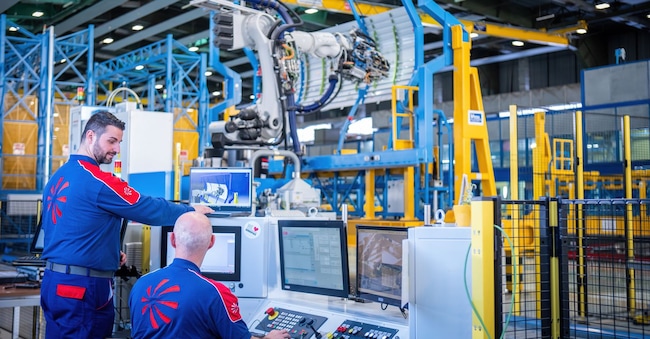
Un’immagine dello stabilimento di Leonardo a Pomigliano d’Arco

7' min read

7' min read

The topic of EU rearmament is highly topical. In a few days, on the occasion of the summit between the heads of state and government of the North Atlantic Treaty Organisation scheduled to take place in The Hague on 24-25 June, NATO will ask the member states to raise the bar, and to allocate 3.5% of GDP per year for weapons, the remaining 1.5% for strategic investments in infrastructure, industry and security. According to NATO Secretary General Mark Rutte, the Atlantic Alliance must "increase its air and missile defence capability by 400%" in response to the Russian threat. And Rutte himself will be received on Thursday 12 June in Rome by Prime Minister Giorgia Meloni. Each government is called upon to define its strategy.

In the conviction that while investing in the defence industry generates national income and employment, this type of investment today represents the main opportunity for Italy to advance in technological research and engage in the industrial innovation that is transforming the civil economy. This is somewhat the message of the paper 'Defence. the necessary industry', presented today, Monday 9 June, by the Louis Einaudi Foundation. Together with the biotechnological and pharmaceutical sectors and the information and communication technology sector, the industrial, aerospace and defence sectors, by their very nature, invest a great deal in scientific and technological research, and all this presupposes the achievement of very high standards of quality and reliability.

Loading...

Defence Minister Guido Crosetto, among others, spoke at the presentation of the survey. Using European funds to invest in defence? "Safe should be used. The part of those investments, and the possibility of using them in a very simple way, should be exploited. So some yes,' he said. "I have asked the Chief of Defence Staff to give me a real picture of the threats and the current state of our defence: when I have it I will call and inform all the political leaders in the country, so that they cannot say 'I did not know'. From the next day, when each of them speaks, they will do so knowing the same things that I know,' he added.

"We have moved abruptly into the fold of the great powers, in which little importance is attached to the growth of peoples' welfare and much importance is attached to the capacity for power that a nation can express. Power capacity that can be military, technological or raw materials. And in such a world, Europe matters much less. Because Europe is not a model to follow, but risks being a rich old man to be plucked,' Crosetto noted.

"The complexity of defence in this period is having to compose a picture that goes from the highest technologies, because the race through artificial intelligence, through quantum computing has more and more difficult and more and more complex challenges, those in space, those on the seabed, wars fought by artificial intelligence drones or humanoid robots, things that seemed like science fiction are becoming more and more real, and on the other side in Ukraine we have the war fought by human beings in the trenches the same as in the First World War. We have a snapshot of reality in which everything is there: we have realised that it is as much about technology as it is about the quantity of production, as it is about dealing with threats that have low costs. You think,' he explained, 'that an American ship last week to repel an attack carried out by eighty Houthi drones costing a few thousand euro each fired 80 missiles that cost an average of two million euro each. Just think that Israel's first attack cost a billion to defend the country in those three hours. We need a very high level of technology and things that cost very little that we can use against things that cost very little. There is a very complex security and defence issue that has to be played out on many levels'.

Lorenzo Guerini also spoke at the presentation. The Copasir chairman dwelt on western solidarity: "It has been a pillar of international relations in recent decades and to see it called into question or addressed in this way is a subject that cannot be experienced with a shrug of the shoulders, as an ordinary issue. We are in an extraordinary phase, and the usual phrases about friendship, history and common values are not enough," Guerini added. "At this time, we must not hide the problems we are faced with, which make the framework of the choices we are called upon to make even more important," which "on the political level is to find a way to give and relaunch a new strategic perspective within the NATO framework. The discussion at the next NATO summit cannot be just the unrealistic topic of 5%, unless we do not do spending maquillage operations that then have nothing to do with reality. The topic is not setting unrealistic targets" on defence investments, "as we did in 2014. I do not think it is enough now, instead we must work on a realistic strengthening of military capabilities, both national and European, within a new strategic framework of the Atlantic Alliance, with a strengthening of the European pillar of the Alliance and the choices that Europe must make, in many directions. The framework we are confronted with, especially the awareness of the gaps, requires choices and responsibilities. To talk about European strategic autonomy without talking about investment in defence, the defence industry, especially technology, is to talk about nothing. We need choices, investments, and explaining to the public,' Guerini concluded.

'Over the years,' recalled Giuseppe Benedetto, president of the Luigi Einaudi Foundation, 'we settled into our comfort zone, ignoring that new, less visible, but equally deep barriers were rising to the east of our continent. While we deluded ourselves that history was over, others were writing a new chapter, one of hybrid warfare, cultural manipulation and silent attacks on the cohesion of our democracies. It is no longer just a matter of armed conflicts, but a daily struggle to defend those values we took for granted, acquired. It is time for Europe to acknowledge the external threats and its internal weaknesses'.

The investment and employment multiplier

.

The defence industry, notes the Fondazione Luigi Einaudi report, is characterised by a high technological content and long supply chains, which generate a significant multiplier effect on the overall economy. For every euro of added value generated directly by the sector, a multiple is produced in the subcontracting and services supply chains. Ratios often indicate a double or triple multiplier of production and added value: for every euro invested, 2 or 3 are generated for the economy as a whole. The same can be said for the employment multiplier, because for every direct job, more are created in the supply chain.

The value of Italian defence is 16 billion

.

The survey, carried out on behalf of the foundation by Alberto Pagani, a contract professor at the University of Bologna since 2022 where he has been conducting his research in the field of strategic studies relating to national security, provides some data that help to get an idea of the importance of the sector. AIAD (Federation of Italian Aerospace, Defence and Security Companies) figures indicate over 50,000 people employed by federated companies alone. Considering also indirect and induced employment, the survey highlights, the number of workers linked to the sector increases significantly. The Cesi-Italy report refers to a total of 159,000 people. In 2023, arms export licences reached EUR 4.76 billion, but the value of the Italian defence industry is estimated to be around EUR 16 billion.

Broadening our gaze to Europe, the turnover of the defence industry in 2023 was EUR 158.8 billion, an increase of 16.9 per cent on the previous year, with consequent increases in employment of 8.9 per cent, and in the stock market values of both public and private companies operating in this sector. The defence industrial sector employs 581,000 workers in the EU, to which must be added the increases, which cannot be calculated with precision, in the supply chain and in production chains. In fact, the Defence industry's production supply chains cross many other production sectors, as a large part of subcontracting is dual-use.

The drive for technological innovation

.

However, for the Italian economy, the EUR 16 billion is not the most important aspect. The main value of the defence industry, it is emphasised, lies in the technological innovation it produces and transfers to civil industry. It is necessary to accompany the transition from a mature industrial economy to a more innovative one, with public policies that favour scientific research and technology transfer. This means promoting and participating in major international research projects that can also attract the talent of brilliant Italian mathematicians and computer scientists working on Big Data analytics in the United States or Great Britain, or Italian mechanical engineers working in the field of robotics in Japan, South Korea, Sweden and Germany.

The concept of 'dual-use'

.

The paper points out that military investments in R&D often lead to scientific and technological breakthroughs that later find applications in the civil sector, generating new industries, products and services. Technologies developed for military purposes can be adapted and commercialised for civil use, creating new business opportunities and economic growth and can contribute positively to the Italian balance of trade, generating wealth. The concept of 'dual-use' explicitly recognises this potential overlap. Indeed, countries at the forefront of military technology often also enjoy a competitive advantage in high-tech civil sectors, because the ability to innovate in the military sector can be reflected in the ability to innovate in general. Technological innovations derived from military research and applied in the civil sector are numerous and have profoundly transformed society.

Pushing Europe

.

With the State budget burdened by a debt exceeding 3 trillion, 137.25% of GDP, the only public policy that can realistically finance substantial investments in scientific and technological research is the Europe Readiness 2030 programme, which will allow the exclusion of defence spending from the Stability and Growth Pact and will provide for the European Investment Bank's commitment to support large joint industrial projects. This Commission initiative is aimed at preparing Europe for new security challenges by strengthening its response and resilience capabilities.

Where to invest with priority

According to the report, in order for the programme to promote investments that benefit the Italian economy and society, while also creating opportunities for infrastructure, it is necessary to invest primarily in the underwater dimension and the aerospace industry, while also funding research in the fields of satellite communications, artificial intelligence and quantum computing. In particular, quantum technologies such as quantum computing and quantum cryptography have the potential to revolutionise both military and civil communications.

What does technological superiority consist of today

?

Technological superiority in the military field today is no longer based solely on the possession of more powerful weapons or more soldiers. It is a multidimensional advantage, resulting from the integration and effective application of advanced technologies in all domains of warfare (land, sea, air, space and cyberspace), as well as in the information domain. It is therefore a very broad field of action, allowing Member States to choose their own path, identifying and prioritising, and then investing in the technologies they need most.

Copyright reserved ©
Loading...

Brand connect

Loading...

Newsletter

Notizie e approfondimenti sugli avvenimenti politici, economici e finanziari.

Iscriviti