
Discovering voodoo and the historical memory of Dahomey: a journey through culture, colonialism and identity
A tale that interweaves a journey to West Africa with the rediscovery of voodoo, the history of the slave trade and the complex cultural and political dynamics of Benin.

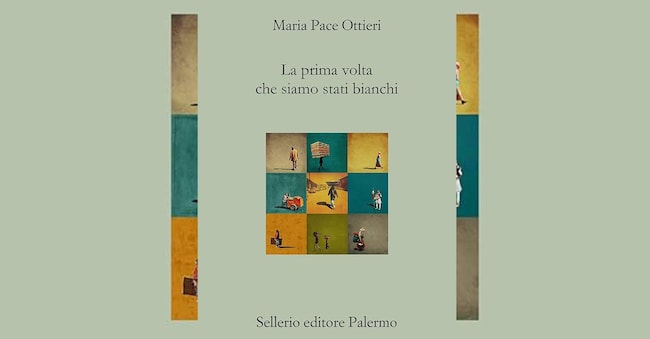
It was on 30 September 1975 when, eleven years late, Ascanio received a reply from "his majesty" Dah René Aho Glélé, direct nephew of the last king of the powerful kingdom of Dahomey. Promising to"make the civilised world understand the ways that nature uses to keep the world in balance" and to introduce them to "the possibilities of the invisible world" Aho Glélé, who was also chief vodun, accepted Ascanius' proposal, who wanted to make a film about voodoo, "a little-known and much misrepresented culture, reduced to zombies and dolls with black magic pins", writes Maria Pace Ottieri in her latest book The First Time We Were White.
A culture that the kingdom, infamous for its slave trade, had spread throughout the world along with the people kidnapped and sold, especially in the Americas: in Brazil, the Caribbean, Louisiana, where it still resists in a diasporic, syncretic form, such as the Cuban santeria, the Brazilian candomblé, the Haitian vodou.
It is a true story that Ottieri masterfully recounts in a text that is at once a récit de voyage, a journalistic reportage, an anthropological account, but also a coming-of-age story - if by coming-of-age we mean the opening up of the protagonists to knowledge of the world, of different cultures and the historical, social and economic balances that determine it, as well as of themselves. This is the story of when, fifty years ago, she found herself spending several months in West Africa as an assistant to an oenologist who wanted to be an ethnologist, and a small troupe of Italians, as good at jumping on the opportunities presented to them as their hosts were.
An adventure into which they had thrown themselves 'like someone who steals a boat at night and goes out to sea, in a dark, unknown and aimless sea', the unfolding of which he recounted half a century later, in a language that is light, bright and clear, as are distant happy memories, changing only the names of the Italian protagonists and reconstructing it from his notes, from the images he shot and digging into his memory, as well as documenting the chronicles of those who had ventured into those lands from the 18th century onwards: explorers, soldiers, colonial officials, employees of French commercial agencies.
An account therefore from the point of view of the yovo, the whites, as is stated as well as inevitable, but aware of the cultural and we might say more generally intersectional distortion that this entails, and for this very reason also an interesting reflection on the possibility and mode of mutual understanding.


