The report

The war is also financed by laundering through evasion, cryptocurrency and online scams

The denunciation in a report by Moneyval, a Council of Europe organisation. The solutions: confiscation, freezing of assets, exchange of information and financial intelligence

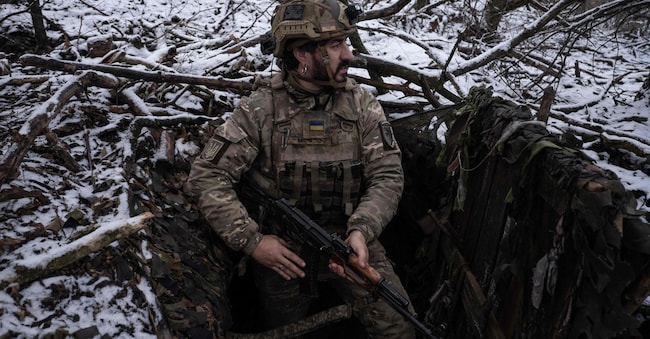
 (Photo by Iryna Rybakova / The 93rd Kholodnyi Yar Separate Mechanized Brigade / AFP)

3' min read

Translated by AI
Versione italiana

3' min read

Translated by AI
Versione italiana

War fuels laundering and money laundering finances terrorism and the proliferation of destructive weapons. The financial crime schemes by which resources are drained to finance conflicts are structured through tax evasion, the misuse of cryptocurrencies but also phone scams, fake voluntary organisations and illegal online gaming.

The alarm, which is not new but highly topical, comes from Moneyval, the operational arm of the Council of Europe dedicated to monitoring and controlling global money laundering phenomena and methods to counter them. A report published on 12 March highlights how conflicts create the conditions for the generation of illegal income and how these funds are subsequently laundered or used to finance terrorism and the proliferation of weapons of mass destruction.

Loading...

The methods used

The methods used, and highlighted in the report, are perfectly in line with financial technological developments. Alongside the more traditional methods of evasion and money laundering, such as the creation of offshore shell companies or the use of opaque trusts, there are the purchases of goods such as technology, microelectronics, through intermediaries and triangulations with non-sanctioned countries, but also the use of shipping through intermediary ports to confuse the real route and the real purposes of the flows.

Then there is the whole subject of the tools of finance and technology, which leads the conflict to a hybrid war and money laundering plan. Among the cases addressed by the report, one starts with cybersecurity attacks, which on the one hand compromise sensitive information and on the other paralyse public administration and critical national infrastructure, interfering with decision-making processes, service delivery and security coordination.

Among the most commonly used cybercrime methods are the distribution of malware, credit card cloning, phishing attacks, social engineering (a psychological manipulation to obtain data), the use of recorded voice calls to steal data (such as vishing), and the use of illegal online content. Evencrowdfunding platforms, warns Money Val, are increasingly being exploited to finance military objectives, including the purchase of weapons or dual-use components.

Not immune from this risk fundraising campaigns. The most vulnerable? Young people and the elderly, who are often the victims of initiatives that use fraudulent schemes to divert money from social media accounts not for their vaunted humanitarian purposes. Moreover, the fraudulent schemes used involve the creation of false non-profit organisations, with false documents, to access possible contributions and funding. Once obtained, the funds - the report confirms - are often laundered through a network of different accounts and converted into cash or digital currency to conceal their origin.

The link with tax crimes

There is also a close connection between war, money laundering and tax crimes. Tax crimes , the paper acknowledges, 'represent a pervasive and damaging trend in conflict-affected environments, undermining government revenues at a time when public spending and resilience are most critical'. The schemes used are varied:fictitious invoices, the use of nominees and the manipulation of legitimate businesses for shell businesses, legislative loopholes with forced interpretations of double taxation treaty rules and cross-border payment systems.

Focus on illegal gaming and cryptocurrencies

Also under the lens, the illegal online gambling. The highlighted technique involves the diversion of players' payments via merchant codes forged by cooperating financial institutions, thus masking the true nature of the transactions. The misclassified payments are recorded as unrelated goods or services and, at the end of the day, the accumulated funds are used to distribute untaxed winnings and generate 'non-cash black money', with the remainder being absorbed by the operators as undeclared profits.

In the dock are cryptocurrencies, which are often used to evade sanctions, finance subversive or terrorist activities and facilitate transactions linked to illegal arms, drug and gambling markets. Their ability to anonymise transactions and circumvent official controls allows, Moneyval points out, the accumulation of proceeds difficult to trace and often transnational in scope.

Counteraction strategies

The answer to this long list of case histories, provided by Moneyval, is through the use of freezing of funds,the implementation of cautionary measures (such as confiscation) and the coordination of financial intelligence. They remain blunt weapons, however, as the organisation shows uneven responses and lack of coordination on the part of states, with the use of financial intelligence still limited.

Implementation of international law enforcement measures remains patchy: while some jurisdictions have developed robust strategic planning tools, others are still in the early stages of integrating conflict dynamics into money laundering and terrorist financing risk management. The way forward once again lies in strengthening and enhancing more systematic data exchange and aligning financial supervision with geopolitical risk analysis.

Copyright reserved ©
Loading...

Brand connect

Loading...

Newsletter

Notizie e approfondimenti sugli avvenimenti politici, economici e finanziari.

Iscriviti