Climate

Violent storms in the north have claimed one life, whilst the south is facing record heatwaves

Italia is experiencing a mix of destructive storms in the Triveneto region and extreme temperatures of up to 45°C in central and southern Italy

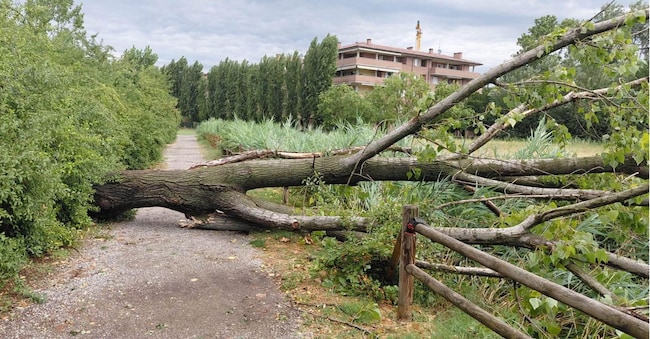
Una delle foto postate sui socail dal sindaco di Modena Massimo Mezzetti sui danni provocati dal maltempo, 15 luglio 2026 Facebook / Massimo Mezzetti +++   ANSA

3' min read

Translated by AI
Versione italiana

3' min read

Translated by AI
Versione italiana

Thunderstorms in the Triveneto region; severe storms in Emilia-Romagna with wind gusts exceeding 100 km/h and in Lombardy, where a tornado struck the Bergamo area; sunshine and extreme temperatures in the rest of Italia.

It is an Italia split in two, but only until tomorrow – the picture painted by the weather forecasts, which have come true right on schedule. In fact, by Thursday, the bad weather will no longer be the main issue in the North, where, as in the rest of the country, people will unfortunately be left gasping for breath once again.

Loading...

The Ministry of Health’s red alerts, after all, don’t lie: today there are 7 cities with the highest heat risk level for the population, but tomorrow that figure will rise to 15 and on Friday it will reach 16.

But the bad weather that lashed northern Italia also caused damage, with fallen trees and flooding, and resulted in one fatality. During the storm that hit Emilia-Romagna in Bomporto, in the Modena area, one person died when their car collided with another vehicle travelling in the opposite direction.

According to Lorenzo Tedici, a meteorologist at iLMeteo.it, the heatwave will continue until the weekend. Temperatures are forecast to reach 45°C in the inland areas of Sardinia, 42°C in Nuoro, 41°C in Caltanissetta, Foggia and Oristano, 40°C in Florence, Terni and Matera, 37°C in Rome and 36°C in Milan.

In Castelluccio di Norcia, temperatures have exceeded 30 degrees at an altitude of over 1,400 metres. The drop in temperature, which is set to last 5–6 days, is expected on Sunday, when temperatures are forecast to be around 34°C.

And although Trieste, Venice, Verona and Bolzano, where this is, incidentally, the third hottest summer since 1850, will not be under a ‘red alert’ over the next few days, the third heatwave of the year, which has now reached its peak, has prompted the Ministry of Health to convene a new crisis management meeting tomorrow as part of the Operational Plan on the effects of high temperatures.

Ahead of the meeting, the Health Minister, Orazio Schillaci , reiterated the advice to protect oneself from the heat by avoiding going out during the middle of the day.

As temperatures rise, so do measures to protect workers: in Lazio, the regional government has banned work involving prolonged exposure to the sun between 12.30 and 16. In Milan, where a municipal by-law has halted deliveries during the hottest hours of the day, delivery riders have taken to the streets to demand social safety nets. In Florence, Glovo and Deliveroo riders organised a protest cycle ride against low pay and working conditions in extreme heat. Meanwhile, Assodelivery, the Italian association that best represents the sector, assures that it is “fully implementing measures to protect riders from the heat”.

Meanwhile, the bad weather has made itself felt: whilst last night heavy rain, violent gusts of wind and hailstorms battered South Tyrol – requiring 50 call-outs from the fire service – similar conditions were reported in the Turin area, particularly in the Susa Valley and the Chisone Valley. The Triveneto and Emilia Romagna regions are particularly at risk from the bad weather.

“The heat and humidity that have built up in the Po Valley,” explains Tedici, “will clash with the influx of cool air at high altitude from the central-eastern Alps. This combination will trigger thunderstorms and hailstorms, particularly in the Triveneto region, but the alert extends to the entire Po Valley and Milan”.

In the Lombardy capital itself, where the City Council’s climate report estimates there will be 80–90 tropical nights a year by 2050, the regional authorities have issued an orange alert for thunderstorms and strong winds (up to 100 km/h) until tomorrow.

For this reason, the council has asked people to stay away from parks and tree-lined areas, to avoid standing near building site scaffolding, outdoor seating areas and marquees, and to ensure that any items on balconies are secured.

Copyright reserved ©
Loading...

Brand connect

Loading...

Newsletter

Notizie e approfondimenti sugli avvenimenti politici, economici e finanziari.

Iscriviti