

The world is watching the World Cup, and science has discovered that football is good for the heart and helps combat obesity
Findings from 32 controlled studies, involving a total of 1,126 participants aged between 11 and 68, from different backgrounds and cultures

Key points
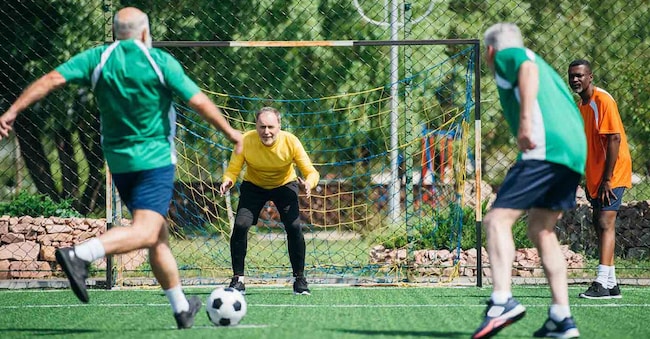
Over the past few weeks, the world has had its eyes glued to the telly for the World Cup. Millions of fans are cheering, shouting and dreaming. Sitting on the sofa. And it is precisely here, in this jarring disconnect between the world’s most beloved sport and the way it is consumed by sedentary spectators, that a scientific study comes in which could change our perspective: what if, instead of just watching that ball, we actually kicked it? Even if we’re rubbish at it and don’t have the talent of Messi or Mbappé? Because making the switch from watching football from an armchair to actually playing it could save our lives.
This is demonstrated by the findings of a systematic review with meta-analysis published in the journal *Life*, which combed through six major international databases — from PubMed to the Cochrane Library — to summarise all the research findings on the topic of ‘the impact of amateur and recreational football on the health of people who are overweight or obese’. The final analysis covered 32 controlled studies, involving a total of 1,126 participants aged between 11 and 68, from diverse backgrounds and cultures.
There’s no need for great intensity
The first surprising finding concerns the intensity required. There is no mention of gruelling training sessions, man-to-man marking or high-intensity pressing like that of the great champions. The programmes analysed involved short sessions, ranging from a minimum of four minutes to a maximum of thirty, with a frequency varying from weeks to months. No state-of-the-art artificial turf pitches, no coach. Just a ball, a vaguely rectangular space and someone to play with. And body composition changes – in a statistically significant way. Amateur football reduces weight, body mass index, body fat percentage and waist circumference. It also leads to a slight increase in lean body mass. In short: less fat, more muscle. It may not give you an athlete’s physique, but it’s enough to bring about a measurable metabolic change, with potential health benefits. And the benefits aren’t limited to weight or waist circumference.
The impact on cardiovascular parameters and cholesterol
Amateur football also has an impact on key cardiovascular parameters: blood pressure falls, resting heart rate decreases, and aerobic capacity (that is, the efficiency with which the heart and lungs work under exertion) improves. These are three indicators that cardiologists use to assess the risk of heart attack and stroke, and which, thanks to a friendly game of football, move in the right direction. But there’s more. Blood tests on the participants showed reductions in total cholesterol, LDL (‘bad’ cholesterol) and triglyceride levels. These effects were particularly pronounced in women and younger people, suggesting that certain groups may derive even greater benefits from recreational football. Finally, the research also found a reduction in fasting insulin levels, a sign of improved metabolic control of glucose, with all that this implies in terms of preventing type 2 diabetes.
At what dose does calcium become a means of prevention?
Amateur football also shows a dose-response relationship: its benefits were found to be greater among those who trained more frequently and for longer periods of time. Those who kept taking to the pitch for months, training several times a week, achieved better results than those who played a friendly match every now and then or were substituted early, continuing to support their team from the stands. But – and this is the crucial point – even shorter and less frequent training sessions produced measurable benefits. You don’t need to do a great deal (or, worse still, overdo it); even a little exercise makes a difference compared to a sedentary lifestyle.

