

There are 1,224 community centres taking action against the heat: here is a map showing their distribution across the regions
So far, heatwaves have led to a 3 per cent increase in excess mortality. The new facilities under the National Recovery and Resilience Plan (PNRR) are intended as respite centres for the elderly and vulnerable: the issue of services, and around a hundred fewer openings in the South

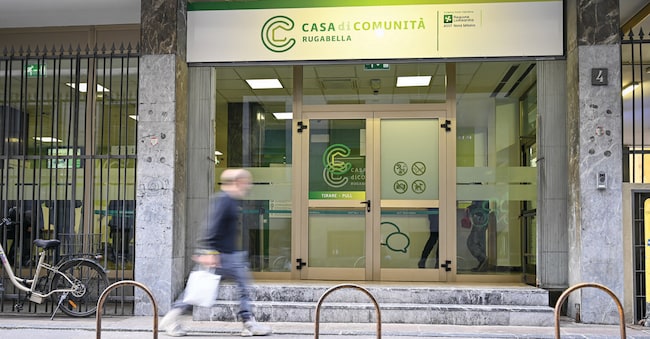
There are already 1,224 of them up and running across Italia, and they are opening without many Italians even realising it – or with the reputation, not always justified, of being nothing more than ‘empty shells’ lacking staff and services. But now that Italia is in the grip of the summer’s third heatwave, community care homes – the new additions to the Italian healthcare system, funded with 2 billion from the NRRP – conceived during the Covid pandemic when hospitals were the only line of defence – are being rediscovered as the first points of healthcare in the community, designed to support and assist the elderly and vulnerable in particular during these weeks of renewed alarm over the ‘climate pandemic’. Just yesterday, the WHO confirmed 10,000 heat-related deaths across five European countries and 200,000 across Europe over the last four years, whilst the Ministry of Health’s crisis unit recorded a 3 per cent in excess mortality between 25 May and 30 June among the very elderly aged over 85 – with a peak in the Turin area (+20 per cent) – and a slight increase in A&E admissions, particularly in Venice, Milan and Palermo, whilst also confirming that the month of June just ended was ‘the second hottest June on record’.
Now, after a brief lull, we are in the thick of the third heatwave – today, 16 cities are on ‘red alert’, a figure set to rise to 19 tomorrow for what promises to be a sweltering Saturday – and the fact that we are only halfway through the summer suggests that we could be heading towards temperatures similar to the record-breaking heatwave of 2003, which caused nearly 20,000 deaths in Italia alone. That is why the opening of community centres could be a welcome development, because here – as some regions are already trialling – ‘cooling centres’ or ‘heat relief centres’ are being set up to provide elderly people with cool respite in air-conditioned areas, as well as the opportunity, in the event of ailments or illness, to see a doctor and have their blood pressure or heart checked, without overburdening A&E departments.
The up-to-date map of the new local healthcare facilities under the NRRP, which *Il Sole 24 Ore* is able to reveal in advance, paints a picture of a fairly widespread distribution, albeit with the usual delays in the South. The good news is that the minimum European target for new facilities has been met: 1,224 facilities were declared operational by the regions at the start of July, compared with the 1,038 that Brussels had set as the minimum threshold, even though the regions in the CIS – Institutional Development Contracts – had planned for at least 1,350. Apart from the constantly updated figures, the Ministry of Health, as ever, is seeing the usual North-South divide. In the North, 510 community homes are active out of the 519 planned; in Central Italy, as many as 236 are operational compared to the 223 announced; whilst in the South, the regions have reported 478 active facilities out of the 608 planned, with Puglia (64 out of 120), Molise (five out of nine) and Calabria (37 out of 57) recording the greatest delays.
The biggest unknown, of course, remains that of services and the availability of doctors and nurses for at least 12 hours a day: at present, there is no up-to-date overview – which will soon be finalised by Agenas – but the latest monitoring report from six months ago indicated that only 4 per cent of community care homes were able to provide all the services intended for residents. The risk, therefore, that in many parts of Italia services are still being provided in a very limited manner is very real, just as it is equally true that many citizens are still unaware of these facilities. At least on paper, these facilities should provide medical consultations – with GPs and specialists such as cardiologists and pulmonologists – initial diagnostic tests such as ECGs or ultrasound scans, preventive care (vaccinations, screening, tests) and the management of patients with chronic conditions, thanks in part to the new role of the family nurse.
And now there is also local support to tackle heatwaves, as Giuseppe Quintavalle, president of Fiaso – the association of local health authority managers who met with Health Minister Schillaci yesterday – points out: ‘Community centres and local services,’ explained Quintavalle, ‘are increasingly accessible and recognisable points of reference, capable of guiding people, identifying high-risk situations at an early stage and helping to prevent unnecessary visits to A&E. The priority is to protect the most vulnerable and intervene before a problem turns into a health emergency.’ Such as heatwaves, which can no longer be considered extraordinary events, but are now a regular feature of our summers.


