Legambiente-AzzeroCO2

Three million new trees planted in 2024

Planting up 31% thanks to metropolitan cities' actions. Positive effects of 20.7 million euro each year
by Bianca Lucia Mazzei

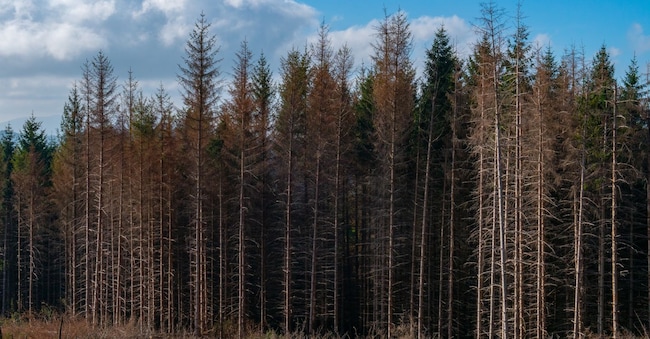
Foreste Casentinesi. Abeti rossi situati nell’area di intervento

6' min read

Translated by AI
Versione italiana

6' min read

Translated by AI
Versione italiana

Last year, over three million trees were planted in Italy (3,150,935), 31% more than in 2023 when it stopped at 2.4 million.

What drove this increase were the interventions carried out by the metropolitan cities thanks to the Pnrr funds, which were able to compensate for the slowdown in regional initiatives due to the transition between two funding programmes, the conclusion of the Psr 2014-2022 and the start of the Csr 2023-2027. This transition had also weighed on 2023 when the planting of new plants dropped by 9.6 per cent.

Loading...

Taking stock of the situation is the fifth edition of the Forest Atlas, the annual report produced for Il Sole 24 Ore del Lunedì by Legambiente and AzzeroCO2 (a sustainability and energy consulting company), in collaboration with the Compagnia delle foreste.

The report (to be presented tomorrow, 6 November, at Ecomondo) surveyed 294 macro-projects implemented over an area of almost 4,000 hectares that includes both urban and suburban areas.

In economic terms, the benefits generated by the trees planted in 2024 (from spring 2024 to spring 2025) will be 20.7 million euro per year for the life of the plants. The positive effects are manifold and range from the containment of climate change (plants absorb CO2, the main greenhouse gas responsible for global warming) to the prevention of hydrogeological disruption. Green areas also regulate air quality, mitigate extreme events, reduce soil erosion, produce raw materials and food, and boost tourism and recreation. "In order for the benefits to be lasting," says Legambiente director general Giorgio Zampetti, "however, a far-sighted approach is needed: it is not enough to plant, but we need to design, choosing species that are suitable for the context and guaranteeing their maintenance over time".

Climatic change (longer and longer drought periods and heat peaks) increases rooting and development difficulties. In order to avoid wasting resources, it is therefore important both to plan interventions and to maintain plants after planting.

LA TOP 5

Loading...

Metropolitan Cities

The Metropolitan cities and in particular those in the Centre-South were the driving force behind the 2024 forestation measures, thanks to the projects financed with resources from the NRP (in some cases also from the Climate Decree).

Last March, the sixth report to Parliament on the implementation of the NRP certified the achievement of the target of 4.5 million trees and shrubs planted by 2024. The initial target was 6.6 million but had been reduced at the end of 2023 when planting in nurseries and not only planting in the final location (transplanting) was also allowed.

The Atlas shows that, in 2024, the transplanting phase was completed by approximately 75% of the projects financed with Pnrr funds (2022 call) and that Messina and Rome were the two metropolitan cities with the largest number of trees planted (357,612 and 265,501 respectively). Reggio Calabria, Cagliari and Naples followed. Other cities had already reached their NRP targets: Venice in 2022, Bari and Turin in 2023.

Further behind are Catania and Palermo, which have not communicated any new planting either for 2024 or for previous years and which, therefore, according to the report, should still be in the nursery phase (Bologna, Florence and Milan are not included in the survey as they had not applied for or obtained funding under the Pnrr 2022 call for proposals).

Last March, the Ministry of the Environment launched the Reforestation project, which envisages the grounding of 3.5 million plants at target sites by June 2026.

SUL TERRITORIO

Loading...

The Regions

The conclusion of the Psr 2014-2022 (Rural Development Programme) and the start of the Csr 2023-2027 (Regional Complement for Rural Development) slowed down the interventions managed by the Regions. In 2024, Abruzzo, Calabria, Campania, Molise, Sardinia, Sicily, Tuscany and Umbria did not start new directly managed plantings. The largest number of plantings was instead carried out by Trentino Alto Adige and Basilicata: the former thanks to provincial and municipal funding, the latter still using resources from the 2014-2022 Rural Development Programme (Psr). Veneto and Friuli-Venezia Giulia, on the other hand, have already started foresting interventions envisaged by CSR 2023-2027.

Private individuals

In 2024, the share of trees planted with private funds suffered a sharp decline: only 40,852 trees were planted, 72% less than the 146,318 in 2023. Consequently, the area used for new green areas also decreased in 2024 to 42.7 hectares from over 153 hectares in 2023.

According to the Atlas, the decrease may be due to a diversification of investments by companies, which prefer to support environmental regeneration and biodiversity promotion projects that do not include the planting of new trees. The regions with the most trees planted thanks to private contributions were Veneto, Trentino Alto Adige and Emilia Romagna.

How much are the benefits worth

The Forest Atlas measures the value of benefits (so-called ecosystem services) generated by new green infrastructure using a calculation methodology based on international databases. The positive effects on the mitigation of extreme climate events, on the regulation of air quality and soil (prevention of hydrogeological instability and flood risk) are estimated at 2,202.9 euro per hectare per year. The socio-cultural value of planting, i.e. the positive impact on tourism and recreation, is instead estimated at 639.2 euro per hectare per year. Also of importance is the 'legacy value', which quantifies the benefits of handing over healthy, biodiversity-rich ecosystems to future generations: the estimate is 2,342.5 euro per hectare per year.

Virtuous Initiatives

Sicily: a food forest in the mountains of Palermo 

Creating a resilient forest rich in biodiversity, producing food sustainably and improving soil fertility. This is the aim of the "Forest of the Seven Skies" project, which envisages the planting of 1,800 trees and shrubs of 40 species on the Moharda, the mountain overlooking the village of Altofonte (Palermo). The new food forest will occupy one hectare and will be surrounded by a hedge. A total of 540 trees have already been planted. The project was financed by Aiaf (Italian Anderson-Fabry Association) and Agesci (Italian Catholic Guides and Scouts Association).

Economic value generated: EUR 5,221 per year

Tuscany: rfarming and care for spruce 

In the municipality of Londa (Florence), in an extra-urban area that falls within the Casentino Forest National Park, 200 plants of the same species have been planted to strengthen the spruce forest. Throughout Italy the spruce tree is under attack by a small parasitic beetle, the bark beetle, which causes it to decay and even die. Before the new spruces were planted, a preliminary cleaning of the undergrowth was carried out, removing the smaller plants affected by the insect. The intervention was financed by Nespresso.

Economic value generated: 2,610 euro per year

Veneto: Padua expands urban green 

The Peace Forest of Padua, which stands in front of Villa Giusti (where the armistice of the First World War was signed), has been enriched with an additional 1,639 trees and shrubs planted over an area of two hectares. The expansion started in November 2024. Over the next twenty years, the new plants will absorb up to 159 tonnes of CO2 (bringing the absorption of the entire forest to 382 tonnes) and release up to 116 tonnes of oxygen. The financiers are Accenture Italia, Banca Ifis, Dba Group, Rina, Renovit, Snam Rete Gas.

Economic value generated: 10,442 euro per year

Sardinia: Tortolì reborn after fire 

With the planting of one thousand trees, a part of the area in the municipality of Tortolì (Nuoro) affected by the 2024 fire was recovered. Native tree and shrub species consistent with the local climatic conditions were used, such as wild olive, holm oak, cork and mastic trees. The new plants will generate several benefits including: increased soil stability, reduced fire risk, environmental regeneration and reduced air pollution. The intervention was financed by Ichnusa.

Economic value generated: EUR 5,221 per year

Lombardy: biodiversity trail in the Vettabbia Park

In the Vettabbia Park, within the South Milan Agricultural Park, 500 trees have been planted along the paths of the new biodiversity garden, including hornbeam, field maple, turkey oak and grey willow. Mixed mitigation hedges have also been inserted to create vegetation barriers and reduce the impact of human activities and natural events. The aim is to improve the landscape, increase biodiversity and create habitats for local birdlife. The intervention was financed by Sky.

Economic value generated: 2,610 euro per year

Tuscany: in Livorno a forest between industry and tracks 

Improving the landscape, absorbing train noise, making the area more liveable and encouraging biodiversity. This is the aim of the new urban park in the eastern part of Livorno, in the Coteto residential district. The intervention involved a one-hectare area without forest cover located between residential buildings and an industrial complex. The area is also adjacent to railway tracks. One thousand plants were planted. The project was financed by Edison.

Economic value generated: EUR 5,221 per year

Copyright reserved ©
Loading...

Brand connect

Loading...

Newsletter

Notizie e approfondimenti sugli avvenimenti politici, economici e finanziari.

Iscriviti