

Thyroid nodules: why they arise, when they are dangerous and how to deal with them
They are often discovered by chance. And they are increasingly frequent. Monitoring over time and treatment must be studied on a case-by-case basis by the specialist

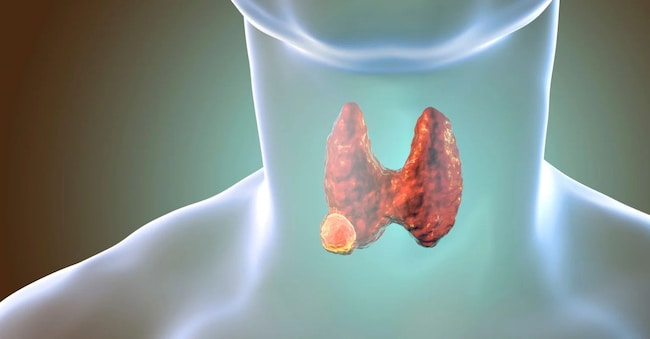
Incidentalomas. One could also call thyroid nodules when they are discovered almost by chance, perhaps by doing an ultrasound scan for an entirely different reason, to analyse the vessels in the neck or to discover the cause of a pain in the neck. Eventually, the diagnosis appears in the report: presence of thyroid nodule. In other circumstances, perhaps because the gland is not functioning at its best or there are endocrine changes that require monitoring, ultrasound becomes basic in identifying these lesions. So we are talking about a very common condition. If you find this in your health history, you are in good company. As the years go by, and especially in women, almost one out of every two people reckon with such lesions. If they used to be unseen today, as tests and the accuracy of ultrasound scans increase, findings of this kind are increasingly common. But what should one do?
Widespread condition
Let's start with a fundamental point. Although many people have one or more thyroid nodules, the figure must be interpreted with caution and medical advice is always required. "In the vast majority of cases, over 90%, these are benign lesions that will never develop into tumours," comments Luigi Barrea, Professor of Clinical Nutrition and Applied Dietetics, Specialist in Food Science and National Councillor of the Italian Society of Endocrinology (SIE). At the same time, the incidence of thyroid tumours has also increased in recent decades, but in part this increase is linked precisely to the increased diagnostic capacity, which intercepts small and clinically unimportant nodules'. In short: on the one hand, more and more thyroid nodules are being detected, even very small ones, due to the increasingly widespread use of ultrasound, and on the other hand, the diagnosis of thyroid cancer is also on the rise. But even in the presence of a neoplasm of the gland, it must be said that the vast majority of thyroid tumours are not very aggressive.
How they are formed
Giving a general answer is not easy, as thyroid nodules form in response to uneven growth of glandular tissue due to several factors acting over time. 'One of the main stimuli is the increase in TSH, often due to iodine deficiency, which induces the gland to work harder, favouring irregular growth of follicular cells,' Barrea comments. 'An important role is also played by somatic mutations, i.e. DNA alterations that occur spontaneously in thyroid cells: some cells thus begin to proliferate autonomously, forming a clone that can evolve into a nodule.
Added to this is chronic inflammation, as in Hashimoto's thyroiditis, which causes continuous tissue damage and regeneration, increasing the risk of disordered growth'. Finally, it must be said that environmental and biological factors such as age, ionising radiation and genetic predisposition also contribute, increasing the likelihood of cellular alterations, as well as hormonal and metabolic factors, such as oestrogen and insulin resistance, which can promote thyroid proliferation.
Does the power supply work?
When it comes to the thyroid, obviously, the most important nutritional factor remains iodine, which is essential for the synthesis of thyroid hormones. Chronic deficiency, historically widespread in some areas of Italy before iodoprophylaxis, favours the development of goitre and nodules. Today, the situation is certainly different from a few years ago. But beware: 'the relationship between iodine and the thyroid gland is delicate,' the expert indicates. 'Even an excess can be harmful, according to a U-shaped relationship. Alongside iodine, there are genetic, hormonal - with oestrogen playing a major role - and environmental factors, such as exposure to radiation.' In recent years, however, a new player has emerged: obesity. 'This is in fact associated with chronic low-grade inflammation, insulin resistance and hormonal alterations involving molecules such as leptin and adiponectin,' Barrea continues. These mechanisms can stimulate the proliferation of thyroid cells, favouring the appearance of nodules and, according to various evidences, also a greater aggressiveness of tumour forms. It is no coincidence that, in parallel with the obesity epidemic, we are seeing an increase in nodular thyroid diseases'.

