

Tigray: the risk of a new crisis and the domino effect from Sudan to the Red Sea
The clashes at the start of August have subsided, but an escalation could trigger regional repercussions
from our correspondent Alberto Magnani
 Aggiungi Il Sole 24 Ore
ai preferiti su Google
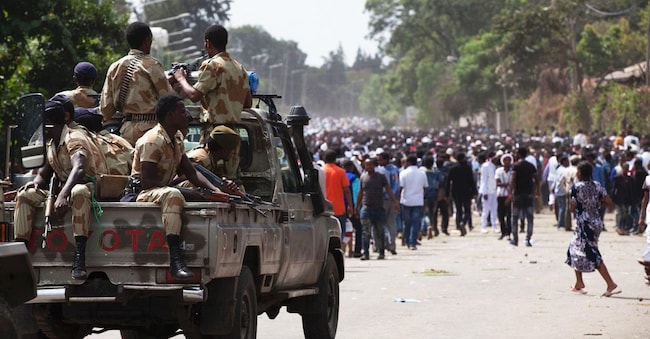
NAIROBI – The incident appears to be behind us. The underlying tensions, however, are not. On 1 August, the Tigray authorities accused the central government in Addis Ababa of waging an ‘open war’ using artillery and drones against Shererina, on the western border between the region and Sudan. The administration, led by the Tigray People’s Liberation Front, accuses Addis Ababa of violating the 2022 Pretoria peace agreement, undermining a deal that was already fragile from the outset and increasingly precarious in its implementation. Tensions between the Tigrayan leadership and Abiy’s government are by no means new, fuelled by Ethiopian allegations of tactical collusion between the Makalle administration and an intermittent adversary such as Eritrea. The latest violence raises fears of an escalation, just over two months after an election that consolidated the power of Abiy’s Progress Party. The prospect of an immediate escalation should be viewed with caution.
“A new war has been expected since December 2024,” notes Federico Donelli of the University of Trieste. According to Donelli, the internal and external dynamics that could have repercussions in the region are of greater significance.
On the domestic front, both the Ethiopian central government and Eritrea have sought to ‘claim’ a mediating role in order to increase their influence in Tigray. On the international front, says Donelli, it is ‘clear’ that the complexities of the situation in Tigray reflect wider tensions and alignments between Sudan, the Horn of Africa and the Red Sea.
The risk of a domino effect between the Horn of Africa and the Red Sea
The fighting in Shererina is significant “more for its geography than for its scale”, points out Bravin Onditi of the HORN International Institute for Strategic Studies, highlighting a crucial point: the clashes took place in the Welkait corridor, “the only strip of land where Ethiopia’s internal conflict, the war in Sudan and the Eritrean issue all converge”.
A new conflict in Tigray, Onditi points out, could escalate into an interstate conflict involving multiple actors and intertwined fronts of hostilities: Eritrea, following months of tension; Sudan, under al-Burhan’s regular army; and Somalia, under the grip of al-Shabaab. All this, says Onditi, is set against a key backdrop: the Red Sea coast and the web of alliances, with the United Arab Emirates close to Ethiopia and Saudi Arabia leaning towards Asmara. Abiy, says Onditi, won ‘comfortably’ in June but now finds himself under pressure on too many fronts. The combination of political strength and territorial vulnerability, says Onditi, is ‘the exact point at which wars break out’.


