
Tim, Opas completed: Poste rises to 85.82 per cent, below the 90 per cent threshold
The telecoms company has come under the control of the Ad Del Fante group: the way is now clear for a delisting

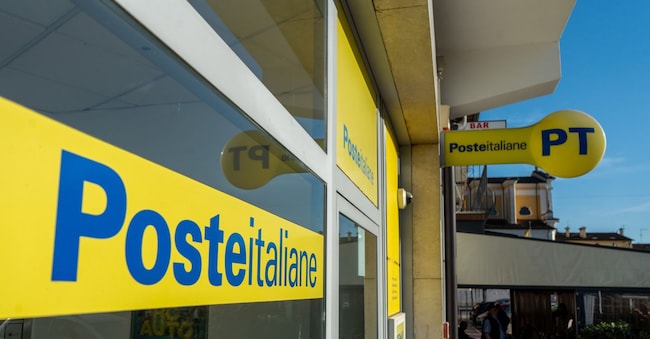
Poste Italiane’s takeover bid for 100 per cent of TIM has closed: according to initial calculations, the company led by Matteo Del Fante has secured 85.82 per cent of the share capital. Acceptances have risen to 65.72 per cent of the share capital (or 82.2542 per cent of the shares covered by the offer); when added to the stake that Poste Italiane already holds in Telecom Italia, the total stake held by the company led by Matteo Del Fante in the telecoms group therefore rises to approximately 85.82 per cent.
The threshold and the consequences
Although it has exceeded by a considerable margin the 66.67 per cent threshold previously set (and subsequently removed) by the company, and despite the acceleration compared with yesterday (when Poste stood at 75.6 per cent), Poste still falls just short of 90 per cent, the threshold that would have triggered the squeeze-out, which allows a shareholder who has reached a high threshold of share capital to compulsorily acquire the remaining shares held by minority shareholders and proceed with a swift delisting.
The options
There are now therefore various possible scenarios if the aim is to achieve delisting quickly. Poste could buy shares on the market, or it could merge TIM with another subsidiary – such as Poste Mobile, for example. In this way, it would have to pay out in cash to shareholders who did not accept the takeover bid.
The relaunch
Poste Italiane had removed the minimum threshold of 66.67 per cent from its public takeover and exchange offer for TIM shares, following a 30-cent increase in the cash component, bringing the offer to 1.97 euros per share (plus 0.218 Poste Italiane shares for each TIM share tendered).
Tim therefore comes under public control: the Ministry of Economy and Finance holds, directly and through Cassa Depositi e Prestiti, over 50.1 per cent of the new combined group, thereby definitively losing its status as a private and independent company.

