
‘Tirrenica’, a documentary on the Salerno–Reggio Calabria motorway (beyond the clichés)
In the ‘Gex Doc’ section, Rosario Minervini interweaves historical footage of the motorway’s construction with the lives of those who travel on it today

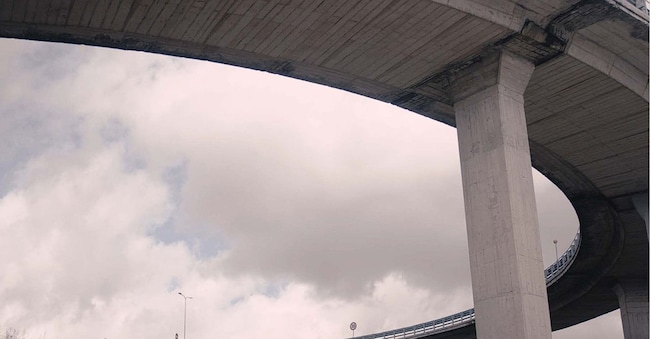
For decades, the Salerno–Reggio Calabria motorway has been portrayed as the quintessential symbol of the South’s backwardness. A public works project that has become part of the national collective imagination, characterised by endless construction sites, political controversies, election promises and clichés. Yet, behind that tarmac stretching across Campania, Basilicata and Calabria, there lies an almost invisible human world. It is precisely from this perspective that Tirrenica – The Parallel and Hidden Life of the Salerno–Reggio Calabria was born, the documentary by Rosario Minervini presented at Giffoni Film Festival 2026, in the Gex Doc section.
The film seeks to shift the focus from infrastructure to people. The famous motorway becomes a constant presence that shapes the lives of thousands of people, a narrative thread linking stories, places, dreams, vulnerabilities and everyday resilience. On either side of the viaducts, beyond the crash barriers and far from the fast-moving flow of traffic, men and women emerge who embody an authentic, complex and deeply contemporary South.
There’s Antonella, a lorry driver nicknamed ‘The Little Mermaid’, who has been travelling the motorway at the wheel of her lorry for over twenty years; there’s Francesca, a young activist campaigning for women’s rights; there is Pasquale, an elderly collector of discarded objects who seeks solace from his loneliness in the fragments he recovers. And then there is Mariagrazia, who finds in sport shooting a chance for personal redemption; Mythic, a Romanian shepherd living on the margins of society; and Roberto, a child growing up in close contact with nature and the local traditions.
Through these characters, the documentary seeks to paint a human portrait of Southern Italy – a narrative that avoids any form of folklorism and opts instead for a patient observation of people and places. The lives depicted never become textbook examples or sociological symbols: they remain individuals, with their contradictions and their desires.
This narrative dimension is reinforced by archival material from the Istituto Luce, the Teche Rai and the Audiovisual Archive of the Workers’ and Democratic Movement. The historical images of the construction of the motorway engage constantly with the present, creating a contrast between the expectations of the 1960s and contemporary reality.

