

‘To strengthen the electricity system, I’m thinking of microgrids for rapid response’
Adriano Casu, a PhD student at the University of Cagliari, is one of the first participants in the Youth and Energy Hub, launched by the Enel Foundation, with the aim of creating an interdisciplinary system. “One of the areas I will be looking to explore is how to develop increasingly innovative technical solutions for upgrading the grid in the face of extreme weather events.”

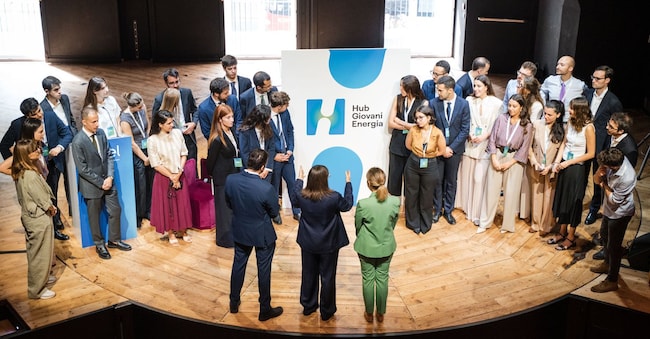
Against a backdrop of challenges linked to energy bottlenecks – including the Strait of Hormuz and disruptions in the Strait of Bab-el-Mandeb – and the ongoing effects of climate change, the Enel Foundation has launched the Youth and Energy Hub, an interdisciplinary initiative aimed at involving the younger generation in shaping the new energy transition system. The aim is to bridge the generation gap by creating a permanent network of young leaders from institutions, international organisations, universities, research centres and bodies active in communication on energy, climate and science, putting their expertise at the service of public policy and industrial strategy to accelerate the energy transition. What makes this initiative unique is not only that it gives young people – who are most exposed to the future consequences of the climate crisis – a leading role, but also that it forges concrete links between them and established experts in the sector. As Edoardo Italia, president of the National Youth Council and one of the speakers at the launch event, explained, the Hub represents a ‘model [that] allows us to transform our ideas into concrete proposals, offering a decisive generational contribution to sustainable development’. At the launch, attended in person and online by numerous project supporters – including the Minister for Energy, Gilberto Pichetto Fratin, and the Minister for Sport and Youth, Andrea Abodi, as well as Italia himself – the need to accelerate the energy transition was taken for granted: the focus shifted instead to the benefits of an approach based on intergenerational dialogue, the involvement of young people and greater use of artificial intelligence and digitalisation. The presence of other speakers and the first participants in the programme demonstrates the already strong involvement of Italian universities such as the Polytechnic University of Turin, the University of Cagliari and Bocconi University.
“The aim is to create a community of young leaders capable of making a tangible contribution to the priorities and strategies shaping the future of energy in Italia and around the world. We are living in a unique moment in history: for the first time, five generations are living side by side, each bringing different skills, experiences and perspectives. The challenge is not to choose one vision over another, but to succeed in integrating them,” said Giulia Genuardi, director of the Enel Foundation.
At a time when the major global powers – first and foremost the United States – have effectively abandoned the goal of transitioning to clean energy, Italia faces an even greater urgency to adapt. The outbreak of war in Iran and its uncertain course have highlighted Europe’s dependence. This view is shared by Adriano Casu, a PhD student at the University of Cagliari and one of the Hub’s first participants: ‘The future is heading in that direction anyway; we must be adept at following it, otherwise we risk falling behind and missing out on certain opportunities.’
In line with his field of research, which focuses on improving the resilience of the electricity distribution network, Casu emphasised just how crucial this issue is at a time marked by extreme temperature fluctuations and increasingly unpredictable rainfall – phenomena that place a heavy strain on the electricity grid. When asked what his contribution to the Youth and Energy Hub would be, he replied: “One of the areas I will be looking to address is understanding how to develop increasingly innovative technical solutions for the modernisation of the grid, which was originally designed for a more stable climate.” These “may be physical solutions – that is, work to reinforce and upgrade the grid – or even smarter, more innovative solutions. One example is the use of microgrids to restore electricity supply to users even before components damaged by extreme weather events have been repaired,” he added. As for what makes the new Hub distinctive from an intergenerational perspective, “one of the advantages I think will emerge from the Hub is the ability to engage with people who have different skills and perspectives,” concluded Casu. “Technology is undoubtedly a tool that enables us to achieve the transition’s objectives; a key principle is the ability to steer technology and innovation on the basis of scientific evidence: using scientific evidence as a tool alongside political decisions to achieve these objectives.”

