
A flood of tomatoes from Egypt endangers the Italian supply chain (worth 5.5 billion)
Question by the President of the Agriculture Commission of the Chamber: derivative imports up 88% in Europe in 6 months. Concern for Project New Delta shared by Anicav's canning industrialists: unfair competition with use of pesticides banned in Europe

For the Tomato Industry there is another shadow on the horizon: it is called the Project New Delta, it will be 114 km long and once completed it will be the largest artificial river in the world. It will be the most ambitious agricultural project - with the cultivation of more than one million hectares - ever undertaken in Egypt, which is already one of the biggest fruit and vegetable competitors for our country.
Launching the alarm in a interrogation addressed to Ministers Francesco Lollobrigida (Agriculture) and Orazio Schillaci (Health) was Mirco Carloni, president of the Chamber's Agriculture Commission. "Many industrial realities," said the parliamentarian, "report exports of tomato derivatives from Egypt to Europe in strong growth: +88% only in the last six months of 2025, according to Eurostat".
For the processing industry, the picture is one of maximum alert and Anicav - the National Association of Italian Vegetable Food Preserves Manufacturers, a member of Confindustria - has long been active in raising awareness among the government and institutions in Brussels, not because they fear repercussions on cans purchased in our retail sector (100% Italian), but because of an issue of intra-European exports.
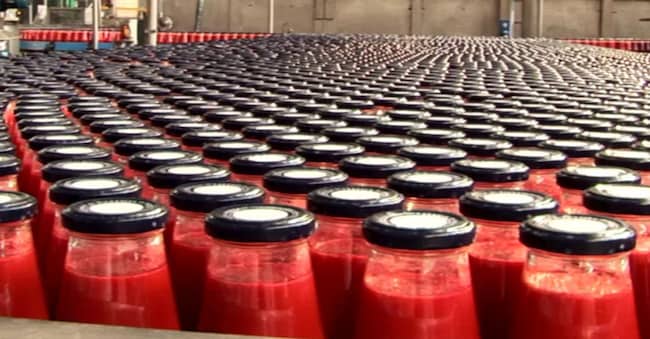
Italy is the second largest tomato processor in the world - after the USA and before China - cwith a turnover of EUR 5.5 billion: more than 50% comes from exports. It is also the leading producer and exporter of tomato derivatives. Semi-finished products (think frozen pizzas or soups sold in German supermarkets) are worth 30% of the turnover (1.7 billion euro): an important share of business. 'We risk losing European secondary processors,' explains Giovanni De Angelis, director of Anicav.
The path, moreover, is already underway: the Land of the Pharaohs produces and exports the same products as ours (pulp and puree) at significantly lower costs. "These low-cost products,' adds Marco Serafini, president of Anicav, 'lead to phenomena of unfair competition, with the real risk of compromising quality Italian exports within the EU and damaging employment, consumers, the environment and the stability of our economic system.

