The astronomical event

Such a low Moon has not been seen for 20 years

The Full Moon of 11 June, low in the sky, offered observation and reflection between astronomical phenomena and cultural suggestions, from ancient myths to contemporary visions

by Leopoldo Benacchio

Aggiornato il 12 giugno 2025 ore 07:04

Aggiungi Il Sole 24 Ore
ai preferiti su Google

4' min read

4' min read

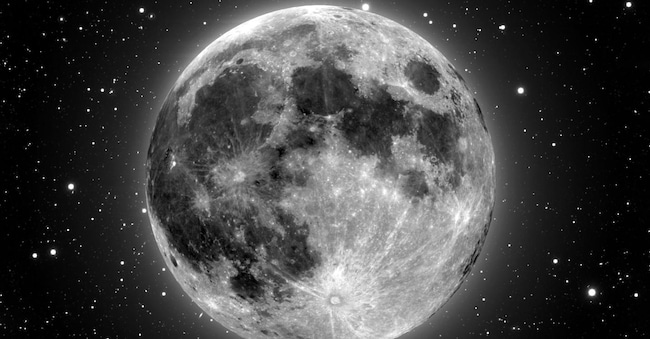
To catch a glimpse of the Full Moon in the sky one has to raise one's head, but this evening (iera sera ed.), 11 June 2025, one does not have to get a stiff neck: the Moon will be low, very low as it has not been for almost a couple of decades. This is not exceptional, it is a periodic phenomenon due to the mutual positions in their orbit relative to the Sun of the Earth and Moon, something known and predicted for hundreds of years.

However, since the next time will be in another twenty years or so, in 2043, since this cycle is 18.6 years, one can take advantage of the weather situation in our country these days, clear almost everywhere, to observe our satellite calmly, since it is also hot and being outdoors is pleasant. The Americans call June's the Strawberry Moon, every month has one that reminds one of nature, the fields and the seasons, the US ultimately stemming from a farming culture, which has cultivated or grazed animals over huge spaces.

Loading...

It will rise around 9.30 p.m. to the east and, due to a well-known effect in our brains, as it rises close to known objects, such as trees or houses, it will appear larger than usual for a few minutes, but then it will rise into the sky, describing a very small arc this time, however, because it starts low and stays low.

The full Moon can be viewed with the naked eye or with binoculars that we may have at home, at the theatre or in the mountains. Let us always remember that the one used by Galileo to revolutionise the conception of the Universe had only eight magnifications and very poor lenses. It was precisely the vision of the mountains and the lunar terrain that made him realise that it was not a perfect celestial body, as had been thought since the time of the great philosopher Aristotle, but a satellite of our Earth made of solid material and, all things considered, quite similar to our planet, from which it probably sprang as a result of a gigantic cosmic collision.

It is interesting, and uncommon in our convulsive world, to see how fast the Moon moves across the sky, and its fullness is ideal for noticing it, or pointing it out to the younger ones we have around us.

A fun thing, if one is alone or rather in company, is to understand what we 'see' on the Moon. We know, we have even been there, that it is made of solid material, mostly rocky, but we from the ground, what do we see on the surface that is shown to us?

Do we see a face, two big eyes and an even bigger mouth, as we were taught in primary school, or do we see a rabbit, as the Chinese, Japanese and Koreans do, or a little old lady with a sack of coal on her shoulders as in Belgium and its environs, or, finally, a crocodile like the inhabitants of West Africa?

It is the phenomenon known as pareidolia, whereby certain random shapes, such as craters and moon mountains, seem to our brains to remind us of something familiar. It also happens with constellations, which depend heavily on the culture of the person looking at them: Western ones are completely different from Chinese ones, even though Greeks and Latins, or the Chinese, saw the same stars.

A game to be played in company, which ends if one uses even a small telescope, as mentioned. Then mountains and valleys and 'seas' appear that have never seen water, since they are vast regions due to ancient lava flows that probably occurred after the formation of the Moon, which we date back 4.5 billion years.

It is thrilling, while looking at the Moon, to imagine and think back to what this faithful companion of our lives has meant, and means, for mankind, which, alas, is receding fast: 3.8 centimetres per year. They seem a trifle, but they are an enormity when we think that a million years is nothing when we are talking about a system that has billions of years on its shoulders.

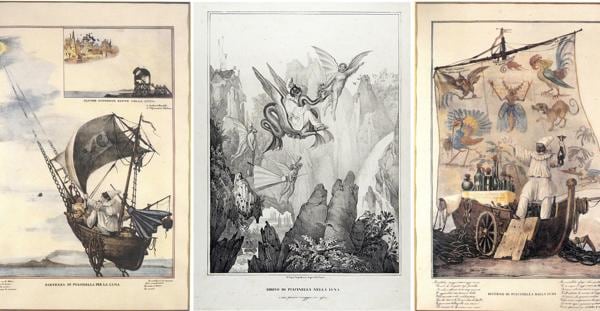
We have always wanted to go there, from the Greek myths that have made it a goddess, to the dreamy pages of Baron Munchausen, who goes there on a cannonball, to Astolfo who in Jerusalem Delivered goes there with John the Baptist in flight to save the valiant Orlando and so many others, even Punchinello who goes there, only he knows how, with a vessel pulled by a sort of rack. He will find it inhabited by gigantic birds that will take him for inspection and then, finally, he will return safely to recount the adventure himself.

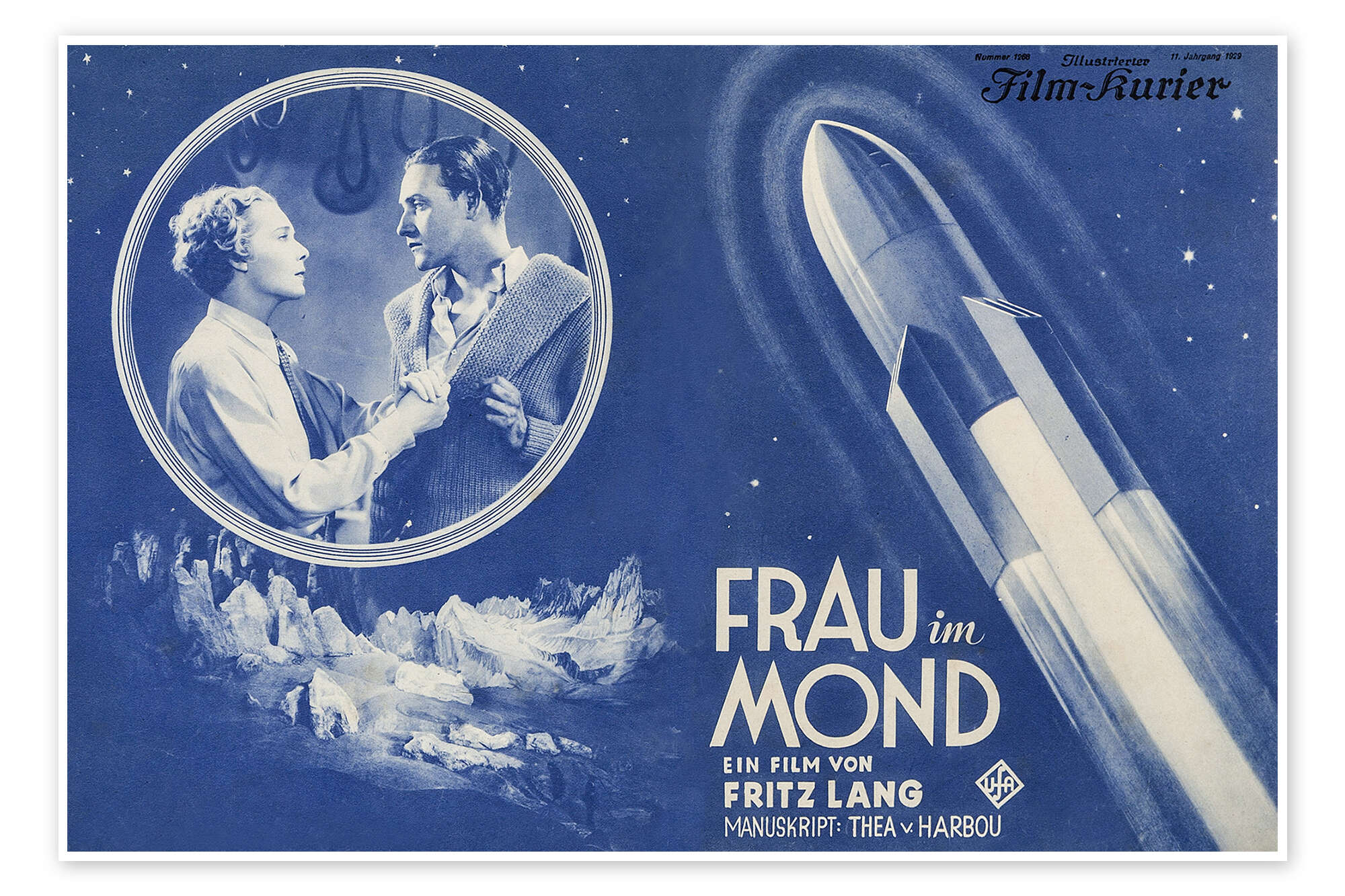
A diva of Cinema from the very beginning, the Moon is the main performer in Georges Meliès' Journey to the Moon, 1902, a mocking and well thought-out satire of scientists and imaginary inhabitants of the Moon. The number of films about the Moon is endless, but to stay with the origins you can see, also on Youtube, Frau im Mond, a very topical theme since no woman has yet been to the Moon, but the great Fritz Lang makes her arrive in sportswear without any problems. Also worth seeing to understand how a rocket and its journey was imagined at the time.

If you want to experience the thrill that the astronauts of the various Apollo missions had, with Google Moon you can take a virtual walk on the surface of the Moon.

Finally, if it was cloudy, you could take a live look on the Virtual Telescope Project site, starting at 9.30 p.m. on 11 June, thanks to the instruments installed in Manciano, in the province of Grosseto.

Copyright reserved ©
Loading...

Brand connect

Loading...

Newsletter

Notizie e approfondimenti sugli avvenimenti politici, economici e finanziari.

Iscriviti