Market and Industry

Too many European cars built in China and sold in the EU. This is why German manufacturers do not want duties

More and more western house models built in China

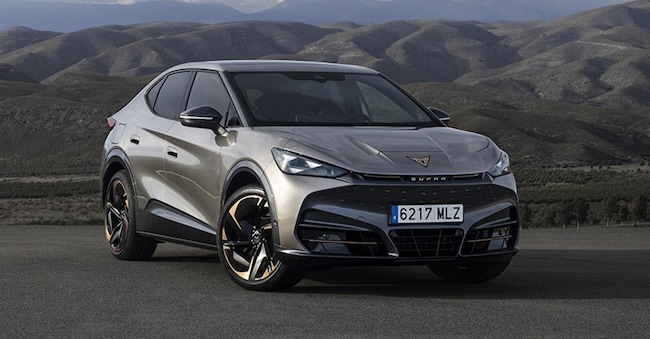
Cupra. La Tavascan elettrica costruita in Cina mantiene il Dna del brand spagnolo

5' min read

5' min read

The made in China you don't expect. Some people may, of course, wince at the idea that a British car like the Mini is built in China, but then, with a cool head, they may also realise that it is a German car (the masters are Bmw) being assembled where it is most convenient to produce. The iPhone is a super cool American phone? Good: it is made in China. The Samsung top of the range S24? Made in Vietnam. Nobody is shocked.

It's globalisation that doesn't come as much of a surprise when we talk about digital devices that are culturally and engineering-wise connected to Chinese manufacturing. But when it comes to cars, the territorial link is triggered, which alas no longer exists and perhaps makes no sense because if you buy an Audi made in Barcelona, an Alfa built in Poland or a Seat built in Bratislava, it is only a question of industrial logic and not of product quality and identity, we are not talking about handcrafted objects.

Loading...

European cars made in China, some examples

.

And what about Cupra, a Spanish brand born from a rib of Seat and thus of the German Vw group that builds the electric challenge model, the Tavascan, in China and brings it to Europe? Not to mention the Chinese Teslas Model 3 and Y invading the streets of the old continent because at the end of the day if you have to buy an electric car, the most logical choice remains to box in a Tesla, American but made in China. Globalisation has changed the geographical logic of belonging in the automotive industry and this has disconnected the link between brand and place of origin.

A Mini has, for years, been more German than English from an industrial point of view, but not so from a cultural one, even if it is now made in China on a platform developed with Great Wall, while a Chinese BYD is perhaps more German than one might expect: the cars of the Chinese manufacturer that has beaten Tesla on the volumes of so-called new energy cars are designed by an international team headed by Wolfgang Egger, the German designer-star, a pupil of Walter de Silva who created dream Alfa Romeos such as the 8C Competizione and, above all, Audis that made history and were, at the forefront of technology, or rather, as the Four Rings' slogan puts it, 'Vorsprung durch Technik'. And to give a few more examples, it should not be forgotten that the Molise DR, are 100% Chinese Chery modified in some way in Macchia di Isernia and that an English brand like MG is from the Chinese Saic. And the same goes for Polestar and some Volvos (Geely group) made in China and for the Smart made in China in the Jv between Daimler and Geely.

Auto cinesi, una invasione elettrica che cambia la geografia dell'automotive

In short, the cards are being shuffled in the global car industry, and not just today. In spite of this, and not considering the industrial logic and allocation of plants, one cannot help but be puzzled when Honda, proudly Japanese, perhaps more so than Toyota and Mazda because of the latter's link with Hiroshima and the Bomb, builds cars in China and, this is the point, imports them into Europe: they are not destined for the large and rich local market. And the entire range of new Big H models is imported.

Chinese cars and joint ventures

.

Relocation to China therefore plays a key role in the supply of cars, especially electric cars, and it is also for this reason that the top management of some manufacturers are against possible duties. All this, however, does not mean that we should give the Chinese and their industrial exuberance a free rein. Perhaps they should have been contained earlier, perhaps the Volkswagen group when it conquered (only to lose) the Chinese market with the VW Santana taxi should have looked ahead. And almost certainly the 51% manufacturing joint ventures with local partners that in recent years were obligatory to sell in China have been a terrible Trojan horse, and now the Chinese automotive system, on the strength of know-how absorbed by European groups and a hi-tech supply chain, is at the forefront in the technologies and frontiers of autonomous driving and software design vehicles.

The knot of duties in Europe: who wants them?

At this point it is obvious that this relocation to China is protected by the CEOs of European manufacturers who oppose duties from China.

However, duties on Chinese cars would be a good idea according to the European Union, a bad idea according to German car makers. No typo but a clear message from the leading Teutonic car makers, who are strongly opposed to the introduction of trade restrictions on cars produced in the nation led by Xi Jinping. Because if on the one hand the EU is close to introducing duties, on the other the CEOs of the various German premium brands have been clear on the matter: "We don't think our sector needs protectionism," quoting BMW CEO Oliver Zipse. The Munich-based group itself has strong interests in China. Because apart from building models like the iX3 or the new electric Mini there, China generates more than a third of its sales. 'There will not be a single car in the Union without components from China,' Zipse stressed, according to which 'there is no Green Deal in Europe without Chinese resources'.

Volkswagen's comments are also absolutely against the limits imposed by the EU: "With tariffs there is always the risk of some sort of retaliation", as emphasised by the brand's CEO, Thomas Schäfer. Identical concept by Mercedes-Benz CEO Ola Källenius in an interview with the Financial Times: "We must not increase tariffs. I am against tariffs and think we should do the opposite, i.e. reduce them. Chinese companies wishing to export to Europe are a natural development of competition and must be approached with better products and technologies and greater agility. This is the market economy. Let the competition express itself'.

"As companies, we do not ask for protection and I believe that the best Chinese companies do not ask for it. They want to compete in the world like everyone else. If we believe that protectionism is what guarantees our long-term success, I think history tells us that this is not the case'.

While waiting for the102.5% tariffs imposed by the US, from Italy comes a totally different thought to the German manufacturers.

"The more the US raises its barriers, as President Biden has suggested doing, the more products made by the big Chinese manufacturing machine, unable to enter the US market, enter the EU market at dumping prices. That is why I think that the investigation initiated by the European Commission into Chinese electric cars will be concluded by June with the introduction of import duties'. This was said by Adolfo Urso, Minister of Enterprise and Made in Italy, speaking recently at the Federalimentare assembly underway at Cibus in Parma.

Copyright reserved ©
Loading...

Brand connect

Loading...

Newsletter

Notizie e approfondimenti sugli avvenimenti politici, economici e finanziari.

Iscriviti