

Torn cruciate ligament: when can I start skiing again? Science explains how to get back on the slopes safely
A scientific review analysed 35 studies focusing on the recovery of competitive skiers following an anterior cruciate ligament injury,

Key points
The first snow has fallen, friends are organising their first ‘snow’ weekends, and the skis are sitting there waiting in the cellar. But for those who have suffered a torn anterior cruciate ligament, who decides when it’s time to get back on the slopes? Experts reassure us that it is possible to get back on skis, even after a serious injury. But ‘feeling recovered’ doesn’t mean you’re ready to tackle a slope.
This is highlighted in a scientific review recently published in Scandinavian Journal of Medicine & Science in Sports, which analysed 35 studies focusing on the recovery of competitive skiers following an injury to the anterior cruciate ligament, one of the knee’s main stabilisers. The study, coordinated by Jörg Spörri of the University of Zurich, challenges a still widely held belief: that it is sufficient to wait a certain number of months after surgery to be able to return safely to the slopes.
The knee doesn’t follow the calendar
In the study, the average time taken to return to competition following cruciate ligament reconstruction was around 12 months. This is already an established benchmark, but it does not represent an absolute guideline, least of all for amateur skiers. The research was, in fact, carried out on competitive skiers who underwent intensive rehabilitation and athletic training programmes.
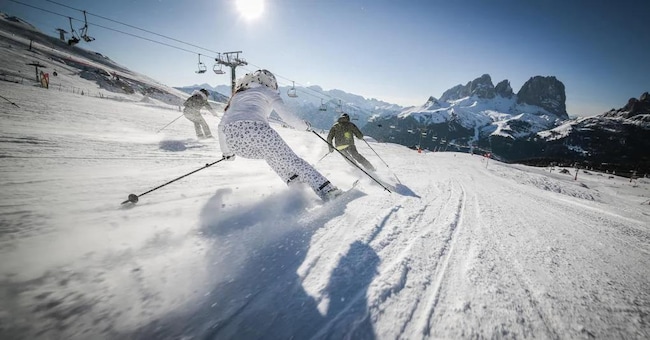
The message is quite different: you can only return to skiing once your knee has fully recovered. Skiing is, in fact, a particularly demanding sport for this joint. Turns, sudden changes of direction and jumps subject the knee to high forces. And as skis immobilise the foot, they can transmit twisting forces to the joint that are difficult to control.
And it’s not enough simply to be able to walk without pain again, or to climb stairs or run. Skiing is a different matter altogether: it requires strength, quick reflexes, coordination and the ability to stay in control.

