
DOP Tourism: Parmigiano Reggiano aims for 300,000 visitors by 2029

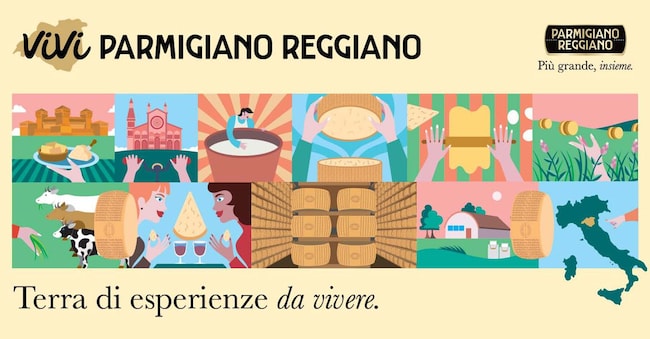
It’s not just about exports and maintaining a presence in international markets: the new frontier for Parmigiano Reggiano lies in experiential tourism. The PDO Consortium chose the Summer Fancy Food Show in New York as its platform – where it presented figures showing a 2.5 per cent increase in exports to the United States in the first five months of 2026 – to outline not only its commercial strategy for North America, but also to set out its new ambitions regarding hospitality and the development of food and wine tourism in the provinces where the PDO is produced. The real challenge therefore lies in the region of origin, which is preparing to become a well-established destination to be explored all year round. This has given rise to the “Vivi Parmigiano Reggiano” project, an initiative that moves beyond the notion of cheese as merely a food product to embrace the idea of a tourist and experiential destination. The Consortium’s vision is set out over a four-year period: the aim is to triple the number of visitors to the dairies, rising from the current 100,000 to 300,000 by 2029. The area covered is the PDO’s region of origin, which encompasses the provinces of Parma, Reggio Emilia, Modena and Mantua on the right bank of the River Po, and Bologna on the left bank of the River Reno, and already boasts a potential catchment area of around four million tourists a year.
The initiative responds to the new needs of contemporary travellers, who are increasingly seeking authenticity, unique experiences and direct contact with producers. This initiative will involve the establishment of strategic information points and branding at the region’s main transport hubs and access points – including railway stations, Bologna Airport and motorway service areas – to welcome tourists upon their arrival and guide them directly to the PDO destinations. Furthermore, to capitalise on these visitor flows, the project’s launch is accompanied by out-of-home and digital communication campaigns.
With this in mind, the Consortium continues to strongly support dairies seeking to make a qualitative leap forward, investing to make them increasingly capable of welcoming international tourists. This development is accompanied by a strategy for integrated territorial coverage: through a network of synergistic partnerships with local institutions and authorities, the aim is to make production sites immediately recognisable to travellers. The project involves coordinated action with hotels, transport providers and other regional attractions, as well as targeted promotion at key entry and transit points, from railway stations to Bologna Airport and motorway service areas. The farm visit – already available throughout the year – is thus incorporated into a structured itinerary, becoming the ideal gateway to explore, in full synergy, the excellence of the Food Valley, the Motor Valley districts and the local artistic heritage.
The Consortium’s initiative comes at a time when the macroeconomic climate is extremely favourable for tourism linked to Geographical Indications. According to data compiled by the Qualivita Foundation, as set out in the 2nd DOP Tourism Report, Emilia-Romagna remains firmly in third place in the national ranking of the most active regions, sitting at the top alongside Veneto and Tuscany. The analyses highlight a sector undergoing vigorous expansion across the country: the Report recorded, in fact, as many as 667 tourism activities nationwide in 2025 (+12% on the previous year) and 292 events (+26% on 2024). Against this backdrop, the regional systems of Emilia stand out for their agri-food sectors steeped in tradition, their inherent appeal to tourists, and their ability to establish consortia with mature and proactive governance.
A decisive regulatory impetus for this development came directly from Brussels. European Regulation 2024/1143 has, in fact, formalised an important step: it has explicitly recognised that PDO and PGI protection consortia play a pivotal role in the development of tourism services and in activities to promote the region. As a result, food and wine tourism is no longer considered a purely ancillary activity but has become a legitimate and statutory function of Geographical Indications.
“With ‘Vivi Parmigiano Reggiano’, we are opening a new chapter in the history of our designation,” said Nicola Bertinelli, president of the Consortium. “We want anyone who loves our cheese to be able to travel to its lands of origin, visit the dairies and discover that behind that perfect slice there are faces, stories and a wonderful landscape. It is a project that creates added value not only for the brand, but for the entire community, demonstrating that Parmigiano Reggiano is much more than a product: it is a cultural destination in its own right.”

