
Tourism: the market is booming, but the default rate amongst SMEs remains high
The increase in the risk profile of companies in the sector is falling slightly (to 4.5 per cent), but remains well above the national average (3.3 per cent)

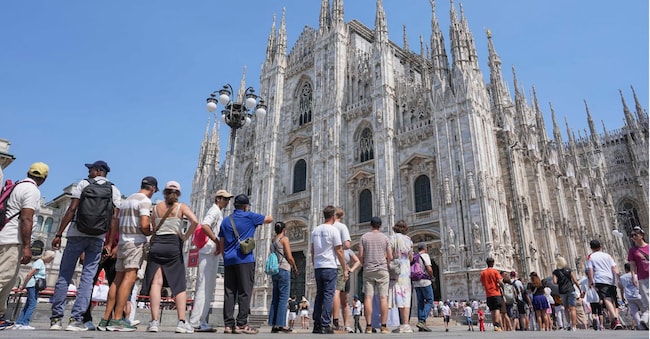
A sector which has been experiencing robust market growth for at least two years but which, despite this, continues to exhibit certain underlying vulnerabilities in terms of credit and commercial risk, which remain at stable levels but are significantly higher than the average for Italian businesses.
On the eve of the last weekend in August – with three days designated as ‘high-risk’ on the country’s roads, where, according to the ANAS Road Mobility Observatory, over 25 million vehicles will be on the move between today and Sunday – it is time for the Italian tourism industry to take stock. Figures from Demoskopika, cited by the Minister for Tourism, Gianmarco Mazzi, last Thursday, confirm the sector’s excellent performance in Italia: this summer, holidaymakers’ spending rose by 7.5 per cent, driven by 43.3 million arrivals and 188.8 million overnight stays. Furthermore, according to the data, in August Italian farm holiday establishments welcomed 1.85 million guests, totalling 6.5 million overnight stays, with an average stay of around 3.5 nights
A strong market, a fragile structure
Yet the world of tourism – or, to be more precise, ‘leisure’, according to the classification used by Crif in its Business Observatory – is characterised by this dual nature: a rapidly growing market and, at the same time, a structural fragility amongst businesses. This fragility was identified by Crif (a company specialising in credit information systems and business solutions) in a study focusing on firms in the sector, which comprises approximately 417,000 businesses spread across catering services (324,000 firms), accommodation services (around 76,000) and travel agencies (17,000). The vast majority are sole traders (44 per cent), followed by limited companies (33 per cent) and partnerships (22 per cent), with a clear concentration in the regions of Southern Italia and the Islands, which account for 35.9 per cent of businesses in this sector, although Lombardy is the region with the highest number (13 per cent of the national total).
“This is a very dynamic sector, which is seeing demand continue to grow and an increase in the volume of credit granted,” explains Luca D’Amico, CEO of Crif Ratings. “However, there are still signs of fragility that remain at levels above the national average, despite the favourable trend recorded in the first few months of 2026.”
Payments on the rise
Bank lending to limited companies actually rose by 6.9 per cent between April 2025 and March 2026 (compared with the previous period: April 2024 to March 2025), partly reflecting the positive performance of the sector and, consequently, companies’ need to refresh their product ranges, whilst broadly confirming the average figure for Italian limited companies as a whole. Crif analysts note that it is encouraging that, even at a time of great market difficulty, credit institutions have not reduced their financial support for Italian businesses.

