
Tourism: summer season on the rise in Emilia-Romagna, with the Riviera fully booked for Ferragosto
According to figures from the Regional Tourism Observatory, July saw an estimated year-on-year increase in visitor numbers of between 1 and 3 per cent, whilst August is set to end at 2025 levels. Coastal resorts stand out, as do those in the Apennines

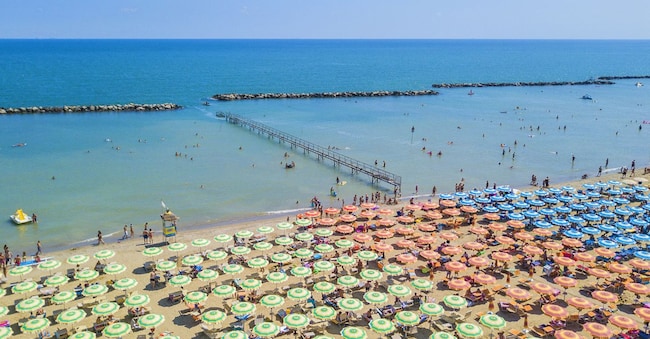
(Il Sole 24 Ore Radiocor) – A coastline almost fully booked and thousands of day-trippers in the Apennine resorts. This is the picture of Ferragosto in Emilia-Romagna painted by the initial data from the Regional Tourism Observatory. On the coast, specifically, room occupancy reached between 90 and 95 per cent, but the mountains also stand out: in Corno alle Scale (Bo), visitors have filled the accommodation facilities, whilst in the Cimone area (Mo), the chairlifts have carried 17,000 people to the summit since June. These are all signs of a summer season that continues to deliver excellent results. In fact, following a strong July – with an estimated increase of between 1% and 3% in visitor numbers compared with the same month in 2025 – August is set to close at levels broadly in line with those of last year, with a positive outlook for the second half of the month.
To give you an idea, bookings already made on the Riviera stand at around 70 per cent along the entire Emilia-Romagna coast, whilst estimates suggest a final occupancy rate for the month of over 80 per cent, thanks in part to the Rimini Meeting, which this year will also feature the historic visit of Pope Leo XIV. Among the most popular events will be those that the regional Sport Valley manages to bring to the area, which represent a major driver of tourism and a decisive factor in boosting the region’s appeal throughout the year. For example, in September, the ITF Beach Tennis Sand Series in Cesenatico (1–6 September), the Italian Bike Festival (4–6 September) and the San Marino and Rimini Riviera MotoGP Grand Prix (11–13 September), both scheduled to take place at the Misano World Circuit, ‘Dominate the Water’ in Cattolica (19–20 September) and the Ironman in Cervia (17–20 September, with the main event on Saturday 19).
A robust sector
“The Ferragosto holiday confirms the strength of Emilia-Romagna’s tourism offering, from the Riviera to the Apennines, and the positive performance of the summer season following a July that saw improved results compared with 2025,” emphasise the President of the Region, Michele de Pascale, and the Regional Councillor for Tourism, Sport and Trade, Roberta Frisoni - “We are particularly pleased with the strong performance of the Riviera, the very positive signs coming from the Apennines and the growth in international visitors, which is also supported by the expansion of air links and new flights to key European markets. Looking ahead, the development of the Ravenna Cruise Terminal will also significantly increase the level of internationalisation.”
“These results demonstrate the strength of a sector that is one of the drivers of development in Emilia-Romagna and highlight the value of the work carried out every day by businesses, tourism operators, local authorities and the entire regional system to make our region increasingly attractive – continue de Pascale and Frisoni – It is on this ability to work together as a system that the strategy we are pursuing is also based, aimed at making Emilia-Romagna an increasingly accessible, international and competitive destination throughout the year. ‘We have everything in place to consolidate these results in the coming weeks as well,’ continue the president and councillor. ‘The calendar of major events, from the Rimini Meeting to sporting events, will help maintain the coast’s appeal and extend the season. The aim remains to grow not only in terms of numbers, but also in the quality of what we offer and our ability to generate value for businesses, workers and local communities.”
A growing picture
The figures for previous months also paint a robust picture. Indeed, the first half of 2026 saw over 6.2 million arrivals (+1.4 per cent) and 17.5 million overnight stays (+3.05 per cent) across the region. Between May and June, over 3.2 million arrivals and more than 10 million visitor nights were recorded, with 7 million overnight stays in the Riviera alone and almost one in three tourists in the area coming from abroad. This positive trend continued into July, with bookings on the Romagna coast estimated to have risen by an average of around 2 per cent compared with 2025, whilst the average length of stay remained stable at around five days. This trend was supported not only by the calendar of major sporting events, international trade fairs and local festivals, but also by the Region’s integrated strategy, which combines investment in businesses, urban regeneration and international accessibility.


