
Tourism, with high beach prices in July -15% of presences
Lido and restaurant prices are weighing on the reduced availability of families. Widespread falls in Tuscany, Puglia, Emilia-Romagna. But holidays are also changing

4' min read
4' min read
"Don't tell us it is a price problem because it is not. If there have been any increases they have been around 3 or 4%, in line with inflation'. Antonio Capacchione, president of the Italian Bathers' Union, a member of Fipe Confcommercio, does not mince his words and tries to defend the category by denying many consumer associations. In reality, the expensive beach is being felt with prices now reaching 60 euro per day in Salento and other locations.
The conjunctural data for July on June 2025 tells of a price increase of 3.7 % but, according to Massimiliano Dona of Consumatori.it, 'what we are experiencing is still an optical effect of the surge of two summers ago that caused prices to rise by 16 %'.
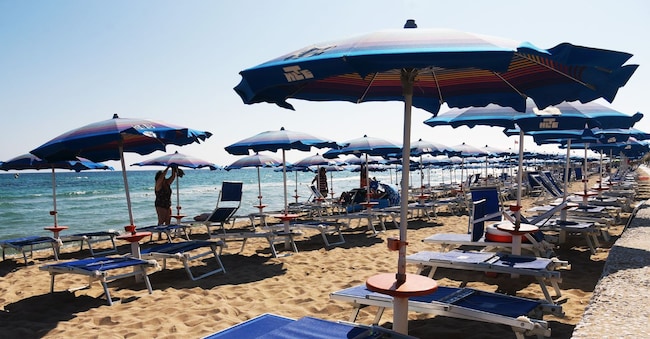
"In my bathing establishment in Margherita di Savoia (Barletta-Andria-Trani. ed.) - Capacchione, the president of the bathing attendants, goes on - a beach umbrella with two deckchairs and a chair for four people, with access to all services, including parking and the possibility of bringing food from home costs 25 euro a day. Yet during the week out of 12 rows I only occupied three. Of course, then at the weekend it is full". Apart from the high prices, the figures for the end of July are rather telling. According to the bathers, the drop in the number of visitors, from Tuscany to Apulia, was at least 15% after a June that was promising and a May whose rainy weather caused many difficulties.
Families have less money to spend
.The issue according to Capacchione is essentially one: 'families have less money to spend and therefore save on the first thing they can cut back on, holidays. Of course geopolitical issues and the expectation of a worsening economy due to tariffs do not help either. A situation we share with the Germans, who are also being penalised by this economic situation, all to the benefit of new middle classes who are increasing their spending power, such as those in Croatia, Poland and the Czech Republic'.
Then, concludes the president of the bathers, if we want to blame our category 'as a national sport, as is done with taxi drivers and hawkers, we can do so, but that is not the point'.

