EU Summit

European sources, Ets essential for reducing hydrocarbon dependency. Meloni and 9 EU leaders: 'Free quotas beyond 2034'

Minister for the Environment and Energy Security Gilberto Pichetto Fratin: Ets tax is unsustainably passed on to final prices. For Italian bills it is worth more than seven billion

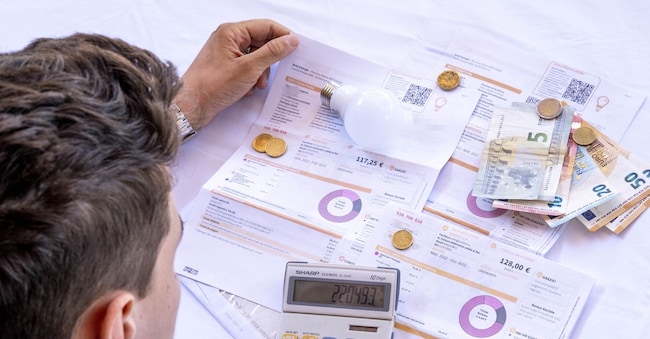
by Rome Editorial Staff

L’Italia lancia l’allarme sull’impatto sulle bollette del sistema europeo delle emissioni di CO2

4' min read

Translated by AI
Versione italiana

4' min read

Translated by AI
Versione italiana

The Etsystem "is essential for our energy and industrial transition" and is the best way "to reduce our dependence on fossil fuels". This was stated by a senior European diplomatic source on the eve of the EU summit.

"If we look at the crises we are experiencing, it is clear that we are still too dependent on hydrocarbons so the last thing we need to do now is to change our plan, delaying the implementation of Ets," he adds. However, it is possible that the Commission will suggest 'some targeted and temporary changes for certain member states'.

Loading...

Among the EU countries, other European diplomatic sources report, no consensus has emerged on the Italian proposal to suspend the Ets. Rather, the discussion will focus on corrective measures to the functioning of the system: from the revision of certain sectors - with possible temporary exclusions - to support measures for the most exposed sectors. The front in favour of maintaining the Ets is described by senior EU officials as broad.

Brussels is called upon to move on a line of mediation between those who defend the current system without changes and those who want robust changes. In the short and medium term, the instruments that Ursula von der Leyen will propose concern the use of the market stability reserve to lower prices, interventions on benchmarks, and a bridge fund for countries with lower GDP, to mitigate the impact of the system, towards the future Industrial Decarbonization Bank. The structural revision, on the other hand, will come in July and will require in-depth discussion with the Member States. Among the most sensitive knots is price dynamics, entrusted entirely to the market and without a guiding authority, as is the case for central banks.

Meloni and 9 EU leaders: 'Forward Ets review, free quotas beyond 2034'

Meanwhile, in a letter addressed to the EU leaders, the leaders of Italia, Austria, Croatia, Greece, Romania, Bulgaria, the Czech Republic, Hungary, Poland and Slovakia call for a "thorough review" of the Ets system that would include "an extension of the EU free quotas beyond 2034" as well as a "gradual approach to the elimination of free quotas starting in 2028". The heads of state and government of the ten countries, including Prime Minister Giorgia Meloni, also call for an acceleration of the review, which should be presented 'at the end of May at the latest', the text reads.

The Italia government is moving to build a backbone in view of the leaders' summit, scheduled for 19 and 20 March, involving Eastern European countries, Austria and Greece, but remains in the minority.

Non-papers promoted by Italia

Theconcern over the impact on European system bills of CO2 emissions "is widespread", is the thesis contained in a non-paper promoted by Italia together with eight other countries, which agree to develop "common initiatives" to reduce the impact of the mechanism on energy costs at home. While continuing to evoke a suspension on thermoelectric power, the Italian position has thus gradually faded: the tipping point, Minister Gilberto Pichetto noted in Brussels, can also be a 'different solution', provided it is sufficiently robust to cool prices.

The front defending the Ets plant

A line that clashes, however, with the front formed by the Nordic countries, Spain and Portugal, determined to preserve the ETS system and supported - in general terms - also by Berlin, which is oriented towards limiting interventions to 'minor adjustments', in particular to protect the most exposed sectors such as chemicals. "The majority of the leaders consider the Ets indispensable not only for the transition, but also for the investment strategies," reported a senior EU official, outlining the sides on one of the 'central chapters' of the confrontation.

The Italia Press

"The nature of the ETS is assimilable to a tax," Pichetto returned to denounce, however, recalling how for Italia the burden exceeds 7 billion and, due to the very architecture of the system, "is not reducible". In light of the rise in gas and oil prices, the request - shared with the counterparts from Visegrad, Vienna, Zagreb, Romania and Athens - remains that of an incisive 'correction'.

Hungarian proposal

Viktor Orban's government is already going into detail, proposing to exclude gas-fired power stations from the system, extend free quotas for energy-intensive industries beyond 2034, and postpone the introduction of Ets2 - destined from 2028 to be applied to transport and buildings - to 2030 in the name of 'protecting competitiveness'. And it is precisely the area of free quotas that looms as the point on which Italia could find the greatest convergence, by virtue of Friedrich Merz's support for the most strategic industries.

At the leaders' table, Ursula von der Leyen will move the first pawns by outlining the future revision of the market stability reserve, new benchmarks for a decarbonisation defined as 'more realistic', and a financial bridge towards the Industrial Decarbonisation Bank, in the most urgent attempt to contain price volatility without affecting the architecture of the system. But, with the exception of the greater flexibility on state aid already in place, no EU interventions on electricity market design are planned in the short term. And even the overall reform of the Ets will only come in July. "The only way out of the current situation is greater energy independence," reiterated EU Climate Commissioner Wopke Hoekstra, confirming a well-established course: more investment in grids, more renewables, more nuclear, more storage capacity. An approach accompanied by the call to 'ensure predictability': investments, is the message, must be protected by avoiding shocks to the Ets.

Copyright reserved ©
Loading...

Brand connect

Loading...

Newsletter

Notizie e approfondimenti sugli avvenimenti politici, economici e finanziari.

Iscriviti