
Commerce, businesses and associations defend shops open on Sundays
The Coop summit's proposal on holiday closures does not meet with broad approval. Buttarelli: 'We would risk negative repercussions'. Ibba: 'Plans on a local basis'
by Enrico Netti
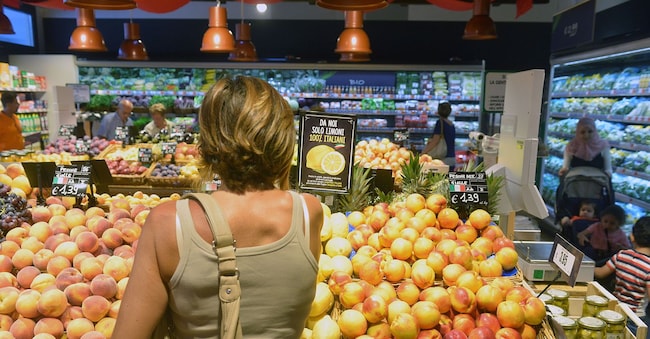
The world of large-scale organised distribution rejects the proposal to close supermarkets on Sundays launched yesterday by Ernesto Dalle Rive, president of Ancc-Coop, the National Association of Consumer Cooperatives (see yesterday's 'Il Sole 24 Ore').
'I was surprised by the proposal, in some of its points I consider it anti-historical, against companies and customers'. This is the response of Carlo Alberto Buttarelli, president of Federdistribuzione, which represents modern food and non-food trade companies with an aggregate turnover of 86 billion realised in more than 18,600 direct and affiliated sales outlets employing around 225,000 people, 84% of whom have permanent contracts. Members include supermarket chains such as Bennet, A&O, Crai, Despar, Esselunga, Selex, In's, Végé, Pam Panorama, Sidis and Master Coop Alleanza 3.0. Brands that over the years have increased their commitment to providing more and more services and invest hundreds of millions a year to renovate their shops and develop their business
"In a situation such as the current one characterised by a fragile consumption trend, an initiative such as the one hypothesised would produce further slowdowns and damage to the entire economic system,' Buttarelli emphasises. 'Moreover, to simplify everything by claiming that closing physical supermarkets on Sundays would allow for cost savings without considering the economic impact of the drop in consumption, as, for example, for shopping centres, is truly short-sighted and not credible.
From the point of view of takings, Sunday, together with Saturday, are key days. For some product categories it is the best day of the week, for others the second. "For supermarkets, paradoxically, Sunday is an important day because more and more people are unable to do their weekly shopping on the other days, and so Sunday is the only day left," adds Buttarelli.
There is also a key aspect: competition from online platforms open seven days a week, 24 hours a day. "If you want to leave space to the big players of the online multinationals, it would be a surrender of arms,' Buttarelli points out. Sunday opening is not an obligation but an option. If someone decides to close, let them do so, without claiming to condition the distribution system. It is a debate that we hoped would be overcome and we must continue to work on liberalisation'. On the point of the possible reduction of costs Buttarelli reiterates that 'they are reduced through efficiency and not through cuts'.

