

Trafficking network operating between Spain and Algeria dismantled: migrants on the outward journey, weapons and drugs on the return
A Europol task force, working alongside the French, Spanish, Portuguese and Polish police, carried out 78 arrests. The dismantled organisation used ‘ghost’ speedboats and also provided services to third-party criminal groups. The price charged for smuggling each illegal immigrant was up to 12,000 euros.

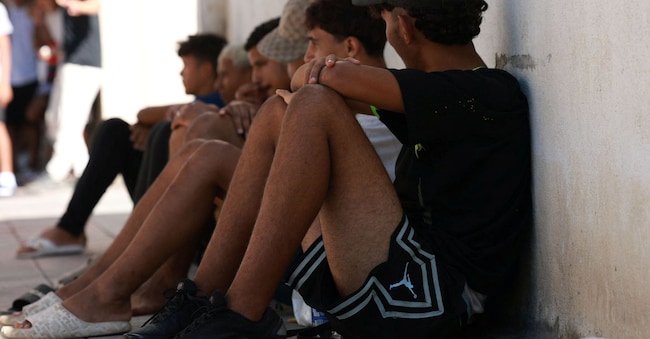
This is the other side of the Mediterranean: the world of illicit trafficking and smuggling. Such activities invariably come under the scrutiny of law enforcement agencies and, as happened a few days ago, are often dismantled. The latest operation was carried out as part of a new Europol task force within the European Centre against Migrant Smuggling, involving officers from the French National Police, the Spanish National Police and the Guardia Civil, as well as the Portuguese Judicial Police and the Polish Border Guard. At the heart of the operation was a network which, according to a statement from Europol, was allegedly involved in migrant smuggling and other illegal activities relating to the trafficking of drugs and weapons. According to Europol’s account, the dismantled organisation ‘controlled an entire fleet of vessels, including so-called “ghost speedboats”, which are banned in Spain due to their length and engine power’.
The operation, which came at the end of a lengthy investigation, led to the arrest of 78 suspects in Spain and Algeria and the seizure of high-speed boats, drugs and cash.
“The criminal organisation relied on a fleet of high-powered motorboats to carry out rapid maritime operations. These included ‘ghost’ speedboats – vessels designed to avoid registration and detection,” Europol emphasises. “The group used these boats to organise transfers in international waters near the Spanish coast. Once the cargo or migrants had been handed over at sea, other members of the network organised their transport by land.” According to the investigation, the network – which assigned different roles to its members much like a logistics company – is believed to have operated along a ‘two-way’ route. ‘On routes out of Spain and Portugal to Algeria, the smuggling is believed to have focused on synthetic drugs (such as MDMA), firearms and explosives,’ the investigators point out, “Along the return routes from Algeria to Spain, the group is said to have smuggled migrants, charging up to 12,000 euros per person”. In a single journey, more than 50 migrants may have been transported. Investigators estimate that profits from migrant smuggling alone amounted to more than 24 million euros. Furthermore, the dismantled network is also believed to have provided services to other ‘criminal groups, facilitating the movement of illicit goods and people across the western Mediterranean’. Investigators believe the network coordinated multiple trafficking routes. ‘Synthetic drugs, and sometimes people, were transported from France and Spain to Algeria,’ the statement continues, ‘whilst cannabis resin, weapons and migrants were transported from Algeria to Spain.’

