
Train strike on Thursday 11 June: 3,000 railway workers risk their jobs
The trade unions are calling the Ministry of Transport into question over the tender for the management of Intercity trains, which it chose to divide into three lots, instead of one, in the absence of social clauses. There are also fears over the entry of the French Sncf into the high-speed sector: 'without the reference contract there is a risk of dumping'

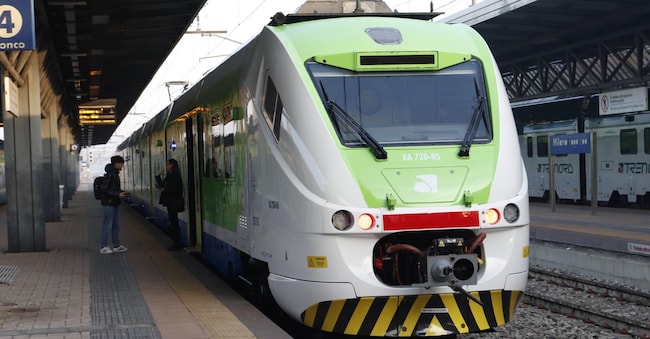
Key points
Trains at risk on Thursday 11 June due to an eight-hour national strike (from 9.01 a.m. to 5 p.m.) of railway company staff and railway contractors called by Filt-Cgil, Fit-Cisl, Uiltrasporti, Ugl Ferrovieri, Fast Confsal and Orsa Trasporti.
The trade unions are calling the government into question, which 'chose to ignore our demands on the risks of future intercity rail tenders where the Ministry of Infrastructure and Transport's desire to divide the future intercity rail tenders into three non-equivalent lots, rather than one lot, has emerged'.
Intercity service tender: 3 thousand railwaymen at risk
At the root of the protest, therefore, is the imminent publication of the tender for the Intercity service - involving some 3,000 railwaymen - which the Ministry of Transport intends to divide into three lots. Not only that. The trade unions are also complaining about the absence of 'binding social clauses' in the tenders to ensure the continuity of employment for the approximately 3,000 workers currently employed by Trenitalia (Italian FS Group) in the service.
For the general secretary of the Filt CGIL Stefano Malorgio the idea that "the fragmentation into lots of the intercity service, by increasing the number of operators, helps the mobility of people is illusory. Such an approach will only lead to the impoverishment of the FS group and put the workers at risk due to the absence of social clauses to safeguard jobs',


