
Summer exodus: transport chaos on trains, planes and roads
Summer brings with it the dreaded chaos in public and private transport. Trains, planes and roads are preparing for a period of inconvenience and delays, putting travellers to the test. Minister Salvini convenes an urgent summit on air transport at the Mit. Meanwhile Anas suspends 70% of construction sites along its network

3' min read
3' min read
Trains, planes, roads and motorways: the transport chaos is looming over the summer exodus. The Minister of Transport, Matteo Salvini, who has been the target of numerous criticisms from the opposition, is taking corrective action and convening a summit at the Porta Pia ministry with all those involved in air traffic, from the airlines to the management companies, to take stock of the situation and provide travellers with maximum guarantees. Without losing sight of the progress of the railway works, which is causing serious disruption to train circulation in numerous junctions of the national network. The round table at the Mit took place late on the morning of Friday 2 August, on the eve of the great summer exodus.
Trains in chaos
.After Trenitalia's announcement (31 July) of changes to the circulation of long-distance trains, especially high-speed trains, due to the opening of a flurry of construction sites along the network (works financed in large part with NRP funds), panic broke out. Trenitalia has warned passengers that they will face numerous inconveniences: delays of up to two hours, cancellation of trains, and transfer onto replacement buses. July was already a black month for Italian high-speed trains, with delays and chain interruptions that paralysed the main stations (Florence Santa Maria Novella and Rome Termini were the worst hit). Now for the month of August, coinciding with the big holiday departures, the worst is feared.
Disruption at the airport
.It is no better at airports, already ravaged by the global computer crash on 19 July, which suddenly and for a few days set procedures back by years, with filling out boarding documents by hand.
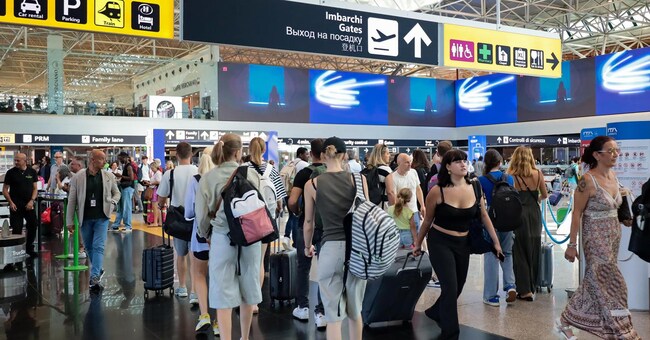
In fact, the aviation sector has been suffering for some time: after Covid, which had almost wiped out demand for air transport, the market has rebounded vertiginously, but many companies, which had in the meantime laid off a large part of their staff when planes were grounded and flights cancelled worldwide, are now struggling to reorganise their networks. And so inconvenience upon inconvenience also adds up at airports, with passengers learning directly from the board about the sudden cancellation of their flight.
Space for some data. According to Eurocontrol, between 15 and 21 July, the punctuality of flights departing from European airports fell to 49.7%, a good 18.5% less than in 2019, reaching an average of 258 thousand minutes of delays per day. Looking at Flightaware's data shows that the problem in the skies is generalised. For example, on Sunday 28 July there were more than 33,500 delayed flights worldwide, with more than 650 cancellations.


