

Treatment, hospital admissions, waiting lists: the Policlinico di Milano’s record figures – and with the new facilities, it will “grow even further”
Over 81 per cent of services are provided within the specified timeframes, and with the Sforza Wing, the hospital will increase the number of patients treated each day by 35–40 per cent. Director-General Stocco said: “The extra opening hours have helped us to reduce waiting times.”

Key points
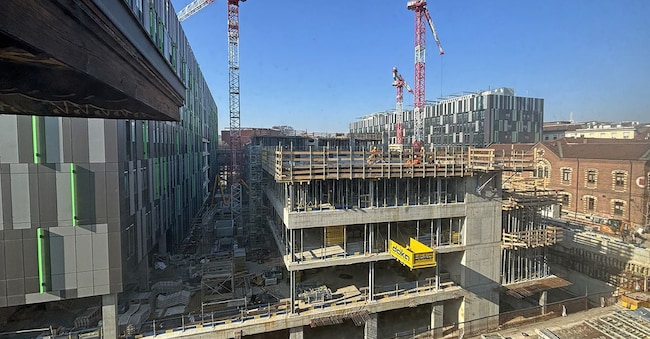
For the Policlinico di Milano – already Italia’s largest public IRCCS – the countdown has begun to its expansion, which will see it become even larger by autumn thanks to the official opening of the new Sforza Pavilion. Already boasting record-breaking figures and performance, the opening of these new, spacious treatment facilities in the heart of the city – over 800 beds, 400 of which have already been commissioned, complete with state-of-the-art wards and technology – will mark another significant step towards ensuring even more services, more admissions and a reduction in waiting times.
Today, the Policlinico records an average of 4,500 visits per day, including outpatient consultations, hospital admissions, A&E admissions and other services, but with the major refurbishment “we aim to increase the number of patients we can treat each day by 35–40 per cent, which will have a positive impact on the entire Regional Health System”, explains General Manager Matteo Stocco to *Il Sole 24 Ore*. He emphasises that with more diagnostic tools and operating theatres, “we will be able to utilise hospital beds even more efficiently. This innovation will enable us to plan our operations more effectively and further increase our capacity to respond”.
Figures on performance, hospital admissions and waiting lists
The figures for the last three years speak for themselves: an 18 per cent increase in outpatient activity, whilst hospital admissions rose by 7.4 per cent, from 43,377 in 2024 to 45,883 in 2026. Indicators relating to waiting lists are also improving. For outpatient services, taking all priority categories into account, the proportion of appointments carried out within the timeframes set by the Ministry rose from 69.65 per cent in 2024 to 81.22 per cent in 2026. This improvement also extends to hospital admissions: in the field of oncology, the percentage of admissions carried out within the stipulated timeframes rose from 81.4 per cent to 92 per cent, whilst for non-oncological admissions it increased from 84.5 per cent to 87.9 per cent. These figures illustrate the growth in the hospital’s activity and the simultaneous improvement in its ability to meet citizens’ healthcare needs. “The experience currently unfolding at the Policlinico is truly unique,” he emphasises. A hospital with over 500 years of history, situated in the city centre, which in a few weeks’ time will have a magnificent brand-new premises, built largely thanks to internal funding made possible by the bequests of thousands of Milanese and Lombards over the centuries. Underpinning these results is a reorganisation of processes that has involved the entire organisation in recent years. We have introduced an operational management model, involving management engineers, which allows us to plan activities based on demand and waiting lists, and we allocate resources and space according to actual needs.”
The extra openings and the new ‘single block’ philosophy
“Operational management enables us to plan operating theatre bookings and outpatient services in advance, based on clinical priorities,” adds Director-General Stocco. “When a patient is placed on the list, we can organise the various stages, from pre-admission to discharge, creating a more streamlined pathway and making the best use of the hospital’s capacity. Added to this is the extension of our opening hours: the Policlinico is open from 8 am to 8 pm, Monday to Saturday, and also opens on Sundays where necessary to catch up on services and reduce waiting times.” The new Sforza Wing will now enable us to take a further step forward. And this growth in care capacity will be accompanied by a new organisational model. The transition from a pavilion-based structure to a single block dedicated to acute patients will allow for the concentration of similar activities, fostering a multidisciplinary approach and collaboration between professionals, particularly in major surgery and the field of transplants. Certain internal processes will also change: the centralised pharmacy will enable personalised, ‘just-in-time’ distribution of medicines and medical devices, whilst the increased use of robotic technology in operating theatres will help reduce hospital stays and optimise the use of space.
“The new hospital is not just a building, but an organisational model based on the integration of processes,” Stocco emphasises. “Bringing together services for acute patients under one roof means facilitating collaboration between specialists, reducing the need for patients to move between departments, and enabling spaces and resources to be adapted more quickly to care needs.”


