
Doctor, is it true that

Are tropical nights bad for your health? Here are the risks and how to deal with them

The team of doctors and fact-checking experts from the National Medical Association addresses the main health concerns

4' min read

Translated by AI
Versione italiana

4' min read

Translated by AI
Versione italiana

The summer of 2026 began with a new heat record. In a post on X, the Director-General of the World Health Organisation, Tedros Adhanom Ghebreyesus, wrote that “Europe is the fastest-warming continent on Earth, with temperatures twice the global average”. He also reported that over 1,300 excess deaths can be linked to this phenomenon. Of particular concern is the increase in ‘tropical nights’ – nights when the temperature does not fall below 20 degrees Celsius. World Weather Attribution, a broad academic collaboration studying the impact of climate change on extreme weather events, has analysed night-time temperature data across Europe and issued a warning aimed primarily at the elderly and those living with chronic illnesses. Residents living in homes without adequate cooling systems and in cities with numerous ‘heat islands’ – that is, areas with a warmer microclimate due to urbanisation and a reduction in public green spaces – are also vulnerable. The likelihood of very hot nights has increased more than tenfold in just over twenty years across much of Europe.

We therefore need structural public health solutions and clear guidance on how to protect ourselves.

Loading...

What exactly is a tropical night?

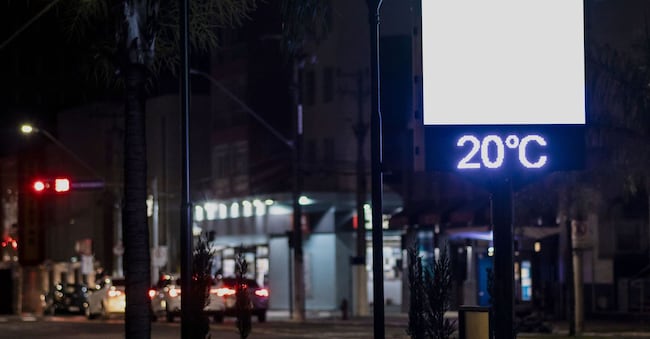
To recognise a tropical night, it is not enough simply to spend one of those nights when it is difficult to sleep without breaking a sweat or to wake up feeling refreshed. Nor is it necessary to change your latitude. The term ‘tropical night’ refers to a specific phenomenon that occurs when, after sunset, the minimum temperature does not fall below 20 °C. And it is becoming increasingly common in Europe too.

For some years now, summer weather reports have also included the TR Index (standing for ‘Tropical Night’) to indicate the number of hot nights during the season. According to the Higher Institute for Environmental Protection and Research (ISPRA), in 2024 Italia recorded an increase of 25.2 tropical nights compared with the average for the 1991–2020 thirty-year period, the highest figure ever recorded. This data is not just about the climate: a study conducted across eleven cities in southern Europe, including Rome, found a link between the duration of hot nights and an increase in mortality. One hypothesis put forward by the authors is that the body is unable to recover adequately from the heat stress accumulated during the day.

What is meant by thermal stress?

Also known as heat stress, this is a condition in which the body is unable to regulate its temperature due to excessive heat. A similar phenomenon, though involving different mechanisms, can also occur in the presence of intense cold (we discussed this in the fact sheet ‘Are some people more sensitive to the cold than others?’). In hot weather, however, it is important to be wary of heatstroke, which prevents the body from regulating its temperature – that is, from dissipating the heat it has accumulated.

On tropical nights, however, even indoors in the dark, regulating body temperature can be very difficult. In practice, the body is unable to recover physiologically, and various symptoms may arise.

Weakness, general malaise, a slow heart rate (bradycardia), low blood pressure, and sometimes confusion may indicate heat stress. Body temperature rises and you sweat more than usual.

If heatwave periods are long and uninterrupted, exposure builds up and the health risks increase.

Who is most at risk of heat stress?

The mainstream press is using terms such as ‘deadly nights’ rather lightly. Whilst there is a risk of very serious adverse events, this should not be a cause for concern for everyone. The impact of night-time heat and thermoregulation that does not function as it should mainly affects the elderly and those living with chronic illnesses.

A recent study suggests that night-time heatwaves are associated with an increase in cardiovascular mortality. The risk of ischaemic strokes also rises. One mechanism proposed by the authors involves night-time dehydration, which increases blood viscosity and may promote clot formation.

Loading...

To cool itself down, the body has to work harder, which puts strain on the heart and kidneys. The health of people with respiratory conditions or diabetes is also at greater risk. Furthermore, pregnant women – a condition which can increase intolerance to extreme temperatures – and newborns, whose thermoregulation is not yet fully developed, must take particular care.

Night-time heat also affects the quality of sleep: WHO guidance indicates that this can be linked to anxiety and sleep disorders and, in younger people, to increased stress and difficulty concentrating whilst studying. At work, too, excessive heat can reduce cognitive function and productivity.

Are tropical nights caused by climate change?

Of all the health impacts of the climate crisis, heat is considered the main risk. One of the leading reports on the subject states that climate change is more than doubling the number of deaths caused by extreme heat events. And that this is evident “from a myriad of studies”. Tropical nights can be classified as extreme weather events. And, like other equally impactful phenomena (from floods to droughts), they are becoming more intense and more frequent.

How can we cope with the night-time heat without putting our health at risk?

Heatwave-related illnesses and deaths are not inevitable: they can be prevented. However, public health policies need to be put in place, particularly in large cities and in the face of an ageing population. Not all homes are able to cool down after sunset or are fitted with thermal insulation.

However, we should try to air the rooms in the middle of the night or early in the morning, and keep the sun out during the day. Take care to use air-conditioners and fans correctly; we discussed this in the article “Does air conditioning make us ill?”.

To help the body regulate its temperature, it is recommended that you wear breathable clothing; follow a light diet consisting of fresh foods; and drink plenty of water. Older people, those with chronic illnesses and those taking daily medication should consult their GP to report any heat-related discomfort or problems caused by sleepless nights.

Read the full article on the dottoremaeveroche website run by Fnomceo

Copyright reserved ©
Loading...

Brand connect

Loading...

Newsletter

Notizie e approfondimenti sugli avvenimenti politici, economici e finanziari.

Iscriviti