
Reactions

Trump against paracetamol, scientific community revolts

Fda announces revision of Tylenol's warning label, but Ema, Aifa and WHO deny: 'No evidence of links to autism'. Kenvue collapses and then rebounds on the stock market
by Francesca Cerati

2' min read

2' min read

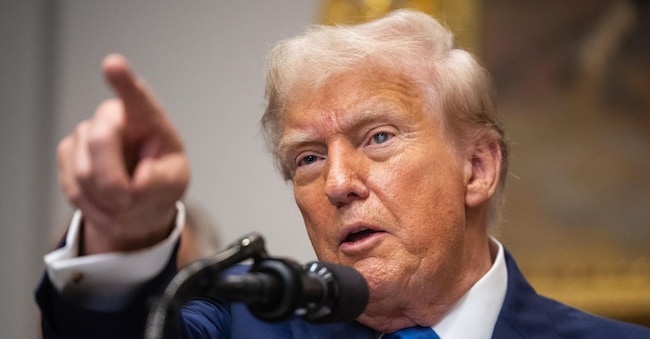
US President Donald Trump's announcement on the alleged link between taking paracetamol during pregnancy and autism has triggered chain reactions in the scientific and institutional world. During a press conference at the White House, Trump repeatedly told pregnant women not to 'take Tylenol', going so far as to suggest that mothers not even give it to their children.

The Fda's move

.

In a close call, the Food and drug administration (Fda) announced the start of procedures to amend the package insert for paracetamol. The update will state that use of the drug during pregnancy 'may be associated with an increased risk of neurological conditions such as autism and Adhd in children'. The agency, however, made it clear that this is not a ban: 'A causal relationship has not been established and there are studies to the contrary,' Commissioner Marty Makary clarified, pointing out that paracetamol remains the only over-the-counter antipyretic considered safe in pregnancy.

Loading...

The voice of international institutions

.

Trump's statements were strongly denied by international regulatory bodies.

The World Health Organisation called the evidence 'inconsistent'. "We know that vaccines do not cause autism, they save countless lives, and this should not be questioned," said spokesman Tarik Jašarević.

The Ema reiterated that 'there is no relationship between the use of paracetamol in pregnancy and autism'. "The drug remains an important option for fever and pain," added medical director Steffen Thirstrup, confirming that the recommendations in Europe are not changing.

Aifa also ruled out new evidence justifying changes: 'Paracetamol may be used during pregnancy, if clinically necessary, at the lowest dose and for the shortest possible time'.

Scientific Societies

.

Very harsh reactions from experts. The Autism Science Foundation spoke of 'dangerous' statements that 'downplay the complexity of autism'. President Alison Singer added: 'There are no new data, no studies, and no scientific conferences to justify such an announcement. It is misleading for families'.

The Coalition of Autism Scientists emphasised that the cited data 'do not support the claim that Tylenol causes autism and that leucovorin is a cure', accusing the administration of fuelling 'fear and false hopes'.

Italy's Sinpia (Italian Society of Neuropsychiatry of Childhood and Adolescence) has also expressed 'deep concern' over words it describes as 'lacking any real scientific basis'. President Elisa Fazzi recalled that 'autism is a complex and multifactorial disorder, without a single certain causal factor'.

Market reactions

.

On the economic front, the storm was not long in coming. The shares of Kenvue, the company that produces Tylenol, plummeted 7.5% immediately after the press conference. The following day, however, they recovered their losses almost entirely, closing up 5% in pre-market trading.

In a note, the company reiterated its position: 'We believe that independent and sound science clearly demonstrates that taking paracetamol does not cause autism. We strongly disagree with any hypothesis to the contrary and are concerned about the health risk this poses to expectant mothers and parents'.

Copyright reserved ©
Loading...

Brand connect

Loading...

Newsletter

Notizie e approfondimenti sugli avvenimenti politici, economici e finanziari.

Iscriviti