
Trump-Milei agreement: Grana, Asiago and Gorgonzola made in the USA become protected
Coldiretti's complaint: agreement in conflict with the protections of the EU-Mercosur agreement. Assolatte: speed up implementation of rules

Key points
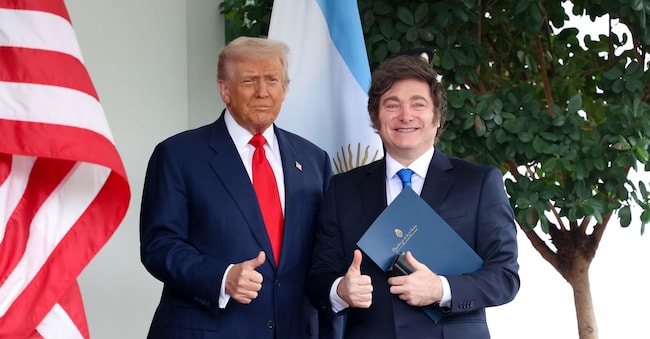
President Trump's right-wing overtake of Italian food products. Just a few days after the signing of the EU-Mercosur trade agreement (which can enter into force immediately pending the judgement of the EU Court of Justice requested by the European Parliament and which provides enhanced protection for 347 European PDOs and PGIs, 58 of which are Italian), President Trump has signed a trade agreement with Argentine President Javier Milei that provides protection for certain American food products that fully replicate the names of some Italian and European denominations of origin.
What the US-Argentine Understanding envisages
Under the US-Argentina agreement, Asiago, Fontina, Gorgonzola, Grana, Parmesan, Pecorino and Provolone made in the USA will be protected. Just as Camembert, Edam, Feta, Emmental and Gouda made in the USA will be protected. But that is not all. Generic product names such as burrata, mascarpone (which is growing rapidly on international markets driven by the success of tiramisu) produced in North America will also be protected. All this is in open contrast to the EU-Mercosur agreement, which instead aims to protect the same protected names of products made in Europe and Italia.
In the short circuit even cold cuts
A real short-circuit that will also involve cured meats, since the Trump-Milei agreement also aims to protect the self-styled Bologna, Capicola/Capicollo, Chorizo, Mortadella, Pancetta, Prosciutto and Salami made in the USA, to the detriment of those produced in Italia.
Coldiretti: EU-Mercosur protections at risk
The complaint was raised by Coldiretti according to which "the US-Argentina agreement risks cancelling the protection granted by the Ue-Mercosur agreement to Italian and European excellence. How can we reconcile - Coldiretti asks again - the protection to Italian designations if one of the main signatories of the agreement (Argentina is one of the four countries of the Mercosur together with Brazil, Uruguay and Paraguay) opens up to a complete liberalisation of their imitations?".
All of this in favour of a country like the United States 'which,' Coldiretti continues, 'leads the ranking of the biggest counterfeiters, i.e. producers of fake Italian products to a value in excess of 40 billion'.


