

Trump cuts drug prices in the US: will Big Pharma make Europeans pay more?
The launch concerns drugs produced by the first five companies with which the White House has already reached price agreements with discounts of up to 90% calculated on the basis of the lowest prices in other countries

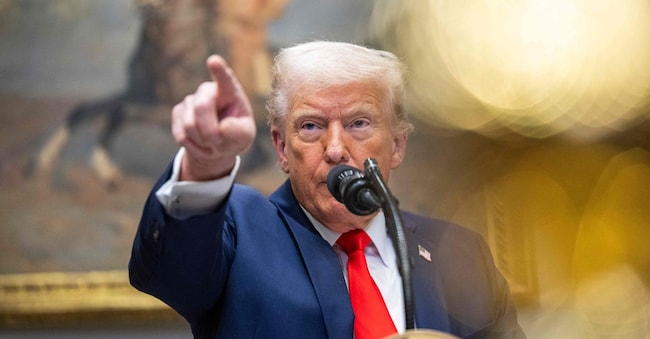
The launch of the TrumpRx web platform - announced by US President Donald Trump in the wake of the Most Favoured Nation principle with the aim of giving American patients access to discounts on many popular drugs - is shaking up the pharmaceutical sector internationally, especially since the first Big pharma companies have already signed up. The launch concerns drugs produced by the first five companies with which the Trump administration has already reached price agreements with discounts of up to 90% calculated on the basis of the lowest prices in other (often European) countries: AstraZeneca, Eli Lilly, Emd Serono, Novo Nordisk and Pfizer. The question being asked by insiders, analysts and institutions on the other side of the ocean is whether there will be repercussions in Europe. So what risks could the Old Continent and Italia run? Will Big Pharma pass on the cuts in the USA to drug prices in Europe?
What Big Pharma managers say
One scenario that could happen was spelled out in a recent Wall Street Journal editorial explaining that if US prices were tied to those in the UK or Switzerland, pharmaceutical companies would have to raise prices abroad and lower them in the US to balance things out. In the editorial it is stated that the reality is more complex than that, but at the same time some significant statements of pharmaceutical companies are reported: 'I think it is important that people understand that countries have to pay and invest their fair share for innovation that helps their citizens,' said for example Teresa Graham (Roche) in an interview. In the same vein Aradhana Sarin (AstraZeneca): 'We have been advocating that richer nations in Europe and around the world should pay their fair share for innovation, which they have not done. In essence, prices in the US will go down and prices outside the US will have to go up'. "I don't want to give the impression that there is no impact, because there is," Paul Hudson, Ceo of Sanofi, also admitted on the sidelines of an event weeks ago, as reported by Cnbc. And Pfizer CEO Albert Bourla, with a hypothetical example, was even clearer on the possible repercussions: 'Do you reduce prices' in the US 'to the level of France or do you stop supplying France? You stop supplying France', 'the system will force us to not be able to accept the lower prices', he said on 12 January, again according to Cnbc reports, clarifying that the agreements will help companies pressure European countries to raise drug prices, not excluding the possibility of discontinuing supplies.
What the Experts Say
But in short, is the worst to come in Europe in terms of supply and price revision of medicines? Many experts are sceptical about pessimistic scenarios also because the European (and therefore also the Italia) market is too big and important for Big pharma. "In the end, rationality counts in economics. American prices are higher, but it is also true that this has its own reason - explains Federico Spandonaro, professor at the University of Rome Tor Vergata, founder and president of the Scientific Committee of Crea Sanità (Centre for Applied Economic Research in Health) - Pharmaceutical companies are international, but most of the research is American and the money goes back to where the process began. The idea that Americans paid for drugs for Europeans is a naive reading. The US system is not universalistic, European systems provide more coverage and that means higher volumes of sales. An example: a box of fruit does not cost less than 1 g of fruit. Obviously,' reasons the expert, 'there is a remote risk that in a kind of collective schizophrenia we will start to say that 'if you lower prices in America we will lose profits and therefore we must force Europeans to pay more'. But EU countries are not sailing in gold, and not only Italia, where spending on drugs is increasing by 4% a year against 2% of the health fund. If the drug eats everything we put into the system, we cannot do other things. I believe that pharmaceutical companies cannot give up the EU market, it would seem suicidal to think of raising prices. There could be a boomerang if political logic prevailed, but in economics - as I said - rationality counts'.
Political concerns and the British case
There are those in the Italia Parliament who are beginning to be concerned about the future. Mariolina Castellone, group leader of the 5 Star Movement in the Tenth Commission and vice-president of the Senate, pointed out in a note that 'the launch of TrumpRx risks producing very heavy side effects for Europe and for Italy's National Health Service, because the mechanism is based on the prices charged in countries such as Italia, and it opens up the real risk that the drug multinationals, in order to compensate for lower profits in the US, will try to raise prices in Europe or, worse, delay or block the introduction of the most innovative drugs in markets where prices are regulated by public protection tools such as AIFA negotiation and payback. A scenario,' Castellone pointed out, 'already foreshadowed by the agreement between the United States and the United Kingdom, which led to a 25% increase in prices charged to the British health service in exchange for priority access to new therapies'. 'Innovation in medicine and pharmaceuticals has brought so much health gain,' Spandonaro continues, 'if I think about how we were 20 years ago. There is no questioning the value of research and development by pharmaceutical companies, but the model built on 'value-based practice' could work in a context where GDP was growing and this produced more wealth and the ability to pay for treatment. The 'the better you are, the more you pay me' fencing cannot be reproduced indefinitely. Today we send a lot more than before for health and if the economy does not grow in the EU, if GDP does not grow, salaries do not grow, the difficulties in paying for medicine also increase. The states, if they want to continue to have decent welfare, have to negotiate on prices because I don't think they are able to pay more today. The problem is that there is a certain short-sightedness towards the sector: if there is a business that grows it is the health business, while too many consider it only an expense'.


