Big Tech

Trump abandons Taiwan? The future of Western semiconductors hangs in the balance

Donald Trump's recent statements on Taiwan are putting the semiconductor market in crisis. If Taiwanese chip manufacturer TSMC comes under pressure from China, the global technology sector, including giants such as Nvidia, Apple and AMD, could face serious consequences. New US trade restrictions aggravate the situation, while Intel prepares for a more autonomous future with new Western foundries. Find out how geopolitical tensions are redefining the semiconductor landscape

by Biagio Simonetta

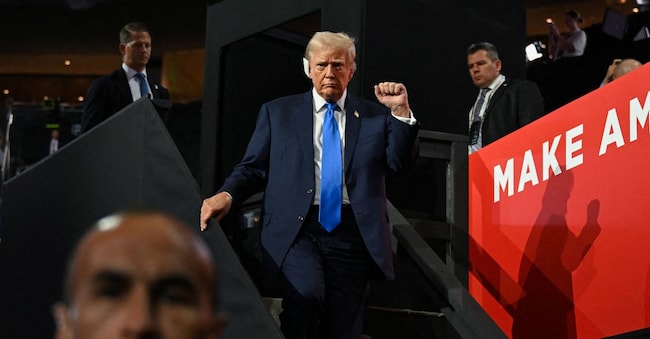
FILE PHOTO: Republican presidential nominee and former U.S. President Donald Trump raises is fist as he leaves at the conclusion of Day 2 of the Republican National Convention (RNC), at the Fiserv Forum in Milwaukee, Wisconsin, U.S., July 16, 2024. REUTERS/Callaghan O'hare/File Photo

2' min read

2' min read

If Donald Trump leaves Taiwan to its fate, the future of Western semiconductor companies will leave the comfort zone of recent years and risk entering a very delicate phase. This is the cry of alarm that has come from the market.

The reason has a specific name: TSMC . And in particular its fate, should China move from propaganda to action.

Loading...

The Taiwanese contract chip manufacturer is in fact the most important silicon factory in the world. A very important company for all American and European partners.

Those who know the world of semiconductors, one of the most strategic sectors of this era, are quite aware today that giants such as Nvidia and Apple , just to name a few, depend on the future of TSMC. That is why if Taiwan's future were to hang in the balance, i.e. without the shield - at least the relational one - of the United States of America, TSMC's could creak, creating a domino effect that frightens investors. should hang in the balance, TSMC's could creak.

Blinken: Usa e Cina terranno primo colloquio su intelligenza artificiale

Trump's words

.

And that is why the market heavily punished American and European silicon companies, after the Republican candidate was lukewarm in defending Taiwan (arguing that it should pay the US for the defence offered so far) and after it was reported that Washington is considering tightening restrictions on the export of advanced semiconductor technology to China.

New Restrictions

.

The US has indicated that it is considering tightening trade restrictions if companies continue to grant Beijing access to advanced semiconductor technology. A stance that hurt ASML, a Dutch supplier of chip-making equipment, which fell around 9% following the news, despite the company beating second quarter earnings estimates. Nvidia's stock was also down, losing around 6%. Even heavier (-7.5%) was the thud of Advanced Micro Device (AMD). But the collapse affected all companies in the sector: from Qualcomm to Broadcom, from Micron Technology to Arm. Clearly, TSMC itself also took a nosedive;

Usa, Biden in Sud Corea: "I microchip chiave verso nuova era sviluppo"

Intel only

.

The only company to move against the trend was Intel, with the stock gaining up to 5%. And the reasons are absolutely strategic. Indeed, the American manufacturer has been repaid for its efforts to project it towards absolute autonomy. A long-term strategy, that of Intel, which is working to build numerous foundries throughout the western world. Foundries that should allow significant production autonomy, so as to untie the fate of its chips from what happens in Asia. The small contract manufacturer GlobalFoundries also went up by over 13%: a clear sign of distrust in the leader TSMC.

Non solo Mar-a-Lago, ecco tutte le residenze di Trump

Photogallery5 foto

It should be recalled that the Biden administration has moved aggressively in recent months to restrict China's access to cutting-edge chip technology, with broad restrictions enacted in October to limit exports of AI processors designed by companies like Nvidia. The restrictions have dented US chipmakers' sales to China. Nvidia 's Chinese revenue was about 18 per cent of total revenue in the quarter ended 28 April, up from 66 per cent in the previous period.

Now the possibility of new axes, which combined with Trump's words on Taiwan, have sunk the chip sector.

Copyright reserved ©
Loading...

Brand connect

Loading...

Newsletter

Notizie e approfondimenti sugli avvenimenti politici, economici e finanziari.

Iscriviti