
Trump's tariffs strengthen China, the new challenge for the US and Europe
Tensions with the US reunite the Chinese around their country, overshadowing domestic problems related to slowing economic growth and consumption

3' min read
3' min read
If US President Donald Trump thought he was weakening China by imposing high tariffs on its manufactured goods, he has definitely miscalculated. US trade policies, combined with the US' sights on Taiwan, are having the opposite effect of strengthening the country's government at a time when many unresolved challenges on the domestic front risk weakening it.
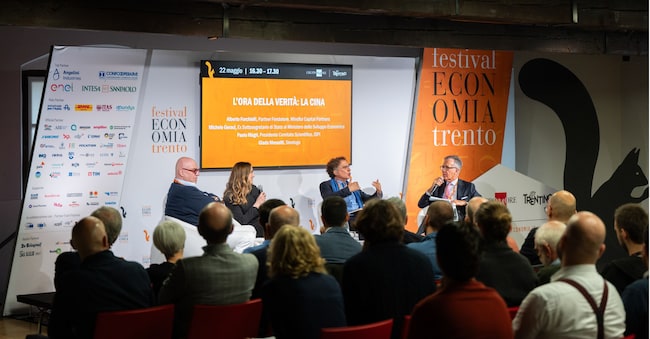
Faced with the external 'enemy', in fact, the Chinese have regrouped around their rulers, as has often happened in their history, explained Giada Messetti, sinologist, speaking at the conference 'The hour of truth: China', introduced by Paolo Magri, president of the Ispi scientific committee. "The challenges on the domestic front are above all economic,' Messetti pointed out. 'In the last 45 years this country has undergone epochal changes and now the unresolved knots of this unbridled race are coming to the surface'. Starting with the ageing of the population and the unemployment of young people, who have less rosy prospects than their parents. "There is also a new female consciousness, which has led to a decrease in marriages and a further decline in births that aggravates the situation created by decades of demographic control policies," the sinologist added. Moreover, the crisis in the real estate sector, which had been the engine of growth in past decades, persists, as does the slowdown in consumption.
According to Alberto Forchielli, founding partner of Mindful Capital Partners, China also faces problems of an economic nature at home, from which social ones follow. 'Citizens are not consuming, the cost of housing is falling fast, and youth unemployment is rising,' he said. 'But the government seems incapable of releasing the necessary measures to stimulate consumption. And not Xi's government: China has not made policies in this direction for 30 years, despite recommendations from many quarters, perhaps also for political reasons, not to give its citizens Western-style welfare'.
The point, according to Michele Geraci, former Undersecretary of State at the Ministry of Economic Development, is that the government has many levers, economic and political, to solve internal challenges, including welfare reform, but 'it reserves the right to use this weapon when it is really necessary. Today GDP is growing less, although it is still growing by 5 per cent, but citizens do not perceive GDP: they perceive per capita income, which is growing by 7 per cent and continues to improve their standard of living'.
The Chinese also remain very proud of their country, Giada Messetti pointed out, 'which has been able to build an alternative model to the West, which today is no longer an example for them'.

