America

Trump, Musk, Nasa: how US space priorities will change

Space may reveal the first power play between the president-elect and his strongest endorser

by Emilio Cozzi

La sonda solare Parker della NASA ha raggiunto il punto più vicino al Sole

8' min read

8' min read

Other than X or Tesla, Elon Musk's real power is ultra-terrestrial: stricto sensu, it comes from space.

Where, with his SpaceX, he has rewritten every rule of the game in twenty years. And where by giving, or withholding, access to the Ukrainian or Russian military's Starlink satellites, one man can decide the balance of a war scenario.

Loading...

This fact should be considered decisive, given that one of the most important games for political preeminence on our planet will be played beyond the atmosphere, in particular between the Moon and Mars. But even before considering the space ambitions of emerging countries or of China, which beyond the sky has already glimpsed its own path towards global leadership, the Trump administration's extra-atmospheric priorities, which are far from certain and predictable today, will be crucial. And on which, precisely, the influence of Musk and a group of entrepreneurs close to him is increasingly evident.

It is precisely the space that could reveal the first power play between the president-elect and his strongest endorser, who is nearing a public role not without conflicts of interest. A contrast, of course, that even without damaging one of the two, could still favour Musk, sealing his long-term influence over a crucial sector and business.

Trump's desire to go down in history as the president capable of taking the United States back to the Moon, flaunted urbi et orbi already during his first term in office, is in fact as well known as Musk's conviction that he is on this Planet to take mankind to another one: Mars. It cannot be ruled out that the objectives partly coincide, but neither can it be ruled out that the strategies may diverge and impose stages capable of conditioning the US agenda and investments and, with them, the entire industry.
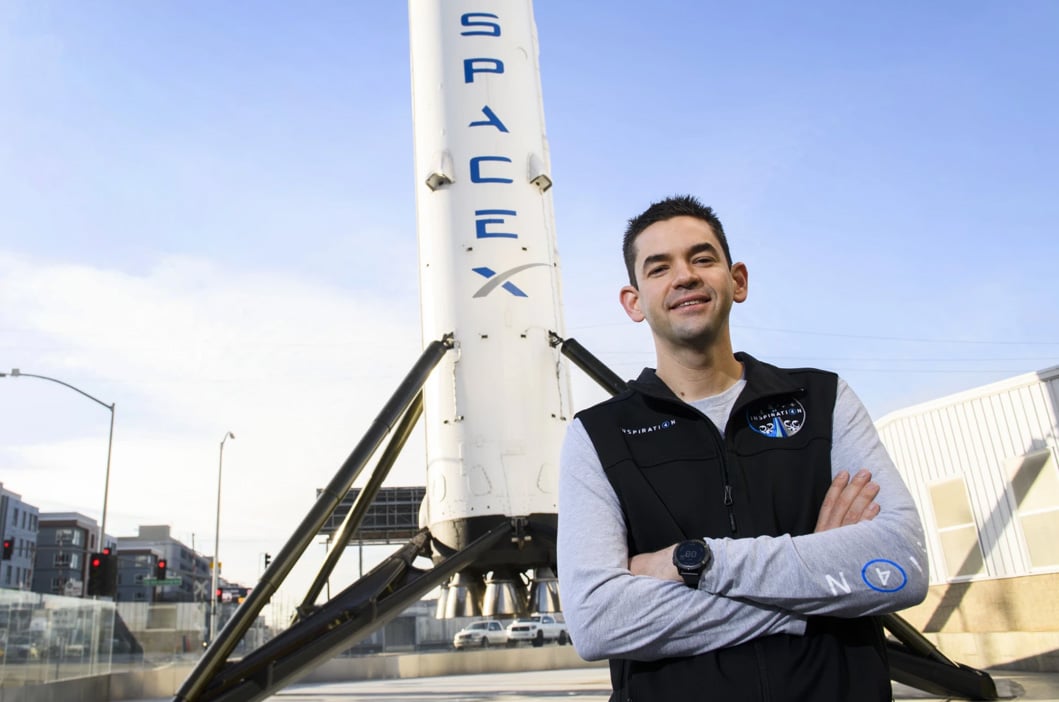
This was also confirmed by Donald Trump's announcement in early December of Jared Isaacman as NASA's next administrator (he will succeed former senator and astronaut Bill Nelson, who is still in office). If approved by the Senate, the nomination will bring another billionaire, Elon Musk admirer and SpaceX customer, to head the world's most important space agency, with an annual budget of around 25 billion dollars and just under 18,000 employees.

It is no coincidence, noted more than one expert, that NASA the very next day postponed Artemis 2 and 3 by a year, i.e. the next manned mission destined for lunar orbit (scheduled for April 2026) and the first one destined to return to the Selenian surface (in 2027): In addition to reasons of a technical nature - from the problems with the Orion capsule's heat shield to the suits for extra-vehicular activities - many believe that the umpteenth postponement is due to the agency's desire to 'take time'.


Jared Isaacman. Getty Images

The Moon or Mars, Mr Musk? And Europe?

The difficulties of the new US lunar programme, called Artemis, have long-standing roots and are largely related to the launcher chosen for the venture, the Space Launch System (or Sls), a gigantic launcher developed by Nasa and costing 23 billion from 2011 to its first, and so far only, launch in 2022.

Dubbed the 'Senate Launch System' by its detractors, the system is the result of an outdated approach to space exploration, with non-reusable technologies financed by cost-plus contracts, i.e. at variable cost (read: much higher than budgeted).

Its implementation was approved by Barack Obama's administration to replace the Constellation programme - cancelled by Obama himself - without bringing its contractors, powerful industry contractors such as Boeing, Lockheed Martin and Northrop Grumman, to their knees. At the same time, Obama inaugurated the commercialisation of space services, de facto opening up the sector to the company that would revolutionise it with its reusable launchers and the consequent reduction in costs: SpaceX.

In the fifteen years since then, Sls has looked more like a dogged attempt by the Senate to avert national dependence on SpaceX, a company that in the meantime has become a near-monopoly (with a current valuation of $350 billion), strong in partnerships with the Department of Defence - starting with the Starshield intelligence satellite network, funded with $1.8 billion from a contract with the National Reconnaissance Office - and moreover, not only already involved in the construction of the vehicle that will allow the first woman and the next man to land on the Moon - the Starship 'lander' version - but also ready, with Starship itself, to launch the first completely reusable space vector. When operational, Musk has promised that a few hundred dollars will be enough to send a kilogram of cargo beyond the sky (with the Space Shuttle it took 65 thousand dollars per kilo).

‘Happy Thanksgiving’ da Stazione Spaziale Internazionale, ecco il menù - e cibo fluttua nello spazio

It is not surprising that today, also in the light of the governmental streamlining that Trump will entrust to Musk, increasingly serious doubts hover over the survival of the Space Launch System.

Does this mean that the US will give up on Artemis? No; it is almost certain that Trump's lunar dream and China's geopolitical competition, crystallised with the Dragon's new space strategy in its intention to send a crew to the Moon by 2030 and build a base for scientific research there by 2035 (with Russia and Saudi Arabia, among others), will force the US lunar landing among the urgent and unavoidable goals.

Quite different will be how America will want to return to the Selenian moors. And here, once again, with its Falcon Heavy and Starship, SpaceX could prove to be the only alternative to the Space Launch System, at least in time. SpaceX's launchers could be adapted to carry Orion and its crews, or do without the capsule and still carry astronauts to their destination.

True, there is no shortage of uncertainties, starting with the fact that Starship has not yet made an orbital flight - the next test will be on 11 January - and that, in order to go to the Moon, numerous refuelling operations in Earth orbit are planned, with a difficult transfer of fuel at cryogenic temperature to be carried out via other SpaceX 'tank' spaceships.

It is certain, however, that by relying on Musk also to reach the lunar goal, Donald Trump would delegate unprecedented power and centrality to the future leader. According to observers, Boeing's intention to put its space division up for sale, made known by a scoop from the "Wall Street Journal", would only make this scenario more likely.

SpaceX, Musk assiste insieme a Trump al sesto lancio di prova del razzo Starship

Because at that point, once the ability to go to and from the Moon by one's own means has been demonstrated, what or who would prevent Musk from disrupting the US and international space agenda, centred on the stable permanence of crews on the Moon, by immediately imposing the Martian goal?

Far from being exquisitely American, the 50 countries that are signatories to the Artemis Accords, including Italy and Europe, are waiting for the issue to be clarified. Not only because Artemis is a programme open to international collaboration - Europe is supplying the service module of the Orion capsule, the one that flies on top of the Sls -, but because European, Canadian, Japanese and Emirati industries are also involved in the construction of the Lunar Gateway, the space station that from lunar orbit will act as an outpost and logistical support for missions on the surface. Difficult, today, to say what will become of it.

Far less far-fetched, however, is to foresee, on the part of the second Trump administration, an increased focus on space as a defensive asset, to be manned even at the expense of scientific and Earth observation programmes, including climate monitoring. In 2019, it was Trump himself who established the US Space Force, the sixth branch of the armed forces, responsible for space operations, launch systems and its satellites. To fund its operations in 2025, the current request to Congress is $29.4 billion, already more than is required for Nasa.

Isaacman, Bezos and Branson: the 'other' space billionaires

.

"Jared will lead Nasa's mission of discovery and inspiration, paving the way for revolutionary achievements in science, technology and space exploration," Donald Trump wrote in a post on his Truth Social platform soon after the announcement of the space agency's next administrator, Jared Isaacman.

Forty-two years old next February, a multi-billionaire, philanthropist and of known Democratic sympathies - in 2021 he donated $100,000 to the Senate Majority Pac, an independent expenditure committee associated with Democrat Charles Schumer - Isaacman purchased from SpaceX a series of orbital missions grouped under the name Polaris Program that, on 12 September 2024, made him the first non-professional astronaut in history to have performed an extra-vehicular activity, i.e. a 'spacewalk'.

If confirmed as head of NASA, he will suddenly become SpaceX's most important customer. From then on, he will not only have to concert his country's science mission agenda - his beliefs on climate change are not known, the American press has pointed out - but also reconfigure its human flight programmes, starting with Artemis. It cannot be ruled out that he might also propose a collaboration, as yet entirely hypothetical, between SpaceX and Blue Origin, the company of Musk's best-known competitor: Jeff Bezos.

With a contract to build the second lunar lander for NASA (it is called Blue Moon) and among the candidates to build a commercial station in Earth orbit (Orbital Reef), Bezos has an unclamorous but no less visionary strategy than Musk.

Maye Musk, la madre di Elon

Photogallery15 foto

Yet it did not go unnoticed that in November he prudently withheld the traditional pre-election endorsement from journalists from his 'Washington Post'. In fact, now, in addition to dealing with the delays in the development of his New Glenn heavy launcher - which have forced the postponement of NASA's EscaPADE science mission to a date yet to be defined - Bezos must understand what room for manoeuvre the new US space plans will leave him. That is, if there is any intention to leave them to him.

A problem that the third most famous space billionaire, the Briton Richard Branson, seems to have postponed, but not by his own choice: Virgin Galactic, his space company (with headquarters in California and a launch base in New Mexico), has outlined its horizons to investors, which, however, will not materialise until 2026. Until then, it will not take off.

Thereafter, if the forecasts are fulfilled, a boom in tourists, flights and new spaceports is expected, including one currently being studied in Grottaglie, Apulia.

These are new promises, after those, not entirely fulfilled, of unexciting years. In its most recent quarterly report, Virgin Galactic posted discouraging numbers: against revenues of $4.2 million, it posted an adjusted EBITDA loss of $79 million. Even with a solid cash situation - $821 million in available cash - business is not turning around.

Branson, however, is no stranger to saving gimmicks: Virgin Galactic recently unveiled the Delta spaceplane, with which the company promises more frequent flights and a pace that will allow up to 125 missions per year. With two motherships - the planes that take the spaceplanes aloft before launch - and four Deltas, revenues will be close to $1 billion each year and Ebitda will quadruple. A target that, however, is not expected to be reached for another five years.

Jared Isaacman's most delicate task might therefore be to figure out who to answer to, particularly if Trump and Musk clash. Nasa's new number one nominee has already shown that he wants to be part of space history for as long as possible, but Trump will only be in office until 2029. Musk has no term limits and is likely to remain the biggest launch provider for a long, long time to come.

Copyright reserved ©
Loading...

Brand connect

Loading...

Newsletter

Notizie e approfondimenti sugli avvenimenti politici, economici e finanziari.

Iscriviti