
28 April 2026
War breaking news. Trump vs. Merz: thinks Iran may have nuclear power, doesn't know what he's talking about
Russian superyacht passes through Hormuz with US and Tehran OK
For feedback, please contact
english@ilsole24ore.com
 Aggiungi Il Sole 24 Ore
ai preferiti su Google
Summary by points
28 April 2026
Trump v. Merz, thinks Iran can have nuclear power, doesn't know what he's talking about
Donald Trump attacks German Chancellor Friedric Merz. "He finds it acceptable that Iran possesses a nuclear weapon. He does not know what he is talking about! If Iran possessed a nuclear weapon, the whole world would be held hostage," the president wrote on his social Truth. 'I am doing something with Iran, right now, that other nations, or other presidents, should have done a long time ago. No wonder Germany is doing so badly, both economically and in other respects," he highlighted. Merz said yesterday that the Iranians had humiliated the US.
28 April 2026
Lebanon, Idf confirms Hezbollah tunnel destruction: 'among the longest ever discovered'
The Israel Defence Forces have confirmed that they have identified and destroyed two major Hezbollah tunnels in the southern Lebanese city of Qantara, which they claim were built by the terrorist group with the "direct guidance" of Iran. According to the IDF, the tunnels were built over a decade, reaching depths of about 25 metres, and were "financed by the Iranian terrorist regime and as part of Hezbollah's plan to conquer Galilee". The two tunnels, located close to each other but not connected, extend for a total length of about two kilometres, representing one of the longest underground systems discovered so far by the military in southern Lebanon. According to the Israel Defence Forces, the tunnels were part of a larger underground network located in the towns of Rab al-Thalathin and Mays al-Jabal, dating back to the fighting in 2024. The IDF believes the underground sites were designed by Hezbollah to serve as a base of operations, where hundreds of terrorists would gather when ordered, gather equipment and prepare to attack Israeli cities. Hezbollah's invasion plans never materialised. Troops of the 36th Division raided Qantara, about 10 kilometres from the Israeli border, during the current offensive against Hezbollah, following "accurate information" about the tunnel systems, the army says. The tunnel entrances were relatively hidden. According to the Israeli Defence Forces, numerous weapons and equipment were found inside the tunnels, which Hezbollah operatives could have used to stay there for a long time. One of the tunnels had about ten rooms, each with several bunk beds. According to the military, the tunnels were also equipped with rocket launching pits, with launchers inside them aimed at Israel. The tunnels were also built 'according to Iranian standards' and Iran was directly involved in the planning and financing of the underground systems. This afternoon, the tunnels were blown up using 450 tons of explosives.
28 April 2026
Gaza sources: five dead, including a Hamas commander, in Israeli attacks
Israeli air strikes killed five people in the Gaza Strip today, including a Hamas commander and a child, according to sources in the Palestinian territory. The territory has been devastated by more than two years of war between Israel and the Islamist movement. Although a fragile ceasefire went into effect last October, both sides accuse each other of violations. According to the Civil Defence, a first aid organisation operating under Hamas authority, four people were killed and six wounded in a drone attack on a car in the al-Rimal neighbourhood of Gaza City. A security source identified two of the dead as Iyad al-Shanbari, a Hamas commander, and his son, Salah, without mentioning the other victims. While Hamas did not immediately respond, the Israeli army said it had 'targeted a terrorist', adding that it would provide further details later. A nine-year-old boy was killed east of Khan Younis (in southern Israel), where a drone attack took place 'simultaneously with artillery strikes', also according to the Civil Defence. The Israeli army stated that a suspect near the 'Yellow Line', which demarcates the area under Israeli control, approached the soldiers, 'posing an immediate threat'.
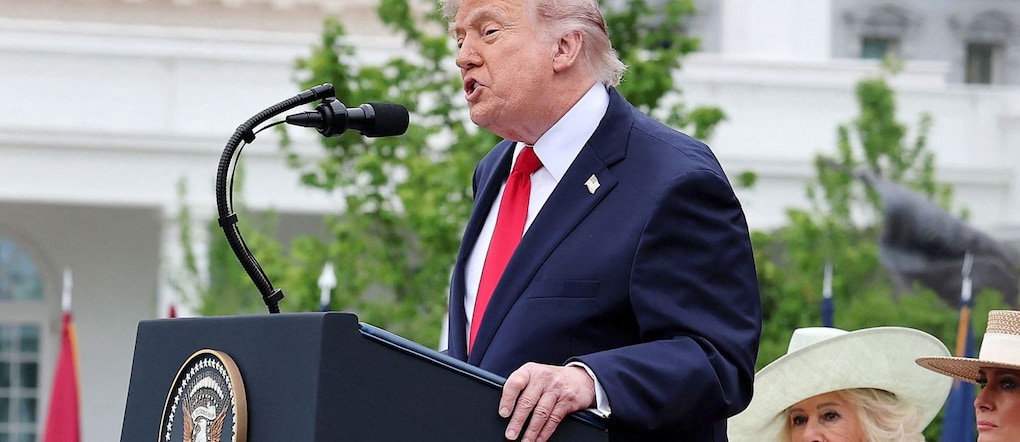
Il presidente degli Stati Uniti Donald Trump tiene un discorso insieme alla regina Camilla e alla first lady Melania Trump durante la cerimonia di benvenuto ufficiale sul Prato Sud, nel secondo giorno della visita di Stato del re Carlo III e della regina Camilla negli Stati Uniti d'America, il 28 aprile 2026 a Washington, DC. Chris Jackson/Pool via REUTERS via REUTERS
Ask the editorial team
Have questions or feedback about this article? Contact our editorial team.
28 April 2026
Cardinal Pizzaballa: 'The pain belongs to everyone, but there are those who occupy and those who are occupied'

We publish the full text of the pastoral letter to the faithful of his diocese from the Cardinal of Jerusalem, Pierbattista Pizzaballa.
Dearly beloved,
28 April 2026
Storm over Gb ambassador: 'US special relationship is only with Israel'
Blizzard over the new British ambassador to the US, Sir Christian Turner, who succeeded Peter Mandelson after the latter's downfall over his involvement in the Epstein scandal. According to a recording of a private conversation leaked to Sky News UK at the height of King Charles III's state visit to Washington, Turner is reported to have dismissed the historic 'special relationship' between London and Washington in February as a thing of the past. Today's US "probably only has a special relationship with Israel," the current ambassador is reported to have said, later also casting a jibe at the American ally over the Epstein case.
28 April 2026
Katz, 'South Lebanon is the same as Gaza'
'Southern Lebanon is the same as Gaza'. This was stated by Israeli Defence Minister Israel Katz, announcing that the Israeli Defence Forces (IDF) 'destroyed an underground terrorist infrastructure in Qantara, Lebanon, with a gigantic explosion' within the so-called 'security zone', as part of the Israeli reoccupation of South Lebanon. Haaretz writes that. "Prime Minister Benyamin Netanyahu and I instructed the Israel Defense Forces to destroy all terrorist infrastructure in the security zone up to the yellow line, both underground and above ground, just like in Gaza, to eliminate threats to the inhabitants of northern Israel," Katz said.
28 April 2026
Lebanon, death toll from Israeli attacks rises to 2,534
The death toll in Lebanon due to Israeli attacks since 2 March has risen to 2,534. This was reported by the Lebanese Ministry of Health.
Previously, 2,509 were reported dead and 7,755 injured. "Since 2 March, 2,534 people have died and 7,863 have been injured as a result of attacks by the Israeli enemy," the statement read.
On 1 March, the Lebanese Shia movement Hezbollah resumed its armed struggle against Israel after the killing of the Iranian supreme leader, Ayatollah Ali Khamenei (1939-2026), in one of the first bombings jointly launched by the US and Israel against Iran on 28 February. Jewish state troops intensified their massive attacks in different areas of Lebanon and on 3 March announced the start of a ground operation in the south of the country. On 17 April, the governments of Israel and Lebanon established a 10-day cease-fire, an agreement to which Hezbollah is not a party.
Despite the continuation of the cease-fire, Israeli aviation and artillery continue to strike areas in south Lebanon. Hezbollah responded with attacks against Israeli troops in the border area.
28 April 2026
Lebanon, Israel destroys vast tunnel network used by Hezbollah
The Israeli Defence Forces destroyed a large Hezbollah tunnel system in the city of Qantara in South Lebanon a short while ago. Videos published by the Lebanese media show the explosions. Loud booms were heard throughout the area.
The Israel Geological Survey states that the massive controlled explosion was detected by the earthquake warning system. However, no earthquake warning sirens went off.
28 April 2026
Iran, media: power in the hands of the Pasdaran, Mojtaba downsized
The war waged by the United States and Israel against Iran has changed the vertical of Iranian power, downgrading the authority of Supreme Guide Mojtaba Khamenei, and giving greater strength to the commanders of the Islamic Revolutionary Guard Corps (Irgc).
According to Iranian officials and analysts heard by the Reuters news agency, the pressure of the war period has concentrated power in an intransigent inner circle, entrenched in the Supreme National Security Council, the office of the Supreme Leader and the Revolutionary Guards, who now dominate both military strategy and key policy decisions.
"The Iranians are incredibly slow in their responses," said a senior Pakistani government official briefed on the Iran-US peace talks, mediated by Islamabad. "Apparently there is no unified decision-making structure. Sometimes they take two to three days to respond,' the Pakistani official told Reuters.
Although Mojtaba Khamenei is formally Iran's highest authority, according to inside sources he represents more of an assent than a command, endorsing achievements through institutional consensus rather than imposing his authority. Real power, they claim, has shifted to aunified wartime leadership centred on the National Security and Safety Council.
The choice facing the Iranian leadership is no longer between a moderate policy and a hard line, but between a hard line and an even harder line, Reuters points out. A small faction might push further, two Iranian sources close to power circles told the agency, but even this impulse has so far been kept at bay by the Revolutionary Guards.
28 April 2026
'Water used as a weapon in Gaza', Msf's complaint against Israel
"My nephew was in Nuseirat. He had gone to get drinking water, he was in line with other children and they killed him. He was 10 years old. Going to fetch water shouldn't be dangerous". Water is used as a weapon in Gaza. The story, which dates back to July 2025, comes from Hanan, a Palestinian from Gaza City, and is contained in the new report by Médecins Sans Frontières 'Water as a Weapon: Israel's Destruction and Deprivation of Water and Sanitation in Gaza' in which it becomes clear that the Israeli authorities' use of access to water has been used as a weapon against Palestinians.
28 April 2026
Msf: 'Israel uses water as a weapon against Palestinians'
The Israeli authorities have used access to water as a weapon against Palestinians, systematically depriving the population of Gaza of the resource in a campaign of collective punishment. This is claimed by Medics Without Borders in its new international report entitled 'Water as a weapon: Israel's destruction and deprivation of water and sanitation services in Gaza', which states that "the deliberate denial of water is an integral part of the genocide perpetrated by Israel". Msf, denouncing the difficulties of access to water for Palestinians and the serious consequences on their health and dignity, urges the Israeli authorities to "immediately restore the supply to adequate levels". And it calls on 'Israel's allies' to 'use their influence to pressure Israel to stop obstructing humanitarian access, including for water infrastructure needs'. The Msf report documents how the difficulties in accessing the resource do not represent isolated cases, but 'are part of a recurring, systematic and cumulative pattern'.
"The Israeli authorities know that without water, life ends, yet they have deliberately and systematically destroyed the water infrastructure in Gaza, while systematically preventing water supplies from entering," says Claire San Filippo, Msf's emergency manager. "Palestinians have been injured and killed simply trying to get water. This deprivation, combined with disastrous living conditions, extreme overcrowding and the collapse of the health system, creates a perfect environment for the spread of disease." Israel - Msf denounces - 'has destroyed or damaged almost 90 per cent of the water and sanitation infrastructure in Gaza, including desalination plants, wells, pipelines and sewage systems. After the local authorities, Msf is the main producer and distributor of drinking water in Gaza, yet between May and November 2025, Israeli army displacement orders prevented Msf teams from accessing areas where they were supplying water to hundreds of thousands of people, causing the disruption of essential services and the loss of life-saving infrastructure." Obstructed, Msf adds, was also the entry into Gaza of essential materials for water supply and sanitation, electricity, fuel and supplies such as generators, their spare parts and motor oil, "essential to power water treatment and distribution facilities".
28 April 2026
Gaza, Qatar: we have not suspended our mediation efforts
Qatar has not suspended its mediation efforts aimed at ending the conflict in the Gaza Strip and continues to coordinate with Egypt and Turkey. This was stated by Foreign Ministry spokesman Majed Al-Ansari.
"Qatar has not withdrawn from its role as mediator in the Gaza Strip, there has been no change in this regard," he said during a press conference. Doha is coordinating its efforts on Gaza with Egypt and Turkey, al Ansari added.
In November 2025, the UN Security Council passed a resolution proposed by the United States in support of a comprehensive plan by US President Donald Trump to resolve the situation in Gaza. The resolution received 13 votes in favour, while Russia and China abstained.
The US plan provides for a temporary international administration of Gaza and the creation of a so-called 'Peace Council' chaired by Trump, as well as a mandate for the deployment of international stabilisation forces in coordination with Israel and Egypt.
28 April 2026
Trump to King Charles: 'We have no closer ally than Britain'
"We have no closer ally than Britain". Donald Trump told King Charles at the White House.
28 April 2026
Lebanon: 2,534 dead and over 7,800 injured since 2 March
In Lebanon there are 2,534 dead and 7,863 injured since 2 March. This is the updated toll coming from the Beirut Ministry of Health, as reported by the Lebanese agency Nna. In the south of the Cedar Country, Israeli military operations continue against Hezbollah, historically supported by Iran, accused of continuous attacks against Israel despite an announced ceasefire between Israel and Lebanon.
28 April 2026
Iran will present a new version of its peace proposal any day now
Pakistan's mediators expect to receive a revised proposal from Iran to end the war any day now. Cnn reports this, citing sources that Donald Trump has indicated that he does not want to accept the previous version. The process for Iran is slow due to communication difficulties with Supreme Leader Mojtaba Khamenei.
28 April 2026
Russian superyacht passes through Hormuz with US and Tehran OK
The luxury yacht 'North', traceable to the Russian billionaire Alexey Mordashov, managed to cross the Strait of Hormuz thanks to the absence of objections from both Iran and the United States, according to a source close to the businessman told Reuters.
Navigation in the area, which has been subject to restrictions and tensions since last February in the context of the conflict between Washington and Tehran, was possible because the vessel was considered a civil vessel in peaceful transit and without stopovers in Iranian ports.
The Russian-flagged yacht had also just completed maintenance work in Dubai and followed an approved route in compliance with international maritime law.
According to the source, the lack of Iranian opposition is linked to the fact that the 'North! was classified as a civilian vessel of a country considered 'friendly' in that transit context; while the US also raised no objections, having found no direct links with Iran or stopovers in its ports.
28 April 2026
FAO, war slows fertiliser shipments, agriculture at risk
Delays in fertiliser shipmentsup to 3 million tonnes per month are putting the world's agricultural productivity at risk. A market that is suffering immediate shocks, with prices of granular urea rising by almost20% in one week. Estimating the impact of the crisis in the Gulf regions is the Director-General of the Fao, Qu Dongyu during the 180th session of the Council, who calls for a coordinated policy response to address the situation. Suffice it to say that by mid-April, urea prices had risen 52% in the US and 60% in Brazil. The closure of major shipping lanes is having a major impact on global agri-food systems. "The timing of crops is crucial to understanding the urgency of the fertiliser crisis," he said, "their applications must be perfectly aligned with planting periods that cannot be rescheduled without permanent crop losses. Countries heavily dependent on imports, including Bangladesh, where 53% of fertilisers come from the Gulf, face an extremely high risk profile. Iran, dependent on wheat and maize imports, is under enormous pressure. The FAO analysis reveals that the overlapping shocks from the crisis could increase food price inflation and exacerbate hunger. In Lebanon, some 874,000 people are in a situation of severe food insecurity, while more than 17 million people in Yemen suffer from high levels of food insecurity.
28 April 2026
An 'unemployment tsunami' is coming to Iran
Iranian media reported that around 320,000 applications were submitted on the JobVision job search platform in one day. The number broke all previous records and is considered a sign of an 'unemployment tsunami' in Iran. The independent news site Iran Wire writes this, pointing out that JobVision is one of Iran's leading online recruitment platforms. With the war, the Iranian labour market entered a new phase of recession and layoffs. Internet disruptions, trade restrictions, falling exports and uncertainty related to security tensions are pushing small and medium-sized companies (especially in the technology, transport, tourism and service sectors) to reduce staff or lay off employees. Trade unions report that many private sector production units have suspended hiring or temporarily closed down. Rising raw material costs, difficulties in international financial transactions and a sharp drop in domestic demand have made business increasingly complex. The crisis is hitting young people, women and informal workers the hardest, and economists warn that without targeted policies to support them, unemployment could turn into one of the country's most serious social challenges.
28 April 2026
Ukraine accuses Israel of importing stolen grain from Russian occupied territories
"I have officially summoned the Israeli ambassador to Kiev. Tomorrow morning we will present our protest note and demand appropriate measures". This was stated on X Andrii Sybiha, Ukrainian Foreign Minister, regarding the Israeli purchase of Ukrainian wheat stolen by Russian soldiers in the occupied territories.
"It is difficult to understand Israel's lack of an adequate response to Ukraine's legitimate request regarding the previous ship that delivered stolen goods to Haifa," Sybiha said in reference to the Abinsk, a Russian-flagged bulk carrier that entered the Jewish state a fortnight ago.
28 April 2026
Opec, Unimpresa: Italy will save up to 7 billion euro from leaving the Emirates
The exit of the United Arab Emirates from Opec and Opec+ may translate into a favourable factor for the Italian economy in the medium term. This was stated by Unimpresa in a note.
"Abu Dhabi's greater production freedom - with a potential increase of up to 700-900 thousand barrels per day compared to previous constraints - in fact introduces an element of competition into the oil market, reducing the cartel's ability to artificially support prices. For a net importer country like Italia, this means first of all a possible reduction in the cost of energy. Even a moderate drop in the price of crude oil, in the order of 5-10 dollars per barrel, can generate significant savings: up to 5-7 billion euro on an annual basis between lower import costs, reduced energy bills, and reduced production costs for companies'. This is what the Unimpresa Study Centre calculates, according to which "the positive impact would extend to the entire economic chain".
"Energy-intensive companies and the haulage sector," the note continues, "would benefit from a direct drop in operating costs, while households would see a reduction in prices at the pump and, with a few months delay, a calming effect on inflation. This would help to strengthen purchasing power and support domestic consumption. Then there is a strategic element: a weaker Opec implies a less concentrated market and, therefore, less exposed to coordinated policy decisions on prices. For Italia and Europe, this translates into greater energy resilience, especially in a phase marked by high geopolitical tensions. There remains the risk related to the security of the Strait of Hormuz, through which a significant portion of global supplies transit. However, should the crisis ease, the choice of the Emirates could help stabilise energy markets and create more favourable conditions for Italian economic growth'.
"The decision by the United Arab Emirates opens a new phase in global energy markets. For an importing country like Italia, greater freedom in production can translate into a moderate easing of prices and, therefore, into a benefit for families and businesses. However, we should maintain a cautious approach: geopolitical balances remain fragile and the security of routes, starting with the Strait of Hormuz, continues to represent a decisive variable,' comments Unimpresa vice-president Giuseppe Spadafora.
According to the Unimpresa Research Centre, the UAE's decision to leave Opec and Opec+ is not just a technical decision on production quotas: it is a political, industrial and geopolitical signal.
The Iea gives the Emirates a sustainable capacity of 4.28 million barrels per day, against an implicit Opec+ target of 3.39 million: the theoretical room for increase, under normal conditions, is therefore close to 900 thousand barrels per day. The exit of the Emirates weakens Opec's internal discipline because it takes away from the cartel one of the few countries with real production capacity, ongoing industrial investments, and modern infrastructure. The Iea, in its April report, already describes a market disrupted by the war with Iran: in March global supply fell by 10.1 million barrels per day and Opec+ production fell by 9.4 million. The political point is obvious: if one of the most efficient producers decides to go it alone, Opec loses not only barrels, but also credibility. Saudi Arabia remains the pivot of the system, but with less ability to impose a common line. In the short term, the decision may increase uncertainty. The market will read the Emirates' exit as a political rift in the Gulf, while the crisis in the Strait of Hormuz remains open.
The Iea reports that, at the beginning of April, flows through Hormuz had fallen to around 3.8 million barrels per day compared to over 20 million before the crisis. In the medium term, however, the greater production freedom of the Emirates could cool prices. If Abu Dhabi were to increase production by even 500-700 thousand barrels per day, the effect would be significant: it would not be enough on its own to offset a shock on Hormuz, but it could ease tensions on Brent crude, refined products, and ocean freight rates.
28 April 2026
Israel declares 5 Palestinian newspapers terrorist organisations
Israeli Defence Minister Israel Katz declared five Palestinian media organisations terrorist organisations, run, according to him, by Hamas activists. For several months, the Shin Bet has been collecting information on 'Quds Plus', 'Maydan al-Quds', 'Al-Quds al-Buzala', 'Al-Marag' and 'Al-A'atsma', which operate as news organs and run popular websites, Facebook pages, WhatsApp groups, YouTube channels, Twitter, Instagram and Telegram. The Shin Bet investigation revealed that these media outlets were acting on instructions from Hamas headquarters in the Gaza Strip, Turkey and other countries, with the aim of inciting Israeli Arabs. Ynet reports.
28 April 2026
Kiev: two ships with grain stolen by the Russians arrived in Israel
Ukrainian Foreign Ministry spokesman Georgij Tikhij said that two shipments of agricultural products, exported by Russia from the temporarily occupied Ukrainian territories, had arrived in Israel.
"I can confirm that we are not talking about two vessels, but more. I cannot give exact figures at the moment, but we are talking about several vessels. It is true, and we have informed Israel about all of them,' the spokesman said, according to Ukrinform Ukrainian news agency.
The Ukrainian diplomat pointed out that Kiev approached Israel through confidential channels, but after 'dozens' of requests received only one official reply from the Israeli Foreign Ministry on 20 April.
28 April 2026
Wsj: Iran 'awash' in oil, exploits abandoned tanks and makeshift containers
Iran is awash with so much unsold oil "that it is scrambling to find new ways to store its oil in the hope of avoiding a crippling production shutdown, while the US naval blockade blocks its exports and negotiations to end the war remain stalled". This is what the 'Wall Street Journal' writes, pointing out that Tehran "is reactivating abandoned sites, using makeshift containers and trying to ship crude by rail to China" to cope with too much crude. "These unusual measures," writes the US business daily, "are aimed at delaying an infrastructure crisis and dampening Washington's pressure" at a standoff in the Strait of Hormuz. The war between the United States and Iran, notes the 'Wsj', "has turned into a race to see whether Tehran's oil industry or global energy consumers will be the first to give in. Every barrel that cannot leave the country through normal export channels has to go somewhere: into a tank, onto a ship, to an improvised storage site - or stay underground. Iran hopes to avoid the risk of having to turn off the taps and exacerbate revenue losses, said Sanam Vakil, programme director for the Middle East and North Africa at Chatham House, a nonpartisan London think tank. 'The closure will increase pressure and stimulate negotiations,' Vakil said." The current blockade has drastically reduced the amount of oil that Iran, a net energy exporter, has been able to load onto tankers, commodity analysis firm Kpler said. "Iranian crude and condensate cargoes averaged 2.1 million barrels per day between 1 and 13 April. Only five cargoes have been observed since the introduction of the blockade, bringing the average down to 567,000 barrels per day between 14 and 23 April. In February, before the war, Iran was exporting an average of 2 million barrels per day'. With limited capacity to load crude onto ships, Iran's national oil company has already started to reduce production, Kpler says. "Production cuts often start before storage is technically full, because operators need to preserve space in the system and avoid dangerous bottlenecks." Kpler estimates that Iranian crude oil production could fall by more than half from current levels, to a range of 1.2 to 1.3 million barrels per day by mid-May, if the blockade continues.
28 April 2026
Trump: 'Tehran at collapse, calls for reopening Hormuz ASAP'
"Iran has just informed us that it is in a 'state of collapse'. They are asking us to 'open the Strait of Hormuz' as soon as possible while they try to clear the air on leadership (which I believe they will succeed in doing)." US President Donald Trump writes this in a post on Truth.
28 April 2026
US, petrol rises to $4.18 per gallon, highest since August 2022
Gasoline prices are rising again in the United States, on the uncertainties of the war in Iran, which is entering its third month: the gallon, in the latest readings released by CNN, hit a national average of $4.18, up to the highest since August 2022. On Monday, the average was $4.11, while it was just $2.98 before the conflict started in the Middle East on 28 February. President Donald Trump has repeatedly spoken of temporary increases that are expected to return in the short term.
28 April 2026
World Bank: Energy prices expected to rise by 24% in 2026, largest jump since 2022
The rise in commodities, fuelled by the energy shock, the report notes, is set to push up global inflation and dampen growth. In developing countries, inflation is expected at 5.1 per cent in 2026, one percentage point higher than pre-war estimates, while growth is forecast at 3.6 per cent, revised down by 0.4 points since January. About 70 per cent of importers and more than 60 per cent of exporters of raw materials could see weaker growth. The scenario - warns the World Bank - could worsen in the event of an escalation of the conflict: Brent crude could rise to USD 115 per barrel in 2026, with knock-on effects on fertilisers and other energy sources. In this context, inflation in emerging countries could reach 5.8 per cent. "The succession of shocks over the past decade has significantly reduced the fiscal space for responding to the energy crisis," said World Bank Deputy Chief Economist Ayhan Kose, urging governments to avoid generalised measures and prioritise interventions targeted at the most vulnerable. The report also points out that oil volatility doubles during periods of geopolitical tension and that shocks are quickly transmitted to other markets: a 10% increase in oil can lead to price increases of up to 7% for gas and over 5% for fertilisers, with delayed but significant effects on food security and poverty.
28 April 2026
Lebanese media evokes 'pink death' brought by Israelis to the far south
The Lebanese call it 'the pink death' and it is the one brought by Israel to the far south of Lebanon, increasingly turned into a wasteland despite the ceasefire in force since mid-April: not only with bombardments, white phosphorus, bulldozers, herbicides and dynamite, but also with a pink liquid emulsion contained in plastic canisters and usually used in the mining industry and in stone quarries. Lebanese media report numerous photos and footage released by Israeli army engineer units in southern Lebanon intent on blowing up civilian buildings in locations between the former Blue Line and the current Yellow Line using canisters containing a pink liquid. According to sources, this liquid is an ammonium nitrate emulsion, a highly explosive and at the same time very cheap chemical component. Among the images most widely circulated on social media, and whose authenticity has been verified by testimonies on the ground, are those depicting a villa in Marun Ras, a Lebanese village a stone's throw from what remains of the blue line of demarcation with Israel, totally destroyed with explosive material by the Israeli army. Lebanese sources stress the low cost of the pink liquid, "a few hundred dollars per canister", and the high value of the civilian buildings destroyed, just like the villa in Marun Ras, owned by Qassem Fares, a well-known Lebanese businessman living abroad. The accounts of the 'pink death' emerge after the Israeli press itself reported in recent days on soldiers' accounts of looting by Israeli soldiers of houses and shops in southern Lebanon. The Israeli Chief of Staff, Eyal Zamir, ordered a military police investigation into the allegations of widespread theft. Local Lebanese media confirm the allegations raised by the Israeli daily Haaretz, according to which Israeli civilian contractors take part in the demolitions, emptying and then tearing down the buildings, recovering furniture, appliances, fixtures and materials for resale.
28 April 2026
Iraq: 'novice' al-Zaidi premier in charge, an entrepreneur after months of stalemate
Entrepreneur, with interests in the media as well as in finance: this is how Iraq describes Ali Faleh Kazem al-Zaidi, who - supported by the main Shia political bloc in Parliament, the Coordination Framework - has been entrusted by Iraqi President Nizar Amedi with the task of forming the new government in Baghdad. The news came after tensions and deadlock following last November's elections. Weighing in, as the New York Times summarises, were the pressures from Iran, the home of Shiism, and the United States, countries with which Iraq has such good relations that it often finds itself 'in the middle'. In Iraq, by convention, the post of premier goes to a Shiite. Amedi asked 'all political forces to support' al-Zaidi - the man of 'compromise' with little political experience for some media in the region - and to 'collaborate' with him. And al-Zaidi, who has never held a government post, promised - as the Iraqi agency Ina reported - to work with all parties to form a government. He has thirty days to do so and to submit it to parliament for approval. To the possibility of a return of former premier Nuri al-Maliki, considered a figure with close ties both to the militias born in the Iraqi chaos more than twenty years ago and to Iran, Donald Trump had clearly said 'no' in recent months. And, the NYT points out, the pressure on the Iraqis to take a stand intensified after the start of American and Israeli military operations against Iran on 28 February, to which Tehran did not fail to 'respond'. Before hostilities were halted by a fragile truce, pro-Iranian Iraqi militias also 'joined in'.
28 April 2026
Iran, Japanese tanker crosses Strait of Hormuz
The Japanese tanker Idemitsu Maru crossed the Strait of Hormuz with Iran's permission. This was stated by the Iranian Tasnim agency, according to which the tanker belonging to the Japanese company Idemitsu Kosan, with a cargo of 2 million barrels of oil, had been off the coast of Saudi Arabia since the end of February.
28 April 2026
Iran prohibits the export of steel
Iran has banned steel exports, the Fars news agency reports, after the country's main steel mills announced they had ceased operations following Israeli and US attacks.
28 April 2026
Axios, 'the Iranian conflict risks becoming the new cold war'
'The conflict with Iran is the new Cold War': is the title of an Axios analysis of the US-Iran conflict. "The conflict with Iran has entered a Cold War-like phase, characterised by financial sanctions, gunboat intercepts and talks to start negotiations. Several US officials told the site that they are concerned that America will be dragged into a frozen conflict with no war and no agreement. In this scenario, the US would have to maintain its forces in the region for many more months. The Strait of Hormuz would remain closed, the US blockade would remain in place, and both sides would continue to wait for the other to give in or open fire first. With November's mid-term elections now six months away, 'a frozen conflict is the worst thing for Trump, both politically and economically,' said a source close to the president. Trump is undecided between launching new military strikes or waiting to see if his "maximum pressure" financial sanctions will make Iran more willing to negotiate an end to its nuclear programme, according to five advisers who spoke to the president told Axios. "All the Iranian leaders understand is bombs," Trump recently told one adviser, who reported the comment to Axios. "I would call him frustrated but realistic," the adviser said. "He doesn't want to use force. But he's not giving up," he added. Some of Trump's top advisers would like him to maintain the US blockade of the Strait of Hormuz for now - and impose further economic sanctions to pressure the Iranian regime - before returning to bombing. But the tycoon is also consulting with hawks outside the administration, including Washington Post columnist Marc Thiessen, retired army general Jack Keane and Senator Lindsey Graham: all are advising him to take military action to try to break the stalemate.
28 April 2026
Israel releases pictures of operations in Lebanon, 4 dead
28 April 2026
Bahrain, prepared terrorist acts with Tehran, 5 life sentences
Five people were sentenced to life imprisonment in Bahrain for 'terrorist and hostile acts' against Iran. This was reported by Al Jazeera. The Bahraini public prosecutor's office announced that these were two Afghan nationals and three Bahraini nationals. The Attorney General's Office - in a statement on X - reiterated that 'the crime of communicating with hostile foreign entities against the Kingdom of Bahrain is considered one of the most serious crimes that threaten national security'. Another 25 people were sentenced to prison terms of up to 10 years for 'supporting the terrorist acts perpetrated by Iran against the Kingdom of Bahrain'.
28 April 2026
Oil lengthens pace, Wti over $100 and Brent towards $112
Uncertainties related to the US-US talks with Hormuz closed pushed oil prices up. The Wti crossed the 100 dollar threshold marking an increase of 4.5%. Brent crude, on the other hand, rose by 3.3 per cent to $112 per barrel. Gas prices also strengthened with Ttf contracts in Amsterdam, the reference market, up 1.3% to EUR 45.2 per megawatt hour.
28 April 2026
Iran: media, first LNG-laden ship crosses Hormuz since start of war
A tanker carrying liquefied natural gas crossed the Strait of Hormuz for the first time since the beginning of the war with Iran on 28 February. Sky News reports. The 136,357 cubic metre tanker was last sighted in the Gulf on 30 March, but reappeared off the west coast of India yesterday, according to ship tracking data from ICIS LNG Edge, MarineTraffic and LSEG.
28 April 2026
Bankitalia: war and energy crisis slow down loans and mortgages, banks expect tightening of conditions
Italian banks expect a drop in demand for loans and mortgages from households and businesses in the current quarter due to the war and energy price developments. This is what emerges from the credit survey conducted by the Bank of Italy as part of the ECB. The events 'would have favoured a wait-and-see attitude on the part of companies,' it says. Credit institutions report that, for the same reasons, there will be a 'tightening of financing' with a more pronounced impact on the most exposed sectors.
In the first quarter of 2026, lending criteria for corporate loans remained unchanged and terms and conditions were also broadly stable. The lending criteria for household loans did not change in the mortgages sector, while they were slightly tightened for consumer credit. For the current quarter, banks expect a tightening of supply criteria, marked for business loans and slightly for consumer credit.
28 April 2026
Cnn: Iran and the US are not far from an agreement
The US and Iran are not as far from an agreement as it might seem after the failed meeting in Islamabad, CNN reported, citing Trump Administration sources. The ongoing talks, according to the sources, focus on a multi-stage process in which the first part of a potential agreement would focus on a return to the pre-war status quo and the reopening of the Strait of Hormuz without restrictions or tolls; the issue of Iran's nuclear programme - which both the US and Israel have pointed to as a casus belli - would instead be addressed later.
The US Administration has repeatedly stated that any agreement would require Iran to give up its stockpiles of enriched uranium and abandon enrichment, demands that Tehran has always categorically refused.
28 April 2026
Iran: first ship loaded with liquefied natural gas leaves the Gulf
An LNG carrier, with its cargo of liquefied natural gas, has crossed the Strait of Hormuz for the first time since the beginning of March when the US and Israeli attack on Iran disrupted shipping in the region. This was reported by the maritime monitoring company Kpler, according to which the LNG carrier Mubaraz, controlled by the Emirati national oil company Adnoc, left the Gulf in April with its cargo of 132,890 cubic metres of LNG on board, which was stored on 2 March at the port of Das Island in the United Arab Emirates.
Further reading
28 April 2026
Media, internet blockade in Iran curbs saffron exports
The Internet blockade has severely damaged Iranian saffron exports, disrupting contacts between exporters and international customers. This was reported by Iran International quoting an industry official. According to data published by the FAO and World Bank, Iran is the largest producer of saffron, accounting for about 85-95% of global supply. The deputy chairman of Iran's National Saffron Council, Iran International explains, said that many exporters were unable to communicate with buyers or ship the goods on time due to limited Internet access. The official added that the disruption created an opportunity for foreign competitors, including Afghanistan, to sell Iranian saffron in global markets under their own name.
Further reading

Hormuz effect on producer prices: +4.4% in March
28 April 202628 April 2026
Iran: media, Vance concerned by Pentagon's handling of war
In various closed-door meetings, US Vice President JD Vance is said to have repeatedly questioned the Defence Department's description of the Iran war, emphasising that the Pentagon had downplayed what appeared to be the drastic depletion of US missile stocks. The Atlantic reports. Two senior US administration officials, it is explained, reported that Vance questioned the accuracy of the Pentagon's reporting on the war and expressed concerns about the availability of some missile systems during talks with President Trump.
28 April 2026
Iran, Bessent: oil industry soon to stop due to US blockade
US Treasury Secretary Scott Bessent believes that the Iranian oil industry will start to stop production due to the US-imposed naval blockade.
"While the surviving leaders of the Revolutionary Guard Corps are trapped like rats drowning in the sewers, Iran's creaking oil industry is starting to halt production due to the American blockade," Bessent wrote in X relaying the Wall Street Journal article that Iran is resorting to "extreme measures" to avoid halting oil production.
"The pumping will collapse soon," Bessent added, "so there will be a shortage of petrol in Iran!
28 April 2026
Iran: Tehran revises death toll from Minab school attack, 155 victims
Iran has released a new detailed death toll from the deadly attack on a primary school in Minab on 28 February, the first day of the joint Israeli-American attack on the country. According to reports by the state broadcaster Irib and local media, 73 boys and 47 girls died in the attack. The death toll also includes 26 teachers, seven parents, a school bus driver and a pharmacy technician from the clinic adjacent to the school, bringing the total number of victims to 155, a lower figure than the more than 175 previously reported.
28 April 2026
Media, Russian billionaire ally Putin's 'superyacht' passed Hormuz
A superyacht linked to one of Russian President Vladimir Putin's key allies has crossed the Strait of Hormuz, despite the ongoing blockade. The BBC reports. It is the 142-metre-long luxury yacht 'North' linked to Russian billionaire Alexey Mordashov, who is subject to sanctions. The boat, it is explained, travelled from Dubai to Muscat, Oman, over the weekend and is one of the few private boats to have crossed the Straits in recent months. Mordashov, who has close ties to Putin, does not appear to be the official owner of the luxury vessel, however in 2022 the boat was registered in the name of a company owned by his wife. According to data from the Marine Traffic platform, the 'North', which is estimated to be worth over USD 500 million, left Dubai on Friday evening and arrived in Al Mouj, a marina in the Omani capital, on Sunday morning.
28 April 2026
Araghchi, strong and strategic partnership with Russia
Recent events have demonstrated the depth and strength of our strategic partnership. As our relationship continues to grow, we are grateful for the solidarity and welcome Russia's support for diplomacy'. This was written on X by Iranian Foreign Minister Seyed Abbas Araghchi posting a photo with Russian President Vladimir Putin one with Moscow's Foreign Minister Sergei Lavrov.
28 April 2026
Rubio, 'if Iran plans to keep control of Hormuz, it does not mean reopening it'
Secretary of State Marco Rubio told Fox that Iran's position on the Strait of Hormuz does not meet US demands. "If what they mean by opening the straits is 'yes, the straits are open on the condition that you coordinate with Iran, get our permission or we will blow you up and you will pay us,' that does not mean open the straits," Rubio said in an interview. "They cannot normalise - nor can we tolerate them trying to normalise - a system where the Iranians decide who can use an international waterway and how much you have to pay to use it," he said.
28 April 2026
'Trump sceptical of Iran's proposal for Hormuz'
Donald Trump and his national security advisers are sceptical about Iran's offer to reopen the Strait of Hormuz and suspend nuclear talks. The Wall Street Journal reports this, citing sources. The White House will continue to negotiate with Tehran and is likely to present its response and counterproposals in the coming days. Although the Iranian offer has not been categorically rejected, Trump and his advisers are doubtful about Iran's good faith action and Tehran's intention to end uranium enrichment and commit not to develop a nuclear weapon.
