War in Europe

Trump threatens Moscow: arms to Ukraine and 500% sanctions on those who buy from Russia

Donald Trump seems ready for a breakthrough against Vladimir Putin, after trying unsuccessfully for almost six months to convince him to negotiate peace with Kiev

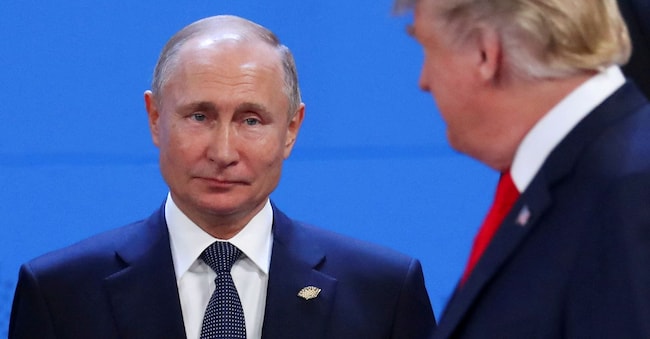
FILE PHOTO: U.S. President Donald Trump and Russia's President Vladimir Putin are seen during the G20 leaders summit in Buenos Aires, Argentina November 30, 2018. REUTERS/Marcos Brindicci/File Photo

4' min read

4' min read

Weapons to Ukraine and sanctions to Russia: Donald Trump seems ready for a turn against Vladimir Putin, after trying unsuccessfully for almost six months to convince him to negotiate peace with Kiev.

The focus is on Monday, 14 July, the day the US president promised to make a 'major announcement on Russia' after feeling 'let down' by the tsar. "You'll see what will happen," he said in an ominous tone to reporters who asked him about Russian drones over a maternity hospital in Kharkiv, ahead of his visit to flood-affected areas in Texas.

Loading...

Something is already moving. The commander in chief announced to Nbc that he had reached an agreement with NATO whereby the US will send weapons to Ukraine via the Alliance: and NATO will pay for these weapons 'one hundred per cent', he assures. Patriots are also planned. According to Reuters, Trump will send arms to Kiev, for the first time since his return to office, using a presidential power frequently used by his predecessor, Joe Biden.

The President's team will choose the armaments to be shipped to Ukraine from the US stockpile according to the Presidential Drawdown Authority. The package could be worth around USD 300 million and, in addition to Patriots, could include medium-range offensive rockets. Until now, the Trump administration had only sent war supplies to Kiev on the basis of previous authorisations given by Biden. The Presidential Drawdown Authority allows the president to draw on arms stocks to help allies in an emergency.

Quite a turnaround after Pentagon chief Pete Hegseth had blocked military aid to Kiev without even informing the commander in chief, almost forcing him to apologise to Volodymyr Zelensky. To exert pressure on the Kremlin, The Donald is also ready to use a bipartisan bill, sponsored by Republican Senator Lindsey Graham and fellow Democrat Richard Blumenthal.

The measure, which is expected to be voted on by the end of the month, envisages a 500% tariff on goods imported from countries that continue to buy Russian oil, gas, uranium and other goods, affecting nations such as China and India, which account for around 70% of Russia's energy trade and finance much of its war effort. In practice, these are a kind of secondary sanctions, much feared by Moscow because they risk undermining the support of its main allies.

Trump demanded an amendment to sign the law, i.e. reserving the decision whether to use it or not to the president alone - and not to Congress - thus remaining the sole arbiter of the game. "We are focusing on his (Putin's) clientele. And that's what, I think, makes the Europeans most satisfied,' Graham commented. 'This is not just a kind of continuation of our current strategy.

It's a real breakthrough because it says to Putin: 'We're going to hit you right where it hurts,'" Blumenthal echoed him. US coordination with the Europeans is also significant. The two senators briefed from Rome, on the sidelines of the Ukraine Reconstruction Conference, on the meeting of the Coalition of the Willing, the more than 30 countries ready to send troops to keep the peace in Ukraine after the cessation of hostilities.

They were joined by the US envoy to Ukraine Keith Kellogg, who announced his presence in Kiev for a week, starting next Monday. In the meantime, the Kremlin has reacted to the European initiatives, calling the hypothesis of a European contingent in Ukraine "unacceptable" and accusing the countries of the Old Continent, with their financial support, of wanting to encourage Kiev to "continue the war at any cost, what we call a war to the last Ukrainian".

It remains to be seen whether and how the 'new idea' on Ukraine that Secretary of State Marco Rubio said he received from Russian Foreign Minister Serghiei Lavrov at their meeting in Malaysia will affect Trump's moves.

The head of Russian diplomacy, while claiming to have reconfirmed Moscow's position on Ukraine in his conversation with Rubio yesterday, did not deny that he had outlined a 'new idea'. But, to those who asked him what it consists of, he replied: "I'm not going to tell you, don't we want to have a little surprise?", he said, using the same phrase uttered by the US president about the possibility of him giving the green light to new sanctions against Moscow.

Zelensky, military supplies have been restored

.

'We have political signals of the highest level, good signals, in particular from the United States of America and our European friends. According to all reports, supplies have been restored," Ukrainian President Volodymyr Zelensky says in his evening message on social media, adding that "important steps forward" on new sanctions against Russia are expected soon. "We will continue to work next week with the American side at the military level, in particular with our army, with General Kellogg," the Ukrainian leader claims.

Copyright reserved ©
Loading...

Brand connect

Loading...

Newsletter

Notizie e approfondimenti sugli avvenimenti politici, economici e finanziari.

Iscriviti