
Tuscan previews, looking for the anti-crisis recipe for reds between promotion, reduced yields and new markets
Ismea estimates for 2025 confirm the difficulty of structured red wines: exports of Tuscan still PDO wines in bottles fell by 8% in value, against substantial stability (+0.7%) in volumes: prices fell

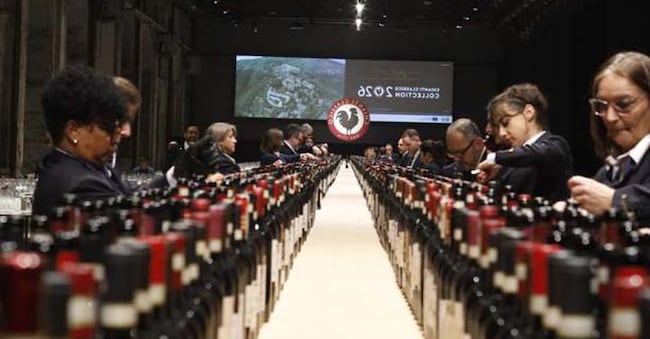
Tuscany closes the week of 'previews' of most of its best known wines, from Chianti to Morellino, from Chianti Classico to Nobile di Montepulciano, with a certainty and a few questions. The certainty is that the market for 'structured' red wines, which has always been a driving force for the region, is no longer pulling as it did in the past: not only because there are tensions of various kinds at the international level, but also because consumer tastes are changing.
Thus it is that in 2025,according to Ismea estimates, exports of Tuscan still PDO wines in bottles fell by 8% in value, dropping from 1.2 to 1.1 billion euros, against a substantial stability (+0.7%) of volumes, registering a trend worse than the Italian average (-2.1% in value, +1.6% in volume).
The most plausible explanation is that producers, concerned about growing cellar stocks, lowered prices to try to maintain market share. Data from the states required for bottling (source Avito, the association of Tuscan PDO and PGI wines) indicate -3% in 2025 compared to the previous year. "A 2026 has opened that will be even more difficult than last year," said Andrea Rossi, president of Avito.
The questions that arise are related to the actions to be taken to stem the difficulties. The Region and protection consortia are united in focusing on promotion, direct sales and the diversification of outlet markets. The 'Tuscany brand' - one of the few internationally known Italian wine territories - gives a strategic advantage on the promotion front, while the approximately 15 million tourists that visit the region every year, mostly interested in visiting wineries and vineyards, open up development potential for tastings and direct sales. Today no one has estimated the weight of this segment on total wine sales, but it is certain that Tuscany - thanks also to its 6 thousand agritourisms with 45 thousand beds - is among the leaders and can do even better.
On the market front, after the 2025 downturn recorded by Tuscan wines in Canada (-22%), Germany (-8.5%), the United Kingdom (-14.6%) and, to a lesser extent, the USA (-4%) - to assess what will change on the tariffs front after the Supreme Court's rejection - now eyes are on 'new' countries, where there is little presence due to tariffs and tariff barriers: "We are looking at Mercosur and India, we are already planning promotional activities," said Giovanni Manetti, president of the Consortium of Chianti Classico-Gallo Nero, which closed 2025 with sales at +2.6% in value and +1.2% in volume, driven by the USA and Canada and who speaks of a "denomination in good health despite the rough waters".
Also looking for new commercial outlets to react to the difficulties is Chianti wine: 'India will be one of the markets in which we will invest most decisively,' explained Giovanni Busi, president of the Chianti wine consortium, who went to Nigeria for the first time in January and continues to work in South America and Mercosur, as well as in Asia.

