Philosophy and Management

From the tyranny of control to the creativity of power: Nietzsche's thinking in business

Traditional corporate power is rooted in control and competition, but can be rethought as shared creation and growth

by Luca Barni*
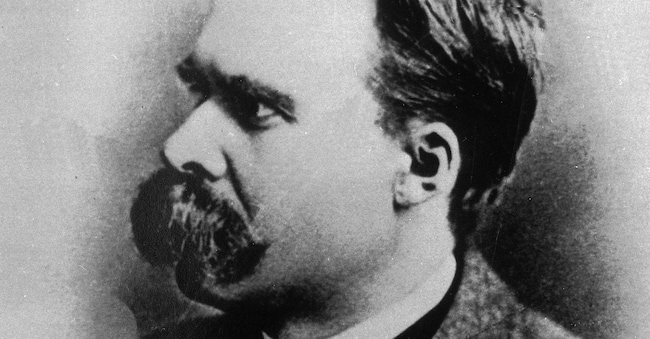
Friedrich Nietzsche. (AP)

4' min read

Translated by AI
Versione italiana

4' min read

Translated by AI
Versione italiana

I belong to generation X, or as my children would say more prosaically, I am a boomer because they don't subtlety and from a certain age onwards they put you in that category.

The classification serves to identify which conception of power my generation grew up with, on a personal level and in the world of work.

Loading...

On power, the philosopher James Hillman has written a book, a beautiful one, which should be on the manager's bookshelf. But before it even ends up there, it should be read and re-read because it is an invitation to review the entire grammar of leadership.

We grew up, boomers and Generation X, identifying power with the epic feat achieved through force of will backed by vigorous struggle. Corporate speaking, we identified power with firm and confident leadership, the achievement of ever-increasing performance, and the pursuit of efficiency as the sole pole star.

Hillman, sharply observes that such a conception leads to Darwinism, social and corporate: the organisation chart as an icon of competition-induced selection, which only allows some to survive. It is not so abnormal to hear military jargon in the company, such as 'he is under fire' or 'he is making enemies' and ending with 'he has returned to base'.

Self-disclosure: the concept of power I grew up with, I practised. Obsessive control of all business activities, equally obsessive pursuit of efficiency and growth, growth and more growth.

Over time, reading philosophers and classics, that concept of power began to show some cracks. An important contribution to these cracks comes from Nietzsche. His idea of the 'will to power' does not coincide at all with the logic of domination. For him, power is not control, not domination: it is the expansion of life, the ability to create, to generate new forms. The rigidity of control, in his reading, is not strength but a sign of weakness, almost a stiffening dictated by fear of change. The derivation of the philosopher's thought is that corporate power, founded on continuous vigilance, no longer appears as power but as an attempt to restrain vitality instead of freeing it.

Incidentally, my generation's concept of power is now being questioned, and not only by the younger generation: because the cost, both personal and economic (i.e. corporate), of such a conception is high and, in recent years, has also been found to be dangerous due to an excessive concentration of power in a few, presumptively selected individuals, without adequate counter-powers.

Obsessive control as a limiting factor

And, perhaps, among those mentioned above, there is one reason that, more than others, has determined the creaking of beliefs: it is the derivative of control, in power, that determines a strong criticality: it is a limiting factor, it places vetoes and obstacles that become limits to the achievement of objectives. It is control, perhaps obsessive control, that generates the preventive interference that takes pleasure away from work. The controllers become the guardians of the already known, and the controlled do not take the initiative because, before acting, they feel observed.

Another probable trigger for the start of the change? The cultural shift of considering employees as persons and not workers.

And together, a different interpretation of the concept of efficiency.

Considering efficiency as the sole guiding principle of business activity makes one short-sighted. By pursuing efficiency alone, thought and action are consumed in the short term, a time when the only possible objective is speculation, which stands at the antipodes of value creation for the company. Speculation, moreover, does not contemplate values, consequently justifying the use of any means to achieve the objective: rather, the means become confused with the ends so that "doing something becomes the full justification for doing it, regardless of what is done" (Hillman).

On the topic of efficiency Aristotle made a contribution: in 'Physics' and 'Metaphysics' he expounds his thoughts on the causes that generate the question "why?":

- Formal Cause - the idea or concept that drives an action;

- Final Cause - i.e. the purpose of the action;

- Material Cause - the element on which one acts and changes;

- Efficient Cause - the trigger for change.

Hillman's example is paradigmatic: a sculptor (efficient cause) produces changes in a block of marble (material cause) in order to make a beautiful object (final cause) with the idea of a statue (formal cause) in mind.

The four Aristotelian causes require vision, time and expertise but, above all, they must coexist simultaneously, otherwise action loses meaning, depth and direction.

The pursuit of efficiency (or efficient cause) alone as the sole driver of action can be the cause of critical issues such as quiet quitting, absenteeism as well as embracing 'bureaucratic' work.

And if all of the above were not enough, control linked to the obsolete conception of power entails risks: it weakens those who wield power because it curbs the proactivity of collaborators. It is a rearguard action that maintains the status-quo, is based on a defensive outlook and generates anxiety, both in those who exercise control and in the controlled. And all this is the antithesis of development.

In this sense, going back to Nietzsche helps to see the alternative: freeing oneself from the obsession with control means giving power back its creative nature. It means releasing the energy that so many employees store up for life outside the company, energy that they would also gladly activate in their working life if properly stimulated and motivated through a shared sense of action. Power, then, is no longer blocking but opening, it is not surveillance but growth.

*Director Bcc Centropadana

Copyright reserved ©
Loading...

Brand connect

Loading...

Newsletter

Notizie e approfondimenti sugli avvenimenti politici, economici e finanziari.

Iscriviti