
Ukraine: Italia is supplying only defensive weapons and generators; no missiles for Samp/T
Italia is stepping up its programme to acquire F-35 fighter jets, the cost of which has risen by over 7 billion euros: from the 13.5 billion euros originally estimated in 2009, the figure has now risen to 20.8 billion

Key points
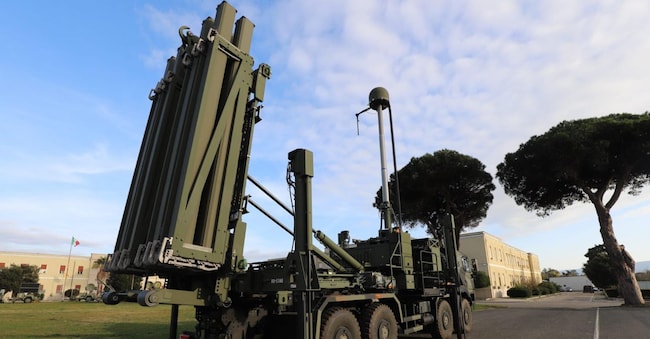
Alongside aid for civilians, the list of air defence equipment is becoming increasingly limited in the Italian aid package for Kyiv. The next consignment, classified like all the others, may include components that can still ensure the operational capability of the Italian-French Samp-T battery, which was supplied previously. However, stocks of Aster missiles intended for Ukraine – the same ones that arm the ‘shield’ – are reportedly exhausted. ‘We have to keep the Aster missiles for ourselves,’ Defence Minister Guido Crosetto clarified
Hence the assumption that soon – if not immediately – Italia too may in effect suspend supplies, just as Germany has already done with the Patriot systems. The reasons in this case would certainly be linked to the need to safeguard national security and not to deplete its own reserves. Similarly, the industry – in general – may not be able to guarantee new production at short notice. For several days now, Defence Minister Guido Crosetto has also stated that, over time, the threats have been contained and that certain requests from Kyiv – relating primarily to air defence systems – cannot be met. It is no coincidence that the scale of the aid packages has diminished over time.
In particular, generators and components to repair bombed-out power stations
This does not mean that support is waning. Russia is attempting to break the civilian population by targeting their ability to keep warm in winter: Moscow has been targeting energy and electricity infrastructure for several months. This is why a significant part of the Italian aid package will consist of generators and components to repair the bombed-out facilities. The situation on the ground has therefore changed profoundly.
Following Kyiv’s attempt at a counter-offensive using drones, Russian technology has now advanced exponentially, partly due to the speed of the new Shaed autonomous aircraft: until recently, the Ukrainian military was able to repel 90 per cent of attacks, whereas now they are only able to stop 10 per cent. Hence Kyiv’s request to its allies for systems that are, however, difficult to obtain.
The F-35 match
In light of international developments – which extend beyond the conflict in Eastern Europe – Italia is, in the meantime, pressing ahead with its programme to acquire F-35 fighter jets, the cost of which has risen by over 7 billion euros: from the 13.5 billion euros forecast in 2009, the figure has in fact risen to 20.8 billion, with the number of aircraft falling from the initial 131 to 115. The estimates are set out in the relevant decree from the Ministry of Defence sent to Parliament: the committees now have until 13 December to give their opinion. The increase in expenditure is due to the ‘necessary revision of safety requirements’, ‘rising costs for technological upgrades to the weapon system’ and ‘changes in inflation and the euro/dollar exchange rate recorded in recent years’. The decree sets out the annual allocations from 2027 (€175 million) until 2039 (€20 million). Criticism has come from the opposition, with Senator Alessandro Alfieri (PD) stating that, as chair of the Senate Defence Committee, he has secured a postponement of the debate on the decree: “Minister Crosetto must come to Parliament to discuss the Multi-Annual Defence Planning Document,” he explains.

