
Following Ukrainian raids on Russia, queues have formed at petrol stations; Moscow is considering a ban on petrol exports
Zelensky: “We need the Patriots to protect ourselves.” Meanwhile, the Ukrainians have launched new drone and missile attacks on Moscow and the Russian region of Belgorod

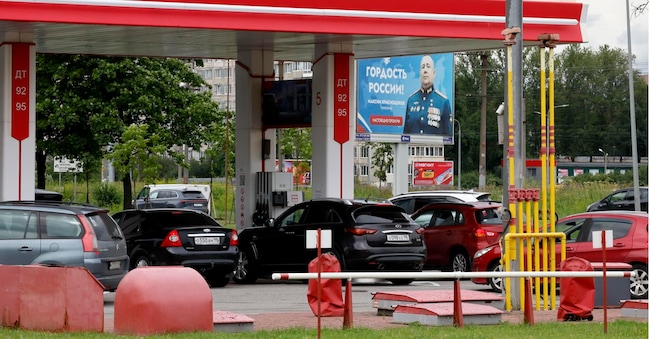
Russian Deputy Prime Minister Aleksandr Novak admitted at a government meeting that “the fuel situation remains tense”, although he cited only “the summer peak in demand and the unscheduled maintenance currently taking place at refineries”, the euphemism he chose to refer to the damage caused by drone attacks from Kyiv, whilst at petrol stations across the country – where long queues have been visible for weeks – reports are emerging of brawls between motorists, some of whom have been waiting for hours. Since last January, the price of petrol at filling stations has risen by 11.6 per cent. Compounding the tension is the fact that different priorities are assigned to official vehicles, not always in the clearest manner. As a result, officials of various ranks in some regions have begun to be given priority and to jump the queue. In the Chita region, veterans of the Ukrainian front and their families have also been added to the list of government officials. Meduza reports that problems have been recorded in the regions of Irkutsk, St Petersburg, Kaliningrad, Kaluga, Krasnodar, Sverdlovsk, Tatarstan, Izhevsk, Chita, Cheboksary and Novokuznetsk, which has announced a possible short-term ban lasting several months on diesel exports (until now, the export of petrol has been banned, until the end of the month, and aviation fuel) attributed the 20–30 per cent rise in demand to panic-driven buying at petrol stations and stressed that it will take time to overhaul the system’s logistics to meet these needs.
The governor of the Vologda region, Georgy Filimonov, recounted on his Telegram channel that he had run out of petrol whilst driving and had “experienced the fuel crisis first-hand”. He added that he had been forced to flag down a police car to ask for a lift. This came just an hour after he had urged residents of the region not to panic and rush to fill up their tanks. “We’re all in the same boat; we’re working to resolve the current issues,” he wrote. Yesterday, he imposed a partial cap on fuel sales to motorists, noting that demand for petrol had doubled whilst supplies had stalled. His administration is in contact with the Ministry of Energy and with Lukoil, which owns 90 per cent of the petrol stations in the north-west of the country, to plan an increase in supplies.
More Russian missiles strike Kyiv: at least 26 dead and dozens injured
At least 26 people were killed and dozens injured in Kyiv and the surrounding region during a massive Russian missile and drone attack on the night of 6–7 July, on the eve of the NATO summit in Turkey. Several residential buildings in the capital were hit, according to the Kyiv Independent. Ukrainian authorities reported that in the city of Kyiv alone, at least 19 people were killed and over 90 injured, including six children. A further seven people were killed and 29 injured in Vyshneve, a town about two kilometres south-west of the capital, where hundreds of residents were evacuated due to the risk of a second attack. According to the Ukrainian Air Force, Russia launched a combined attack using 23 ballistic missiles, 39 cruise missiles, six Zircon hypersonic anti-ship missiles and 351 attack and decoy drones, with Kyiv as the main target. Ukrainian air defences shot down 37 cruise missiles and 326 drones, whilst 23 ballistic missiles, six Zircon missiles and 18 drones struck 34 locations across the country.
Zelensky: ‘We need Patriot missiles’
The attack comes just a few days after another Russian offensive on Kyiv, on 2 July, which left 31 people dead and over 100 injured. President Volodymyr Zelensky said that Ukrainian forces had achieved ‘good results’ against drones and cruise missiles, but stressed that a shortage of Patriot interceptors was preventing them from stopping Russian ballistic missiles. “Intelligence indicates once again that the Russians are preparing a new large-scale attack,” he warned, urging civilians to heed air raid alerts. On the eve of the NATO summit in Ankara, due to begin on 7 July, Zelensky called on the United States and European allies to take “strong decisions” on strengthening Ukraine’s air defences, stating that the Patriot missiles sitting idle in allied arsenals are encouraging Russia to continue striking residential buildings.
The raid comes ahead of the planned meeting between Zelensky and US President Donald Trump on the sidelines of the NATO summit in Turkey, as part of renewed diplomatic efforts to end the war. In recent days, Trump held a telephone conversation lasting almost 90 minutes with Russian President Vladimir Putin, whilst Moscow has announced its intention to continue its large-scale campaign of attacks against Ukrainian cities.

