
Ukraine, Russian raids on Kiev: 24 dead. Overnight drone alert in Helsinki
The death toll from yesterday's massive air strike from Moscow is rising. The exclusion zone of the 1986 nuclear disaster is once again in flames

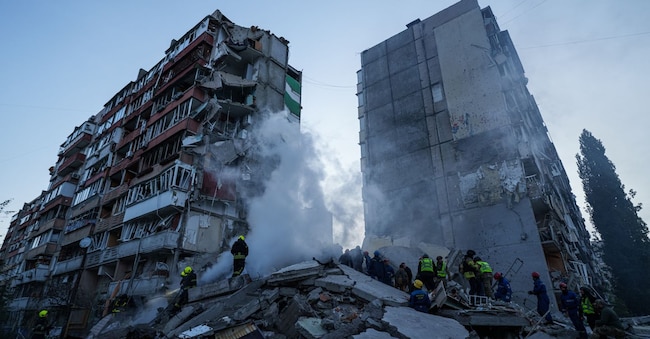
The number of victims of the massive Russian attack that hit the Ukrainian capital Kiev in the night between Wednesday 13 and Thursday 14 May increased: 24 dead - among them three children - and 47 wounded. This is reported by the local authorities, as Ukrainska Pravda reports, pointing out that rescue operations in the Darnytskyi district continue unabated. The authorities in Kiev have proclaimed a day of mourning.
Fires in Chernobyl, in the nuclear exclusion zone of 1986
It is again Ukrainska Pravda that spread the news that a new Russian drone attack overnight caused fires in hard-to-reach areas in theChernobyl exclusion zone.
Yesterday, rescuers and employees of companies managed by the Ukrainian State Agency for Exclusion Zone Management had managed to extinguish a vast fire that had been raging for days, when the territory of the Chernobyl area came under renewed attack. Today, following the shooting down of a Russian Geran-2 drone, new outbreaks of fire emerged in the territory of the Opachytskyi Environmental Protection Research Department of the Chernobyl Ecological and Radiological Biosphere Reserve.
The situation is complicated by thick smoke, fallen trees and impassable terrain. Heavy machinery, bulldozers and personnel with chainsaws are working to secure access to the area affected by the flames. Russian drones were found at the scene of the incident and operations by the State Emergency Service's pyrotechnic units are still ongoing.
Despite the fires, thelevel of radioactivity in the exclusion zone does not exceed control limits, stresses the State Agency for the Prevention and Control of Nuclear Weapons. "Russian attacks," it says, "once again pose a threat to the unique ecosystem of the Chernobyl area, where each new radioactive eruption poses a risk to forests, wildlife and territories that are recovering from decades after the 1986 disaster.

