The war

Kiev strikes two Russian oil depots and Moscow calls on Trump to act as a mediator

The Russian Federal Security Service (FSB) says it has foiled ‘unprecedented’ attempts by the Ukrainian security services. The Kremlin praises the US: “They are supplying weapons to Ukraine, but are committed to the peace process.” And Rubio is in contact with Parolin “to reach a negotiated end to the conflict”.

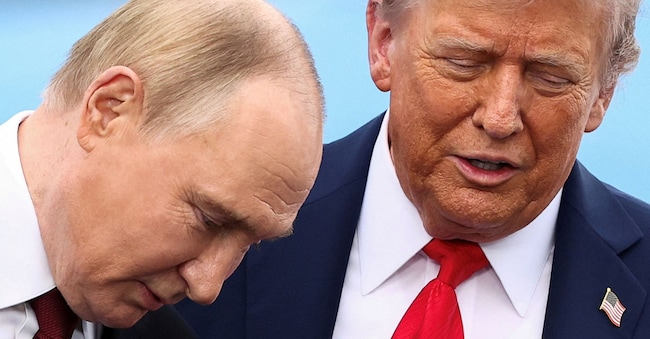
 Il presidente degli Stati Uniti Donald Trump parla con il presidente russo Vladimir Putin durante un incontro per negoziare la fine della guerra in Ucraina, presso la Joint Base Elmendorf-Richardson ad Anchorage, in Alaska (Stati Uniti), il 15 agosto 2025. REUTERS/Kevin Lamarque/Foto d'archivio REUTERS

6' min read

Translated by AI
Versione italiana

6' min read

Translated by AI
Versione italiana

There are drones – today it is Ukraine that is striking, in response to to the raids on Kyiv in recent days and targeting Moscow’s oil – and then there is diplomacy, with the Kremlin appearing to set aside its bellicose rhetoric and explicitly expressing the hope for direct US intervention as mediators in the peace process.

Oil depots have been struck by Ukrainian drones and set alight in Russia, in Tver, the capital of the oblast of the same name, and in the Stavropol region: both regions are reportedly without fuel. This has been reported by Ukrainian media, including Unian, which also quotes the governors of the two Russian oblasts.

Loading...

Ucraina, 1.587° giorno di guerra

Photogallery27 foto

“On the night of 9 July, residents of the Stavropol region reported hearing explosions. Initially, online reports claimed that the Lukoil-Yugnefteproduct oil depot in Mikhailovsk had been attacked and was on fire.

At the same time, the regional governor wrote that, following the raid, a fire broke out on the premises of an industrial plant in the hamlet of Vyazniki, in the Shpakovsky district.

According to Astra, there is another fuel depot in the village of Vyaznyki. ‘It is a large logistics centre for the reception, storage, transhipment and small-scale wholesale dispatch of diesel and petrol of various brands,’ writes the Ukrainian news agency Unian, which, quoting the governor, reported that many residents are now being evacuated.

Emergency in Ucraina: popolazione stanca, vittime civili tutti i giorni

Regional Governor Vladimir Vladimirov confirmed the attack on an unspecified ‘industrial facility’ in a post on Telegram.

The Russian Federal Security Service (FSB) has claimed to have foiled ‘unprecedented’ attempts by the Ukrainian secret services, ‘with the direct involvement of Western agents’, to carry out ‘a series of acts of sabotage and terrorism against military installations and against several members of the Russian Ministry of Defence’. This was reported by TASS. The FSB added that the attacks were foiled “thanks to a series of operational, investigative, counter-espionage and intelligence measures”.

Following a drone attack by the Ukrainian armed forces, an employee of a transport company was killed in Pervomaisk, in the Russian-controlled part of the Ukrainian region of Luhansk. This was reported by the Russian governor of the region, Leonid Pasechnik. The drones struck a private entrepreneur’s vehicle fleet, an industrial area and a lorry in Pervomaisk, Krasnodon and Severodonetsk. “An employee of a transport company was killed in Pervomaisk,” Pasechnik wrote on the Max platform.

The Ukrainian attack comes after Russian raids on Kyiv. Whilst NATO was meeting in Ankara – where Ukrainian President Volodymyr Zelenskyy was also present – Russia targeted Ukraine during the night and early morning, striking civilian targets and causing several deaths.

Financial Times: Ukrainian drones have knocked out up to 40 per cent of Russia’s refining capacity

“The fuel crisis in Russia has brought the effects of the war home to an unprecedented number of people. The fuel shortage is directly affecting around 50 million Russians, or 35 per cent of the population». This is according to an analysis by the Financial Times based on the number of motorists in each region targeted by Ukrainian drones in recent weeks.

Loading...

“Several regional governments have introduced rationing measures, assigning different refuelling days to cars with even and odd number plates,” the FT points out, noting that the pressure began in May, when Ukraine significantly stepped up its drone campaign against Russian oil infrastructure.

“There are now simply far more drones targeting a single objective than before, physically breaching defences like a medieval cavalry wedge,” said a senior executive in the Russian energy sector, adding that “the defences that used to work are unable to withstand such pressure. This is the new normal.”

Russia has stopped publishing most of the relevant data, but most analysts, drawing on secondary data and media reports, estimate that between 20 and 40 per cent of refining capacity has been taken out of action, explains the British newspaper.

“In June, Russia refined an average of 4.1 million barrels a day, 28 per cent less than the average volume over the last five years and 35 per cent less than its nominal capacity,” said Borys Dodonov, head of energy and climate studies at the Kyiv School of Economics.

Kremlin: The US is supplying weapons but is committed to the peace process

“It seems that Mr Trump was very busy after all the meetings in Ankara, so he didn’t call yesterday. President Putin is always open to dialogue. They have a truly constructive relationship, despite any differences that may exist.” This was stated by the Kremlin spokesperson, Dmitry Peskov, as reported by the Interfax news agency. Yesterday, during his meeting with Ukrainian President Volodymyr Zelensky in Ankara, Trump had announced that he was planning a telephone conversation with Putin by the end of the day.

Peskov also made a point of emphasising that the United States continues to supply weapons to Ukraine, but at the same time – unlike other countries – continues to seek to contribute to the peace process.

“On the one hand,” the United States “continues to supply weapons” to Ukraine, “but unlike other countries involved in this conflict, the United States remains committed and continues to seek to contribute in some way to the peace process. It is through the prism of this stance that we assess all statements,” said Peskov, as reported by Russian news agencies.

Russia hopes that the United States will recommit itself to resolving the conflict in Ukraine, whilst further escalation could prolong the conflict and force Russia to establish a large buffer zone in Ukraine, Peskov added.

At the same time, however, the Kremlin has warned the Trump administration against stepping up pressure on the ground.

“The rise in tensions and actions aimed at escalation will in no way contribute to the peace process,” Peskov said at a press briefing, according to reports from Russian news agencies.

According to Peskov, the US administration would be mistaken to believe that military pressure can pave the way for an agreement. “We note certain misjudgements within the White House administration, namely the belief that escalation and military pressure can help bring about a peaceful solution. This is a misguided approach,” he emphasised.

Rubio meets with Parolin: ‘Efforts to end the war discussed’

The US Secretary of State Marco Rubio held talks with Cardinal Pietro Parolin. This was reported in a statement by the US State Department spokesperson, Tommy Pigott, who said that the two diplomats discussed ‘efforts to reach a negotiated end to the war between Russia and Ukraine’.

Kremlin: Russia has always been NATO’s main adversary

The Russian spokesperson did not hold back in his criticism of the North Atlantic Treaty Organisation.

‘NATO, the Atlantic Alliance, is in fact an instrument created for the purpose of confrontation. The alliance has not lost its raison d’être and continues to pursue its objective. The alliance’s main adversary has always been, first, the Soviet Union and, subsequently, its successor state, Russia. And so it remains,” Peskov told the Vesti news portal.

In the Ankara Summit declaration, NATO allies stated that Russia poses a ‘long-term threat’ to Euro-Atlantic security and pledged to allocate 70 billion euros (approximately $79.8 billion) in military aid to Ukraine in 2026, whilst maintaining at least the same level of commitment in 2027 as well.

Putin’s yacht moored in northern Russia, possibly to protect it from drones from Kyiv

After sailing in Danish waters over the past few days, the yacht Graceful – reportedly owned by Vladimir Putin – has been spotted in Murmansk, in northern Russia, at a military port near the town of Severomorsk. This is according to the Danish media outlet DR, which claims to have verified satellite images.

The luxury yacht is 80 metres long and features, amongst other things, a helicopter landing pad. It is also known as “Kosatka”, which in Russian means killer whale. Initially, the yacht had indicated Istanbul as its destination in a signal sent to maritime traffic monitoring services. Before arriving at the military port of Murmansk, there are strong indications that the Graceful continued to sail in convoy with a Russian destroyer and the Russian vessel Voevoda, writes Dr.

According to Russia expert Flemming Splidsboel Hansen, quoted by DR, the voyage could also be due to Russia’s need to repair the ship. But the most obvious explanation is that it is due to Ukrainian threats: “If the aim is to bring the ship to safety, it is because the Ukrainians have developed drones capable of flying long distances. They can reach targets several thousand kilometres inside Russian territory,” the expert explained.

Zelensky: a missile defence system comparable to the Patriot is under development

A missile defence system comparable to the US Patriot system is currently being developed in Ukraine with the help of European partners as part of a project called Freyja. This was confirmed by the Ukrainian President, Volodymyr Zelensky.

‘I would say that this is a European system, but one that remains under our control. This project is our anti-ballistic missile system, which must be equivalent to the Patriot in terms of interception capability, but is more geared towards mass production and is less expensive. This, in any case, is the objective I have set for our manufacturers,” said the Ukrainian president in his audio message to the press.

An initial meeting with potential partners is expected to take place “very soon in France”, he added, without specifying a date, emphasising that the project will take years to complete. According to the Financial Times, an interceptor known as ‘FP-7.X’ was tested last month in Ukraine.

Copyright reserved ©
Loading...

Brand connect

Loading...

Newsletter

Notizie e approfondimenti sugli avvenimenti politici, economici e finanziari.

Iscriviti