
Umbria: in municipalities with a cultural focus, incomes are more than 8 per cent higher
The economic advantage is driven by cities and urban centres with more developed economic structures. Inland areas and small villages remain vulnerable

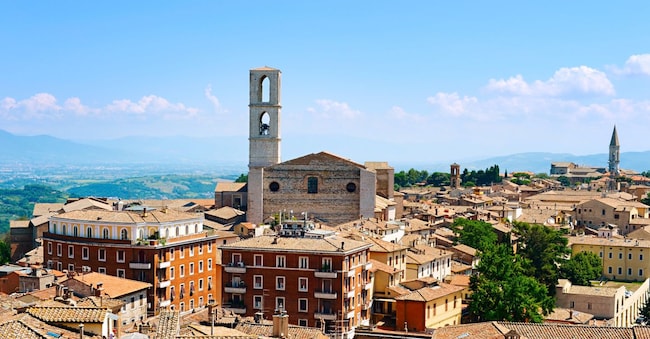
By combining art, history and spirituality, and capitalising on the unique character of its regional identity, Umbria has realised it can move beyond slogans and transform cultural tourism into a tangible economic resource. Not only for industry operators but also for local communities.
Umbria’s record
This is demonstrated by a recent analysis by the Umbria Chamber of Commerce: according to the research, carried out by cross-referencing the Istat territorial classification (using 2019 data on the tourism category and the 2022 revision of tourism density) with data from the Ministry of the Economy on 2025 tax returns for the year 2024, the region boasts the highest proportion of culturally oriented municipalities in Italia.
In fact, 44.6 per cent of Umbrian municipalities –41 out of 92 – fall within the categories of cultural tourism defined by the National Institute of Statistics, based on an assessment of the area’s suitability, historical and artistic heritage, geographical and human factors, and tourist flows and activities. In Italia, out of a total of 7,926 municipalities, 1,026 (12.9 per cent) fall into this category, with Tuscany in second place (119 out of 273, more than 43 per cent), followed by Trentino-Alto Adige (103 out of 291, over 35 per cent) and Marche (55 out of 228, around 24 per cent).
An 8.9 per cent increase in income
But there is another factor to bear in mind: in those very 41 municipalities that have turned churches, museums and archaeological sites into an asset, the average taxable income exceeds by almost 2,000 euros that recorded in the remaining 51 (24,280 versus 22,288 euros, with a difference of 1,992 euros per taxpayer with taxable income, equivalent to 8.9 per cent) and 423 euros more than the regional average (23,857 euros). However, it remains below the national average (24,893 euros) and that of Central Italia (25,656 euros).
This result is driven by the economically most advanced and most populous cities, but unfortunately still has little impact on small villages and inland areas that are disadvantaged by weaker economies and demographics: excluding Perugia, Terni and Foligno – the three main regional centres – the income advantage over the other 38 cultural municipalities falls from 8.9 to 4.2 per cent.

