
The UN at COP31: oil, gas and coal ‘are like dinosaurs – they must disappear’
UN Secretary-General Guterres has criticised fossil fuels and their lobbies, which ‘distort the science and delay decisions’ on tackling global warming. Lula: ‘We have started talking more about weapons and tariffs than about the survival of future generations’. The leaders of China, India, Germany, France and Italia have boycotted the parade of heads of state and government
from our correspondent Gianluca Di Donfrancesco
 Aggiungi Il Sole 24 Ore
ai preferiti su Google
Key points
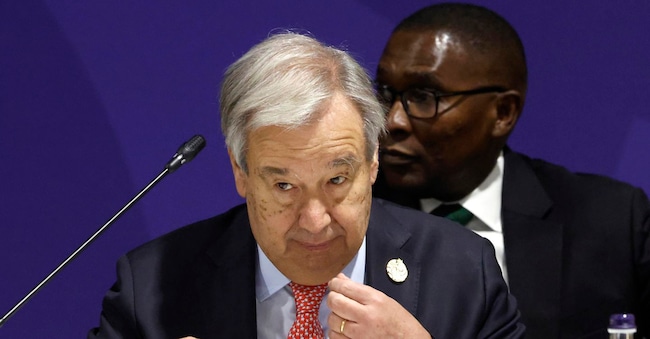
ANTALYA (TURKEY) – Oil, gas and coal ‘must disappear, just like the dinosaurs’. On the first of two days dedicated to world leaders at COP31 in Turkey, António Guterres once again pointed the finger at fossil fuels, the main contributors to greenhouse gas emissions. The United Nations Secretary-General has made climate change one of the hallmarks of his term in office, which is now drawing to a close. On Wednesday 11 November, he once again accused the industry’s lobbies, oil-producing states and multinationals. Their “strategy,” he said, “is simple: to distort the science, delay decisions and postpone action”.
Guterres: ‘Make Big Oil pay’
Guterres also proposed making Big Oil pay: ‘In the last quarter alone, the nine largest oil companies raked in $95 billion in profits. It is time for governments to tax them and use the resources to help vulnerable countries’. And again: “The harsh truth is that the climate crisis is overwhelming us. This path leads to mutually assured destruction.” That choice of phrase is a dramatic one: ‘mutually assured destruction’ was the recurring mantra during the most tense periods of the Cold War, referring to the insane consequences of a potential nuclear conflict (the nuclear threat, in truth, is now being invoked – quite literally – by Vladimir Putin against Ukraine’s allies).
In the discussions in Antalya, the war resurfaces in various forms, and not merely as a metaphor or in terms of its impact on energy prices. In his speech, the host, Recep Tayyip Erdogan, chose to denounce the environmental destruction caused by Israel in the Gaza Strip, with the contamination of soil and water resources and cities reduced to rubble. ‘What has happened is not only genocide, but also ecocide,’ stated the autocrat from Ankara. Environmental disasters are the legacy of all conflicts, as Kyiv and Tehran, amongst others, know only too well. And the Iranian president, Masoud Pezeshkian, told the COP that his country is seeking compensation for the damage caused by US and Israeli attacks.
Lula: ‘There’s too much talk about weapons and not enough about the climate’
The Brazilian Luiz Inácio Lula has criticised the fact that climate change has lost its prominence on the global agenda: “We have started talking more about weapons and tariffs than about the survival of future generations, but the planet cannot be left at the mercy of struggles for hegemony.”
The line-up of heads of state and government at global climate conferences always attracts attention, in one way or another. This year, as well as for Guterres’s indictment, it is the absentees who are drawing attention: as well as US President Donald Trump, who denies global warming, those absent include China’s Xi Jinping, India’s Narendra Modi, Germany’s Friedrich Merz, France’s Emmanuel Macron, Spain’s Pedro Sánchez and Italy’s Giorgia Meloni.


