
UNESCO: 35 per cent of sites are in Europe; Venice is an example of cultural heritage
As many as 61 are in Italia. Digitisation is a cornerstone of preservation and innovation

Key points
More than one in three UNESCO sites, 35 per cent, are located in Europe: out of a total of 1,248 sites worldwide, 437 are in European Union countries. This is according to a report published by the European Parliament last week, which also shows that 61 of the European sites are in Italia. Italy is, in fact, the country with the most UNESCO sites, followed by Germany with 55 and France with 54. Not far behind is the fourth-placed country, Spain, with 50 sites. With 20 sites of interest, Greece ranks fifth; according to the report, the Acropolis of Athens is a fine example of Europe’s tangible cultural heritage. ‘The cradle of democracy and the birthplace of the philosophical tradition that laid the foundations for European thought,’ the report states.
Aachen Cathedral in Germany also embodies the spiritual and political roots of the Old Continent. An example of intangible cultural heritage is the French baguette , which goes beyond its role as food to embody a craft and a way of life centred on respect for traditions.
Digitalisation
Digital cultural heritage, on the other hand, is a cornerstone of preservation and innovation in the field of beauty. The NewsEye project, which uses AI to improve access to and academic analysis of newspapers dating from the period between 1850 and 1950, captures the spirit of digital heritage well, according to the report. Gallica, the digitisation of more than 10 million works from the French National Library, is also driven by a similar spirit: a system that guarantees free and open access to hundreds of years of beauty.
The Venice Case
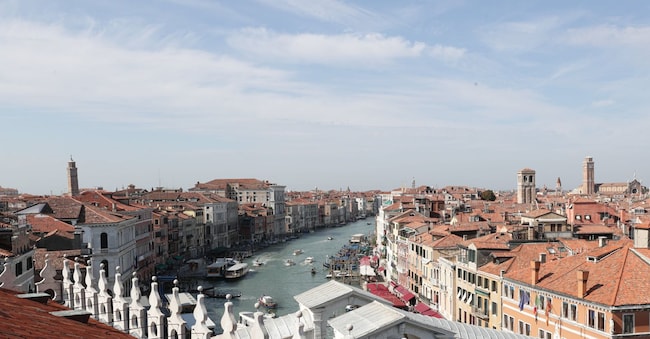
According to the European Parliament, another key example of cultural heritage is Venice with its lagoon, which ‘exemplifies a remarkable process of human adaptation to a hostile maritime environment, which has gradually transformed a marshy archipelago into a maritime and commercial power’. A cultural bridge between Europe and the East, it owes its uniqueness to a unique ensemble: sites internationally recognised for their architectural beauty, such as the Rialto Bridge or St Mark’s Square, stand alongside the system of canals that forms part of its identity. And then there are the works of artists such as Bellini, Giorgione and Tintoretto. Everything rests on wooden piles driven into the ground over a thousand years ago, the foundations of a city that attracts around six million visitors a year. Despite rising sea levels, which are probably the greatest challenge facing the Serenissima today, ‘it remains a historic site of immense cultural value’.

