
German government rejects UniCredit's bid for Commerzbank
Berlin has blocked UniCredit’s takeover of Commerzbank, emphasising the bank’s crucial role in supporting small and medium-sized enterprises and the local economy
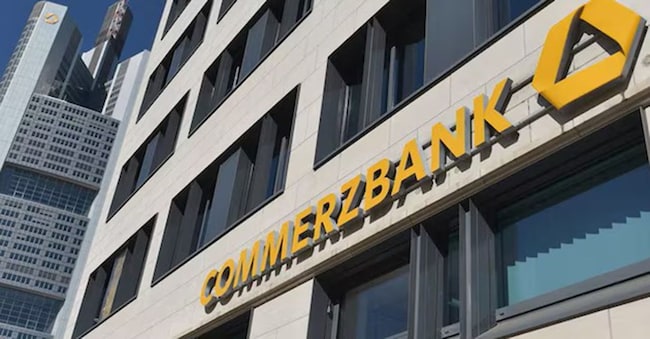
Germany, a 12% shareholder in Commerzbank, has rejected the hostile public exchange offer launched by Germany, a 12% shareholder in Commerzbank, rejects the hostile public exchange offer launched by UniCredit, prioritising the German bank’s independence and denouncing an approach deemed ‘aggressive’ by the Italian group. According to a statement from the German Federal Finance Agency (Finanzagentur), the offer – which ends today – does not offer “a sufficient premium” compared to Commerzbank’s current share price.
The move is politically sensitive in Germany, where the federal government remains the second-largest shareholder in the Frankfurt-based bank, a stake inherited from the 2008 financial crisis.
Beyond the financial considerations, Berlin emphasises the strategic aspects of the operation. Commerzbank “plays a key role in financing the German economy and the Mittelstand”, the fabric of small and medium-sized exporting enterprises, and is “a major employer and an essential pillar of the Frankfurt financial centre”, which the government intends to preserve, the statement reads.
UniCredit proposes, in particular, to downsize Commerzbank’s international network, which is considered too complex and inefficient, in order to refocus the bank on its operations in Germany. The Italian bank’s offer, aimed at strengthening its role as a European banking giant, officially expires at midnight on Tuesday, barring any extensions.
Yesterday, UniCredit announced that it had exceeded the 30% threshold it had set for the takeover bid, having launched it when it already held almost 27% of the German bank’s share capital.

