Export

Unioncamere: we will strengthen the international presence of SMEs

Following the agreement with the Foreign Office, President Prete outlines Unioncamere’s objectives regarding support for ‘Made in Italy’ exports

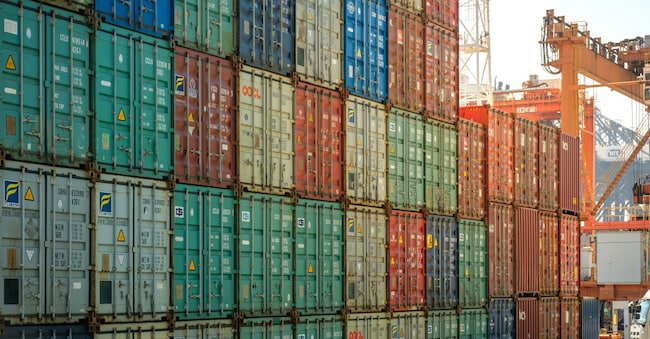
 (Adobe Stock)

4' min read

Translated by AI
Versione italiana

4' min read

Translated by AI
Versione italiana

Unioncamere and the entire chamber of commerce system are rejoining the group of organisations and institutions working to promote ‘Made in Italy’ exports. The national system of chambers of commerce is thus ‘restored’ to an operational role in promoting ‘Made in Italy’ products abroad, a role which, some ten years ago, had been scaled back by the Madia reform introduced by the Renzi government.

Under the agreement signed yesterday, Unioncamere will contribute its expertise on the national business landscape and the export potential of different regions, whilst the Ministry of Foreign Affairs will involve the chambers of commerce network in institutional and economic missions and in internationalisation programmes.

Loading...

“The Renzi government,” explains Unioncamere president Andrea Prete, “had decided that the Chambers of Commerce could not carry out direct promotional activities abroad, but only ‘incoming’ initiatives, inviting foreign operators to Italia on behalf of our businesses. This restriction remains, however; Minister Tajani has chosen to include the Chambers of Commerce within the Italian export team on the basis of the principle that if you have an extra player – and a valuable one at that – it is better to field them.”

How, then, had the previous exclusion come about?

This was based on the assumption that too many promotional initiatives, launched by different organisations, might overlap and harm the ‘Made in Italy’ brand. But that is not the case. We have specific expertise and a clear role, distinct from that of other stakeholders. And through Minister Tajani’s initiative, this role and these areas of expertise have been recognised.

What about the risk of overlap?

I do not believe there is any risk of overlap. In any case, such risks will be mitigated through the coordination of initiatives – which is established under the agreement – amongst all the parties involved. This is a new provision introduced by the agreement, which has not always been implemented in the past.

What are the specific features of the Chamber of Commerce system in relation to exports?

Thanks to our extensive presence across the country (we have 60 chambers of commerce in Italia, 83 abroad in 64 countries and 39 joint chambers, such as the Italian-Arab Chamber, for example), we are convinced that we are among those with the deepest understanding of small Italian businesses. Italia currently exports goods and services worth 650 billion euros, making us the world’s fourth-largest exporting economy, behind the US, China and Germany. This is an incredible achievement. Years ago, when the lira was in use, it was said that Italia only exported thanks to the devaluation of its currency. In recent years, however – with the euro preventing devaluations – we have instead demonstrated our ability to win over markets through the quality of our products. But now, if we want to consolidate the ground we have gained and further develop our overseas sales, we must involve the network of small and medium-sized enterprises more closely. And we at Unioncamere can make a significant contribution in this regard.

In what directions do you intend to move?

Loading...

Despite the mergers of recent years, we are still firmly established in all Italian provinces; we have in-depth knowledge of the local areas and are a key point of reference, particularly for small businesses. We aim to increase the proportion of SMEs that export by encouraging the many that already export – albeit only occasionally – to make this a regular practice. This, too, is a way of strengthening our presence on international markets.

What sort of support will you be offering to SMEs?

Italian SMEs, even in sectors as diverse as engineering, plastics and textiles, are characterised by a high degree of specialisation. And their main challenge when venturing beyond national borders is identifying the right partner – one who is truly able to understand and appreciate their products. Whilst many entrepreneurs go it alone, often on a trial-and-error basis, we can offer them training, carry out research abroad on behalf of our companies, and provide them with information on when and where to export. This includes a full range of support services, such as explaining the necessary documentation and required certifications, assisting companies with payment guarantees, and identifying logistics solutions for product transport. Many of these activities are already carried out by our promotional subsidiary, Promos. In short, we do not wish to go abroad ourselves, but rather to support our companies in their endeavours.

In your view, is there a pool of SMEs in Italia ready to take a leap forward and become exporters?

According to research we carried out with the Tagliacarne Institute, there are 17,000 businesses in Italia that have so far ventured abroad only sporadically and occasionally, but which are ready to establish a permanent presence there. They have products that are successful and well-received by the markets, but they often lack the organisation and expertise needed to do so. We at Unioncamere can support them in this.

Copyright reserved ©
Loading...

Brand connect

Loading...

Newsletter

Notizie e approfondimenti sugli avvenimenti politici, economici e finanziari.

Iscriviti